Media Home
 UN Web TV
 UN Audiovisual Library
 UN Photo
OHCHR / LEBANON TURK VISIT
Download
There is no media available to download.
Share
STORY: OHCHR / LEBANON TURK VISIT
TRT: 03:43
SOURCE: OHCHR
RESTRICTIONS: NONE
LANGUAGES: ENGLISH / NATS
DATELINE: 16 JANUARY 2025, BEIRUT, LEBANON
1. Various shots, Beirut’s exteriors
2. Wide shot, arriving at Presidential Palace
3. Various shots, HC meeting Lebanese President Joseph Aoun
4. Wide shot, exterior near Foreign Ministry
5. Various shots, HC meeting Lebanese Foreign Minister Bouhabib
6. Wide shot, Beirut streets
7. Wide shot, press conference
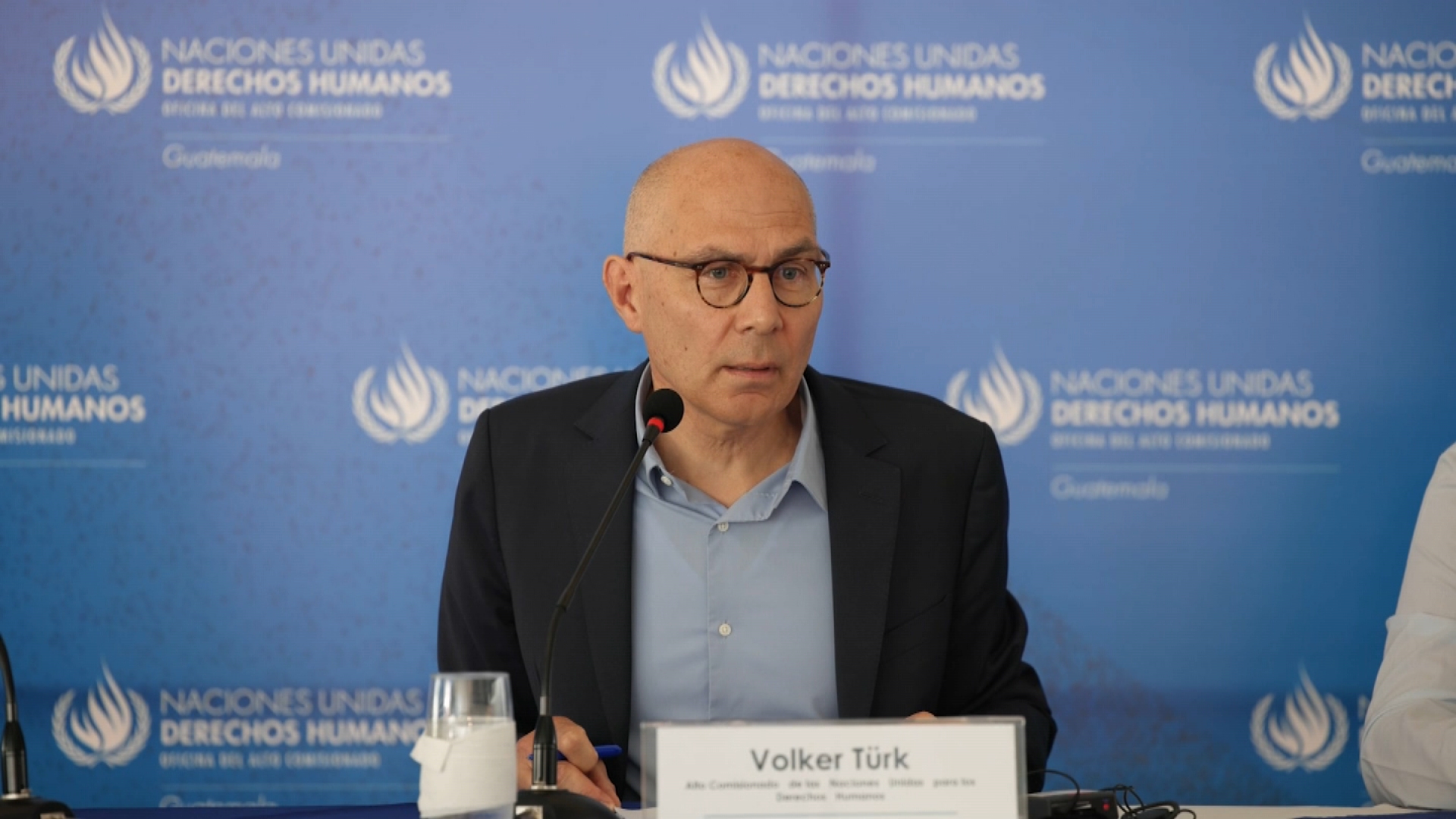
8. SOUNDBITE (English) Volker Türk, UN High Commissioner for Human Rights:
“The critically important ceasefire between Lebanon and Israel continues broadly to hold, albeit with worrying reports of continued demolitions by Israeli forces in towns and villages in southern Lebanon. The country’s resilient and courageous population is slowly starting to rebuild their lives.”
9. Wide shot, press conference
10. SOUNDBITE (English) Volker Türk, UN High Commissioner for Human Rights:
“With the election of this new leadership, there is momentum for political stability, economic recovery, and long-overdue implementation of critical reforms to address the multiple socio-economic crises and gaping inequalities facing Lebanon. Human rights offer a tool of governance.”
11. Wide shot, press conference
12. SOUNDBITE (English) Volker Türk, UN High Commissioner for Human Rights:
“In my discussions with the new President and Prime Minister-designate, I offered my Office’s assistance in support of their commitments on the key reforms needed to strengthen the rule of law, the independence of the judiciary, and transparency of its work. Equally important will be justice and prison reform to address, not least, the overcrowding and the dire conditions.”
13. Wide shot, press conference
14. SOUNDBITE (English) Volker Türk, UN High Commissioner for Human Rights:
“There is a need for a renewal of the social contract that rebuilds the social fabric, that restores confidence in the State but also offers pathways for a dignified future that can harness the potential and capabilities of the Lebanese people and deliver on their aspirations.”
15. Wide shot, press conference
16. SOUNDBITE (English) Volker Türk, UN High Commissioner for Human Rights:
“The rights of all Lebanese, most importantly the vulnerable, must be at the heart of economic, fiscal and financial policies. That is what a human rights economy is all about. Budget and investment decisions must prioritise access to education, to health care, and social protection.”
17. Wide shot, press conference
18. SOUNDBITE (English) Volker Türk, UN High Commissioner for Human Rights:
“I deeply feel for the immense suffering of the population in Lebanon on account of the recent conflict. Israeli military action in Lebanon has caused wide-scale loss of civilian life – including the killing of entire families, widespread displacement, and the destruction of civilian infrastructure, raising serious concerns about respect for the principles of proportionality, distinction and precautions.”
Lebanon faces immense challenges but there are signs of hope, UN Human Rights Chief Volker Türk said at the end of his mission to the country today (16 Jan.)
“The critically important ceasefire between Lebanon and Israel continues broadly to hold, albeit with worrying reports of continued demolitions by Israeli forces in towns and villages in southern Lebanon. The country’s resilient and courageous population is slowly starting to rebuild their lives,” Türk told a news conference in Beirut.
The High Commissioner also noted that the election of a new President and Prime Minister had ended the two-year long political stalemate, opening the door for reforms which will enable a better future for all Lebanese, who have endured years of socio-economic misery.
“With the election of this new leadership, there is momentum for political stability, economic recovery, and long-overdue implementation of critical reforms to address the multiple socio-economic crises and gaping inequalities facing Lebanon. Human rights offer a tool of governance,” he said.
During the High Commissioner’s meetings with the country’s active and diverse civil society, they highlighted the importance of full respect for freedom of expression and association; for combatting discrimination on all grounds; for improving participation and representation of women, for guaranteeing full gender equality; for recognition and inclusion of people with disabilities; and for ensuring human rights protections for those most marginalized and at risk, including on account of the conflict.
“In my discussions with the new President and Prime Minister-designate, I offered my Office’s assistance in support of their commitments on the key reforms needed to strengthen the rule of law, the independence of the judiciary, and transparency of its work. Equally important will be justice and prison reform to address, not least, the overcrowding and the dire conditions,” he said.
Türk welcomed the President’s public commitment to ensure equality; justice and protection for all; and respecting liberties, free press and expression.
During his meetings, the High Commissioner also took the opportunity to call for a resumption of an independent investigation into the explosion at the Beirut port in August 2020, which killed more than 218 people, wounded 7,000 others, including 1,000 children, and rendered hundreds of thousands homeless. Those responsible for that tragedy must be held to account, Türk stressed, offering offer the support of his Office in this regard.
Lebanon remains in one of the worst economic declines in modern history with a severe currency devaluation and triple-digit inflation affecting basic necessities all across the country. According to the World Bank, 44 per cent of the population are living below poverty line. Some 2.5 million people are in need food assistance, and of whom, 1.26 million are facing acute hunger.
Many public sector services have been halted, access to healthcare and education has deteriorated, and electricity supply has been significantly reduced. These deprivations have played havoc with the lives of ordinary citizens, who no longer have confidence in the ability of the State to deliver on its commitments.
“There is a need for a renewal of the social contract that rebuilds the social fabric, that restores confidence in the State but also offers pathways for a dignified future that can harness the potential and capabilities of the Lebanese people and deliver on their aspirations,” Türk said.
“The rights of all Lebanese, most importantly the vulnerable, must be at the heart of economic, fiscal and financial policies. That is what a human rights economy is all about. Budget and investment decisions must prioritize access to education, to health care, and social protection,” he added.
“I deeply feel for the immense suffering of the population in Lebanon on account of the recent conflict. Israeli military action in Lebanon has caused wide-scale loss of civilian life – including the killing of entire families, widespread displacement, and the destruction of civilian infrastructure, raising serious concerns about respect for the principles of proportionality, distinction and precautions,” the High Commissioner said.
More than 4,000 lives were lost, including more than 1,100 women and children, and over 200 healthcare workers and some journalists, while more than 16,000 have been injured. Over one million were displaced at the height of the conflict here, with more than 160,000 people still in a state of displacement.
The ceasefire in Lebanon must transition into a durable peace, and civilians must be able to return safely, the High Commissioner stressed.