Media Home
 UN Web TV
 UN Audiovisual Library
 UN Photo
WTO / MERKEL TRADE CONCERNS
Download
There is no media available to download.
Share
STORY: WTO / MERKEL TRADE CONCERNS
TRT: 5:52
SOURCE: WTO
RESTRICTIONS: NONE
LANGUAGE: ENGLISH / GERMAN / NATS
DATELINE: 07 MARCH 2025, GENEVA, SWITZERLAND
1. Wide shot, WTO headquarters exteriors
2. Wide shot, banner celebrating the 30th anniversary of the WTO
3. Med shot, WTO logo at entrance
4. Med shot, former German Chancellor Angela Merkel steps out of a car at the WTO and is greeted by WTO Director-General Ngozi Okonjo-Iweala
5. Wide shot, Ms Merkel, DG Okonjo-Iweala walking together to the Director-General's office.
6. Wide shot, meeting ahead of Presidential Lecture
7. Med shot, Ms Merkel listens to DG Okonjo-Iweala
8. Close up, Richard Quest, CNN Anchor, attends meeting
9. Med shot, Ms Merkel listens to DG Okonjo-Iweala
10. Wide shot, Ms Merkel, DG Okonjo-Iweala shake hands
11. Med shot, Ms Merkel, DG Okonjo-Iweala greet each other
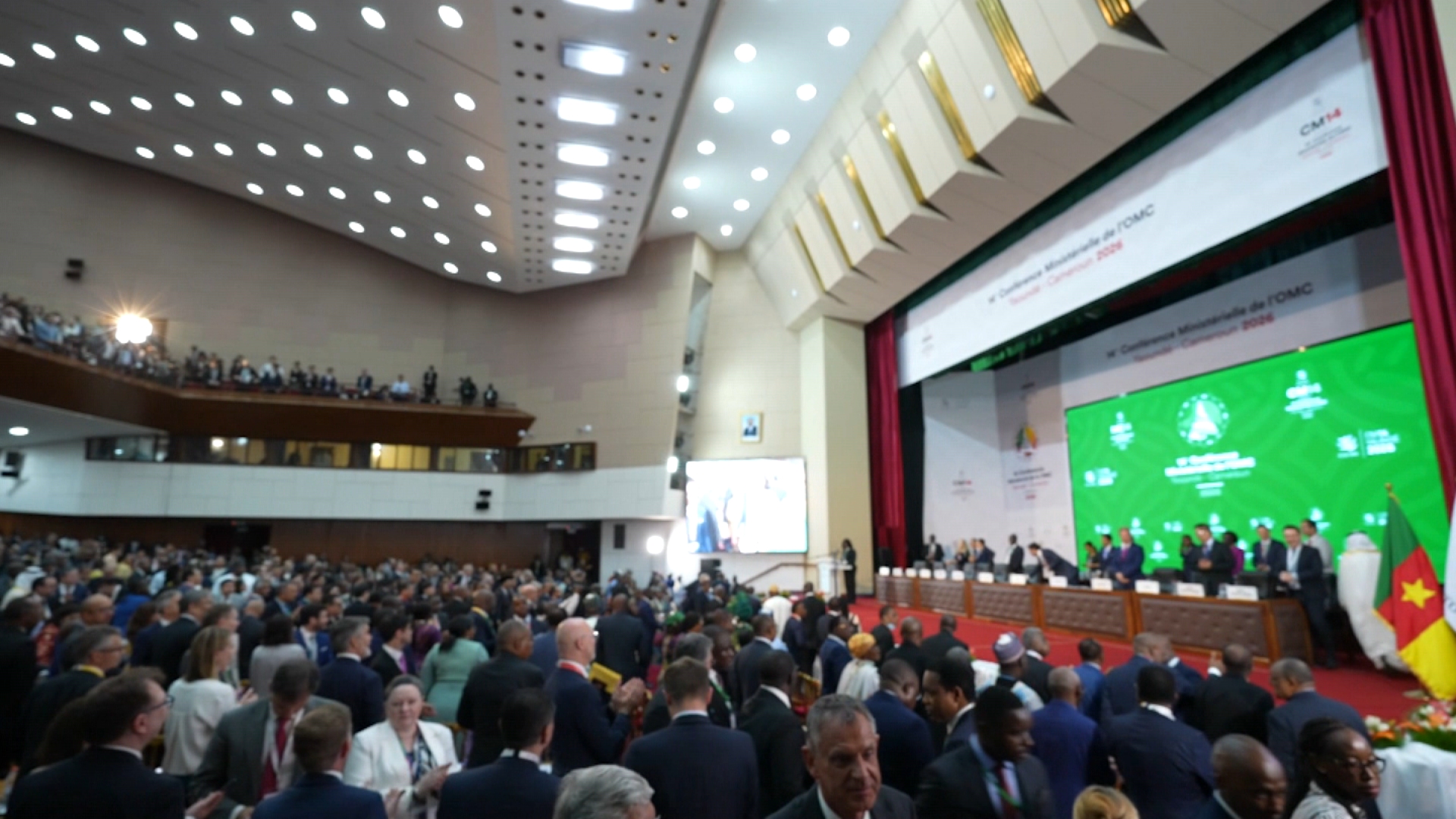
12. Wide shot, officials arrive in conference room for the Presidential Lecture as public applauds
13. Wide shot, pan left, conference under way
14. Wide shot, conference underway
15. Wide shot, Ms Merkel during Presidential Lecture
16. Med shot, Ms Merkel during Presidential Lecture
17. SOUNDBITE (German) Angela Merkel, Former Chancellor of Germany:
“The WTO and its rules have made this possible; multilateral trade regulated worldwide has made it possible. Industrialized countries have benefited, but emerging countries and developing countries have also benefited. The world's prosperity has grown. This means that if we only think about our own security issues, the world's prosperity will shrink again. Not everyone knows yet how much they are affected, but I would think there are good reasons to promote multilateral trade and its rules.”
[GERMAN TRANSCRIPTION]
“Die WTO und ihre Regeln haben es ermöglicht, der weltweit geregelte multilaterale Handel hat es ermöglicht. Industrieländer profitiert haben, dass aber auch die Schwellenländer und die Entwicklungsländer profitiert haben. Der Wohlstand der Welt ist gewachsen. Das heißt, falls wir nur noch an unsere eigenen Sicherheitsfragen denken, wird der Wohlstand der Welt wieder schrumpfen. Nun weiß noch nicht jeder, wie viel es ihn trifft, aber ich würde denken, es gibt gute Gründe, sich für einen multilateralen Handel und seine Regeln einzusetzen.”
18. Med shot, Ms Merkel during Presidential Lecture
19. SOUNDBITE (German) Angela Merkel, Former Chancellor of Germany:
“I have to put myself in the other person's shoes. Because if I don't do that, then I won't be able to negotiate well, because I don't know what is important to the other person and where I might be able to reach a compromise. That means multilateralism means that I understand the world as a whole better. Protectionism ultimately means that I only care about myself and am a bit afraid of hearing about others' problems before doing so. Because then I could start to falter and I might not want to do that at all, because I want to have a firm position for my country.”
[GERMAN TRANSCRIPTION]
“Ich muss mich in die Schuhe des anderen hineinversetzen. Denn wenn ich das nicht tue, dann kann ich auch nicht gut verhandeln, weil ich ja nicht weiß, was ist dem anderen wichtig und wo kann ich vielleicht einen Kompromiss erreichen. Das heißt, Multilateralismus bedeutet, ich verstehe die Welt als Ganzes besser. Protektionismus bedeutet letztlich, dass ich mich nur noch um mich selbst kümmere und ein bisschen Angst habe, davor von den Problemen der anderen zu hören. Denn dann könnte ich ja ins Schwanken geraten und das möchte ich vielleicht gar nicht, weil ich ja eine feste Position für mein Land haben möchte.”
20. Wide shot, fireside chat under way
21. SOUNDBITE (English) Ngozi Okonjo-Iweala, WTO Director-General:
“There's so much changing in the way the tariffs are working out and so much uncertainty. So if you react, what I was trying to tell people and that applies to our members is don't overreact. Take a deep breath when you hear something. Wait until you actually see it applied, then tow the path of dialogue. I still think the WTO provides a forum and platform for dialogue, and before you act, think of how you're going to dialogue, so chilling still applies."
22. Wide shot, fireside chat under way and cameras filming the event
23. SOUNDBITE (English) Ngozi Okonjo-Iweala, WTO Director-General:
"I strongly believe that the WTO has to reform. And that is because it's such, it's an organization that is so much needed in the world. The presence of the WTO in the multilateral trading system and the rules-based system has helped to lift so many out of poverty into prosperity, 1 .5 billion people over the last three decades."
24. Wide shot, fireside chat under way as seen from control room.
25. SOUNDBITE (English) Ngozi Okonjo-Iweala, WTO Director-General:
"I think we should be very careful between equating what is happening now with the tariffs, which is challenging for the system, so I don't want to get away from that. We are at a difficult moment, it's challenging. But let's remember that there is 80% of world trade going on among other members of the WTO. They are trading among themselves according to the rules that exist."
26. Wide shot, fireside chat under way as seen from balcony.
27. SOUNDBITE (English) Ngozi Okonjo-Iweala, WTO Director-General:
"And I think there's one thing that we should take comfort in. The U.S. released a report about the WTO that is quite critical. But the U.S., the indications I got is that they remain part of WTO, they want to remain engaged and I think this is something that should give us room to, you know, to be, I don't want to use the word hopeful, but I think it gives us room to believe that the U.S. still finds some value in being able to engage with other members of the WTO. And that is one of the reasons I think we should keep calm, we should listen to their concerns, and we should see how we can use the instruments we have. in the organization to try and meet them, meet some of the concerns they have.
28. SOUNDBITE (German) Angela Merkel, Former Chancellor of Germany:
“The good thing about trade rules is that they don't cost money and bring prosperity. What else do you have that doesn't cost money and brings prosperity? So this is a very nice thing and therefore rewarding for everyone to try to use it to their advantage.”
[GERMAN TRANSCRIPTION]
“Die Handelsregelungen haben ja die gute Eigenschaft, dass sie erst mal kein Geld kosten und Wohlstand bringen. Was hat man sonst noch, was kein Geld kostet und Wohlstand bringt? Das ist also eine sehr schöne Sache und deshalb für jedermann ersprießlich, sich zu versuchen, es zum eigenen Vorteil zu nutzen.”
29. Wide shot, fireside chat under way
30. Wide shot, pan left, fireside chat under way
31. Wide shot, Ms Merkel speaks during fireside chat
32. Wide shot, DG Okonjo-Iweala speaks during fireside chat
33. Wide shot, Richard Quest speaks during fireside chat
34. Wide shot, fireside chat under way
35. Wide shot, public listening during event
36. Wide shot, delegate asks question and public listening during event
37. Wide shot, participant asking a question during event
On the eve of International Women's Day, former German Chancellor Angela Merkel stressed the importance of preserving and improving multilateralism as a key tool to foster international collaboration and expand women's participation in international trade.
Dr Merkel delivered the seventh lecture in the Presidential Lecture Series at the WTO's headquarters in Geneva today (07 Mar). She served as Chancellor of Germany from 2005 to 2021, the first female leader to hold this office.
In her lecture titled "Empowering women through multilateral cooperation", Dr Merkel highlighted the importance of establishing rules and standards to ensure women have equal access to economic opportunities. She underscored that supply chain diversification presents unique opportunities for women, particularly in emerging and developing economies. She called on more women to be engaged in these expanding markets and for countries to draw on a broader talent pool, driving innovation and growth.
In her welcoming remarks, WTO Director-General Ngozi Okonjo-Iweala referred to Dr Merkel as a "stalwart supporter" of the multilateral trading system and the WTO. She is someone who was a "central actor in the global arena" over a 16-year tenure that was marked by economic and health crises, she added.
DG Okonjo-Iweala also reflected on the "grave challenges" the international economic order is currently confronting. She emphasized that despite all of its shortcomings the system has for 80 years enabled unprecedented prosperity and poverty reduction. "Conflict and climate change are exacting a growing human toll. Progress on economic development and gender equality is stalling. Rising economic uncertainty is diminishing people's prospects - nowhere more so than in the poorest countries," she said.
The Director-General mentioned her recent trip to Washington D.C., where she met with the Secretary of Commerce Howard Lutnick and the United States Trade Representative (USTR) Ambassador Jamieson Greer. Despite criticisms of the WTO in a recently released report, the US signalled its intent to remain engaged in the organization, she said. This suggests there is an opportunity to address their concerns through existing WTO mechanisms, reinforcing the importance of continued dialogue and cooperation within the organization, she added.
Dr Merkel's lecture was followed by a fireside chat moderated by Richard Quest, CNN's international business correspondent. Held in conjunction with International Women's Day, the lecture and discussion served as an opportunity to highlight female leadership and women’s empowerment in international economic governance.