Media Home
 UN Web TV
 UN Audiovisual Library
 UN Photo
UN / KOSOVO
Download
There is no media available to download.
Share
STORY: UN / KOSOVO
TRT: 05:25
SOURCE: UNIFEED
RESTRICTIONS: NONE
LANGUAGES: ENGLISH / RUSSIAN / NATS
DATELINE: 08 APRIL 2025, NEW YORK CITY / FILE
FILE – NEW YORK CITY
1. Wide shot, United Nations headquarters
08 APRIL 2025, NEW YORK CITY
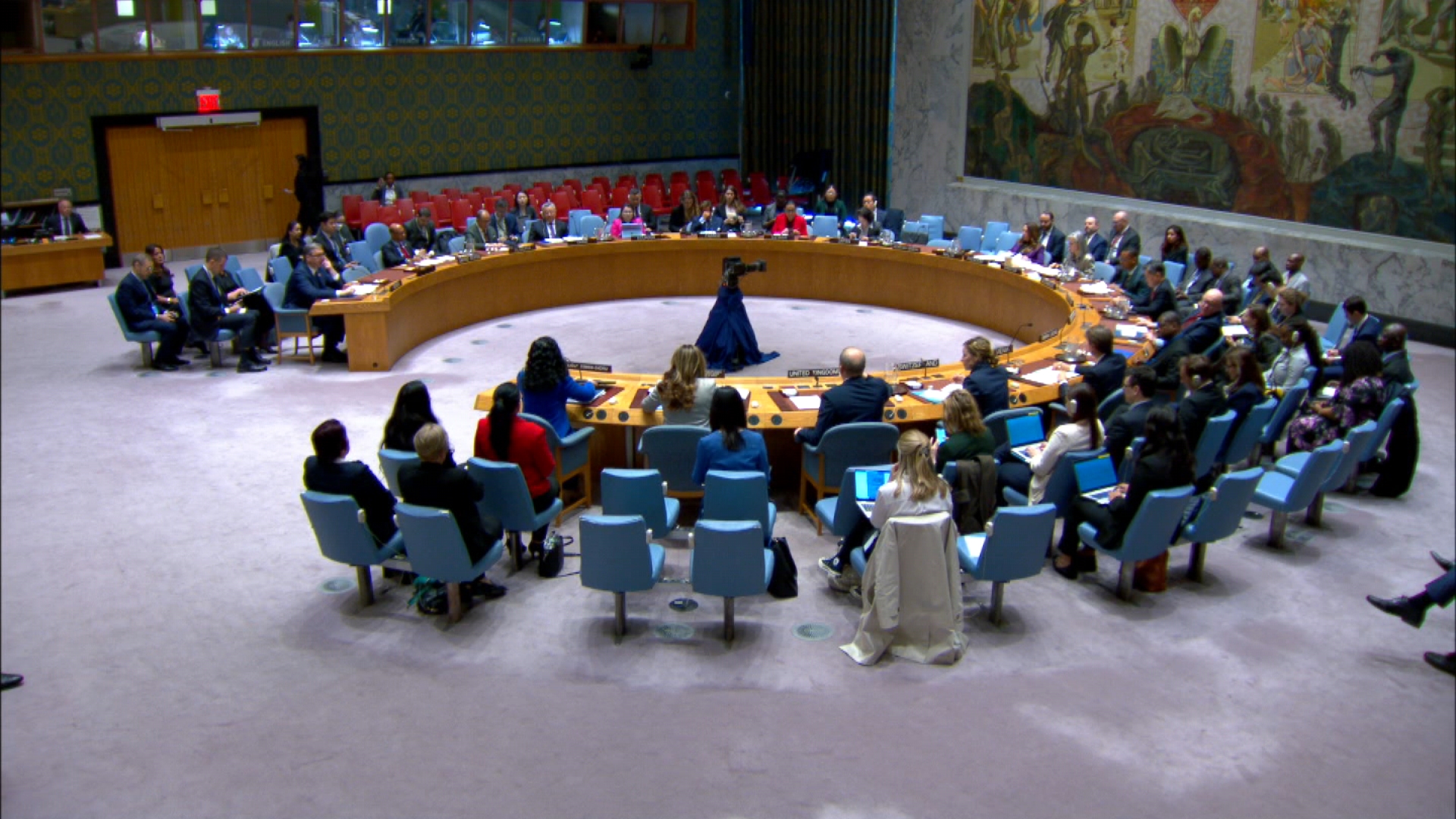
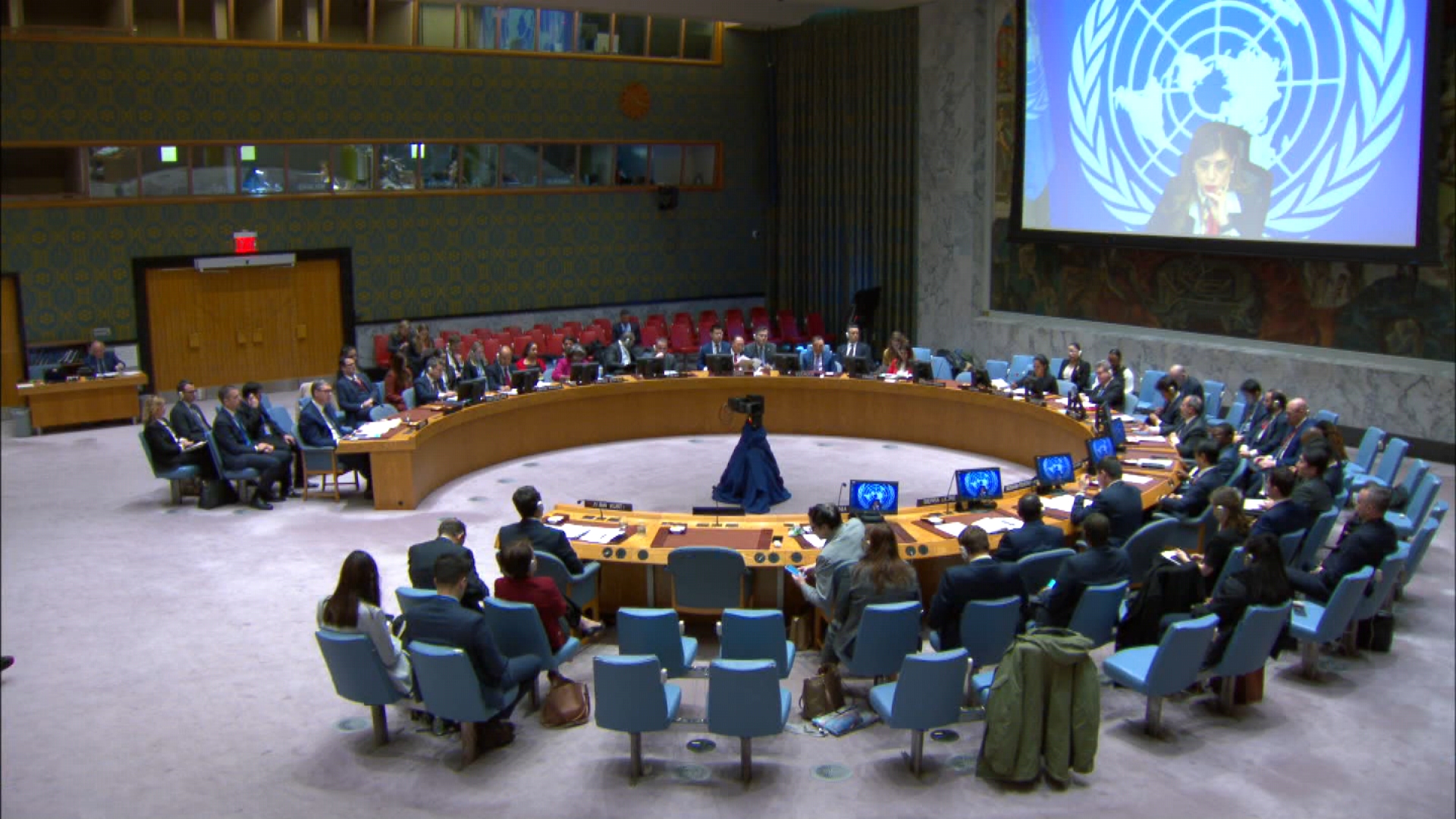
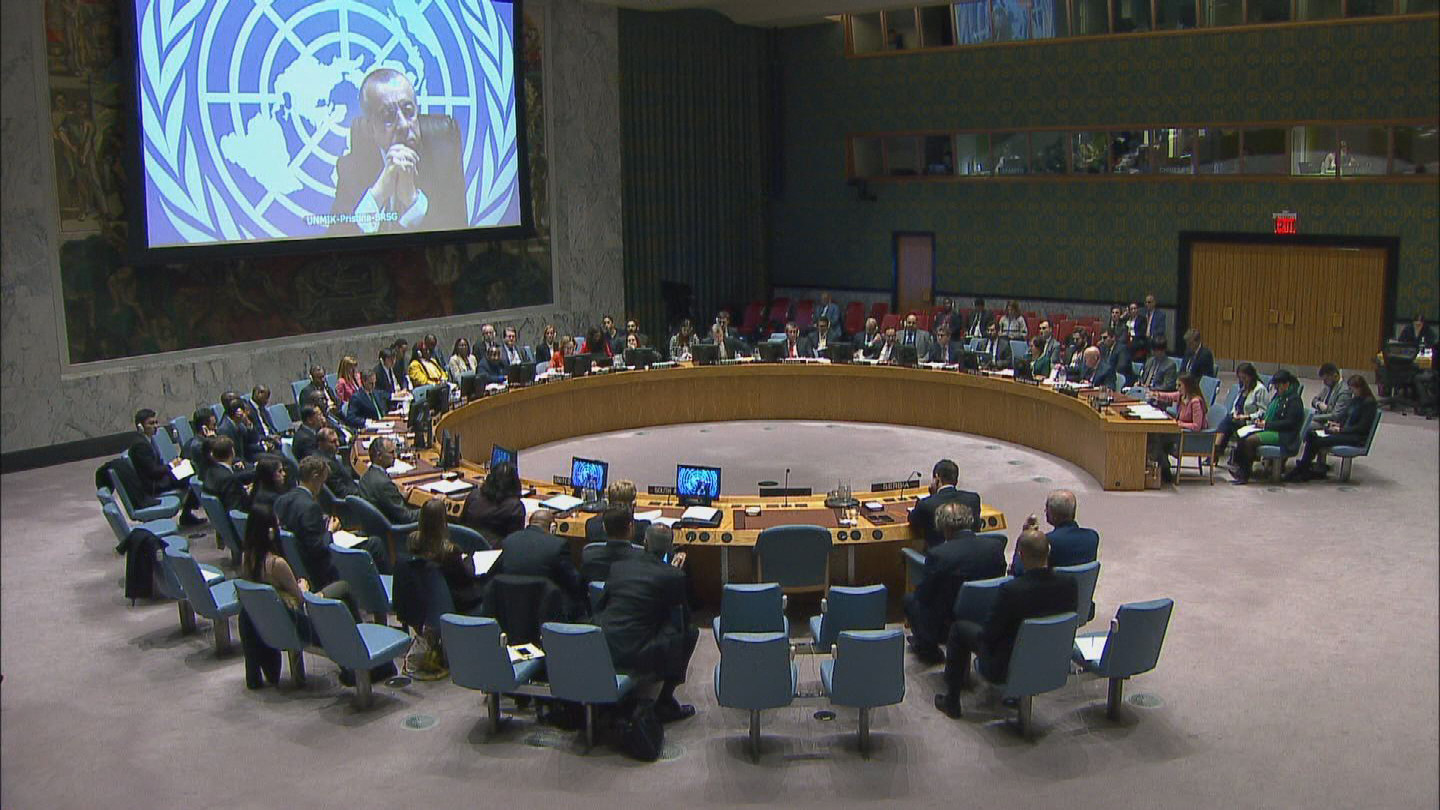
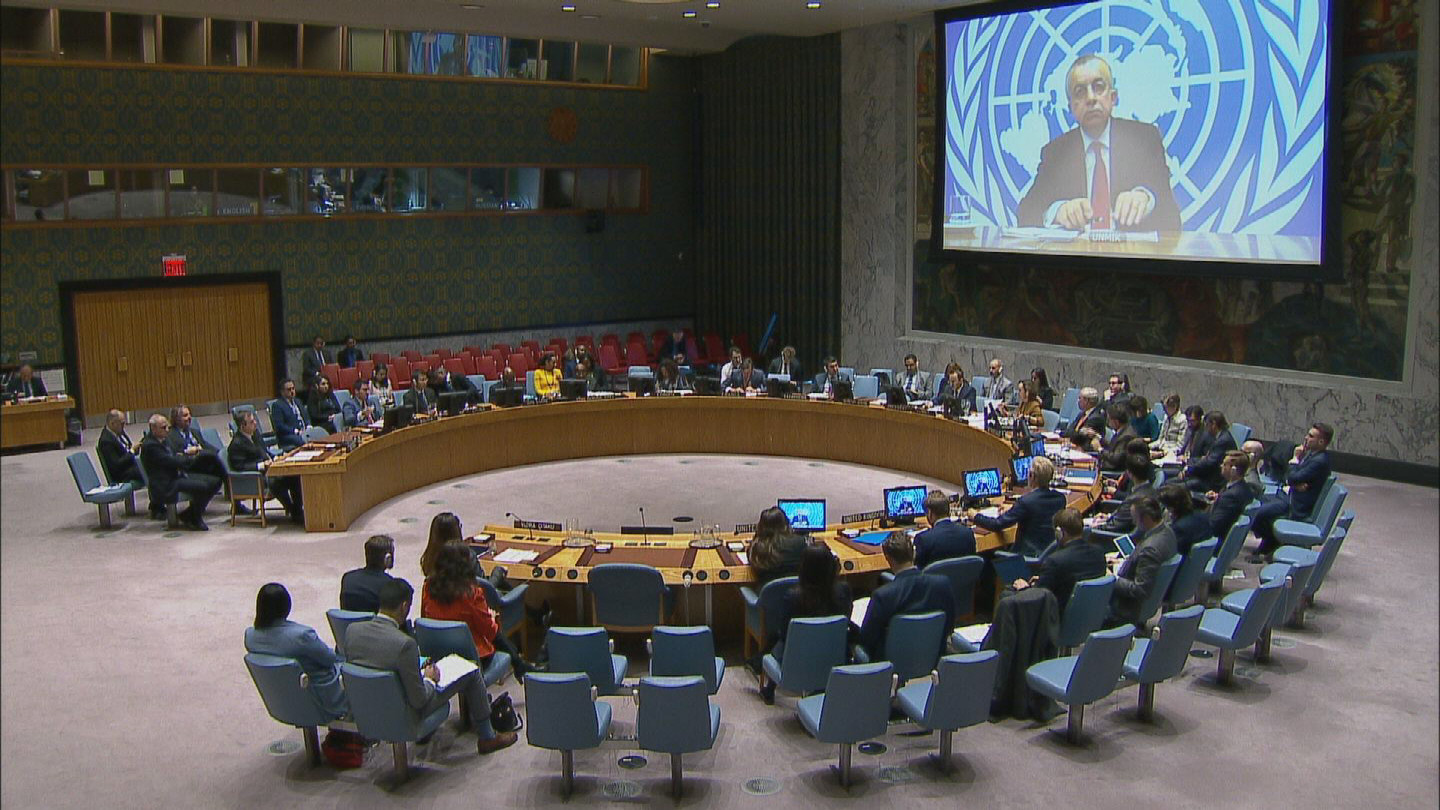
2. Wide shot, Security Council
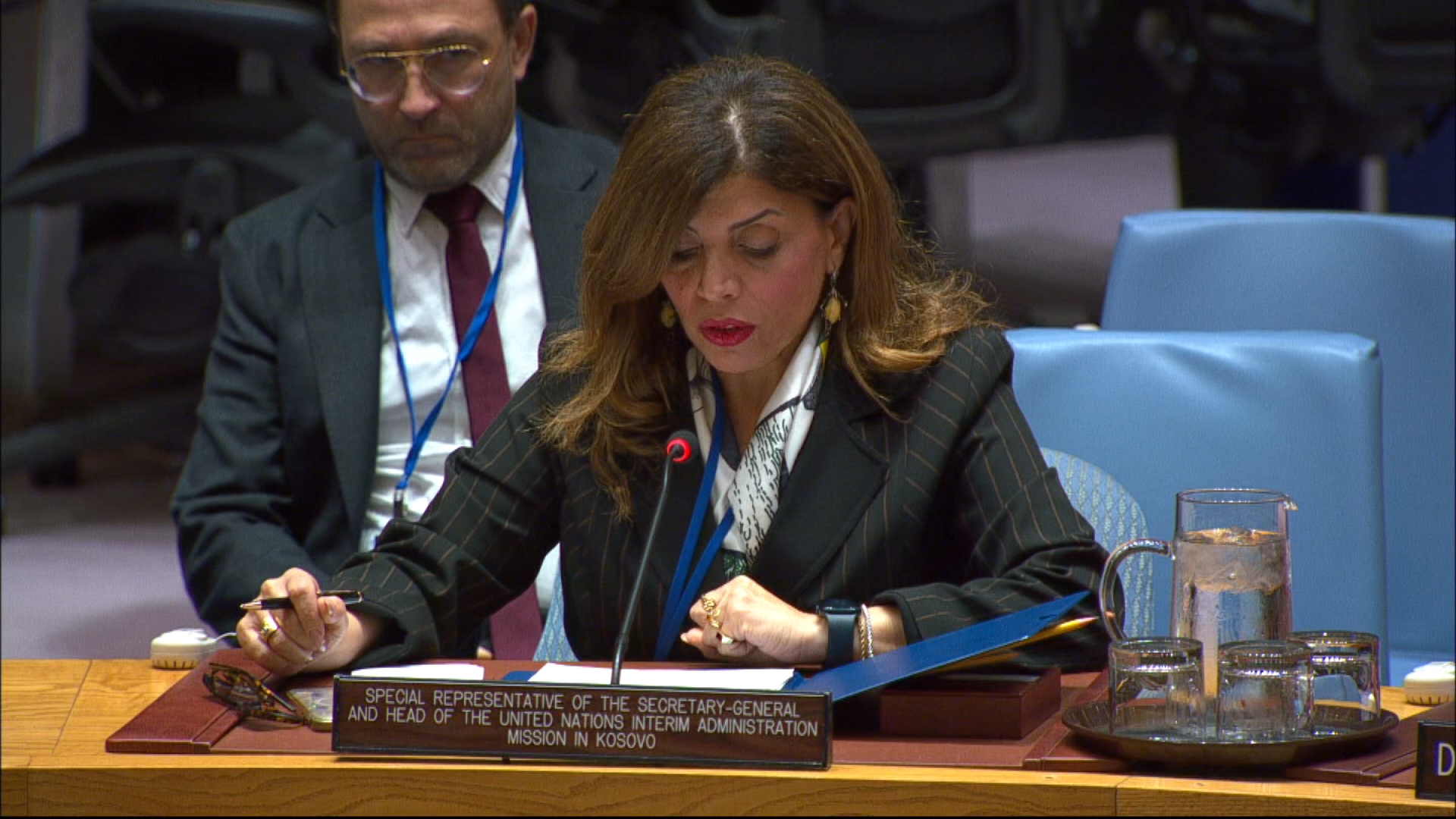
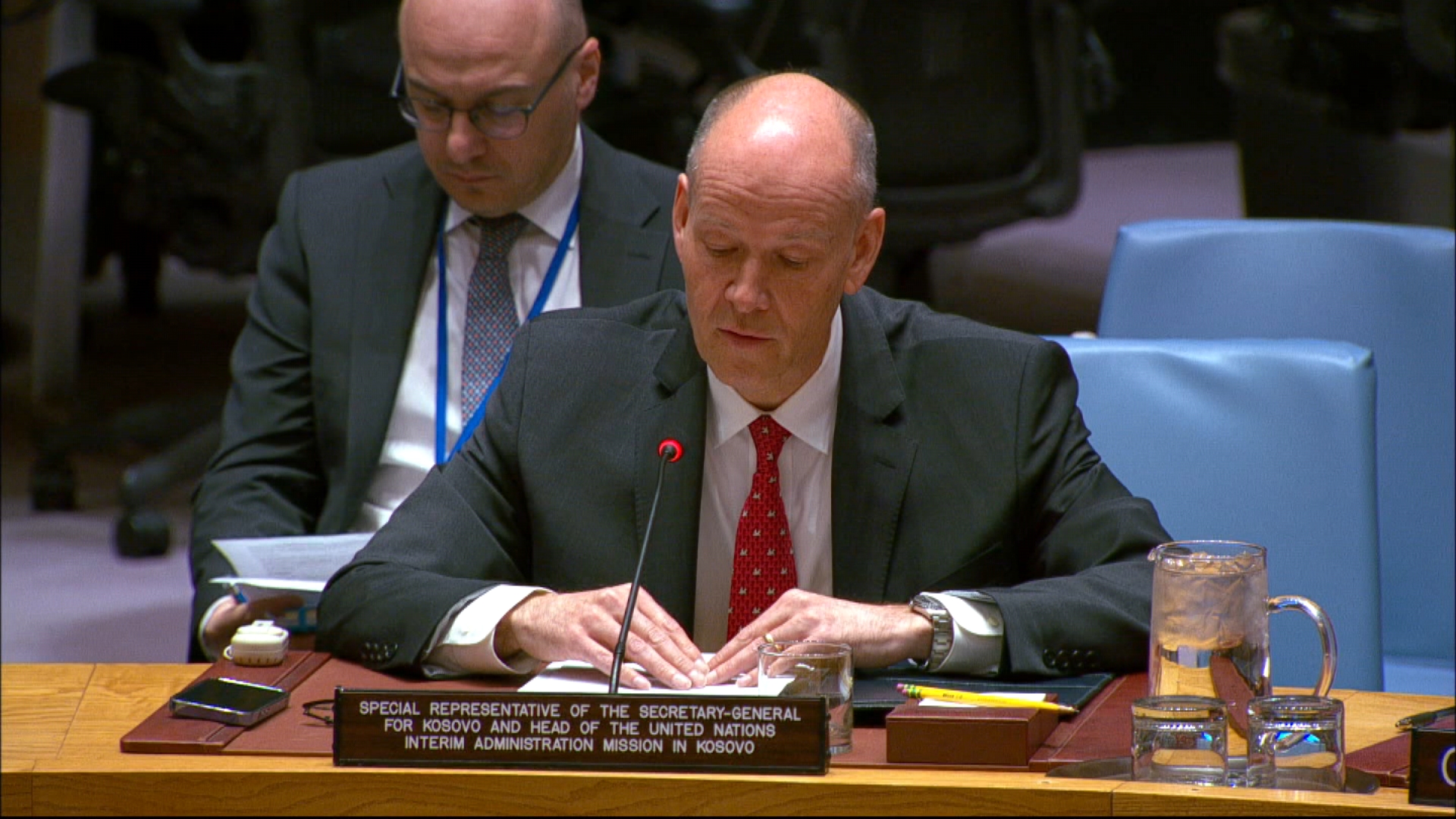
3. SOUNDBITE (English) Caroline Ziadeh, Special Representative of the Secretary-General for Kosovo and Head of the United Nations Interim Administration Mission in Kosovo:
“The conduct of the election on 9 February was notably peaceful, although not without technical complications and appeals by political parties. It was especially encouraging to note the gains in women’s representation.”
4. Wide shot, Security Council
5. SOUNDBITE (English) Caroline Ziadeh, Special Representative of the Secretary-General for Kosovo and Head of the United Nations Interim Administration Mission in Kosovo:
“After the appointment of Mr. Peter Sørensen as the new EUSR for the Belgrade-Pristina Dialogue in January and look forward to working closely with him. His early engagement offers an opportunity to support both sides in making headway. The progress made in December, when Belgrade and Pristina agreed on the terms of reference for the Joint Commission on Missing Persons, should inspire both sides to move forward in other areas of the Dialogue.”
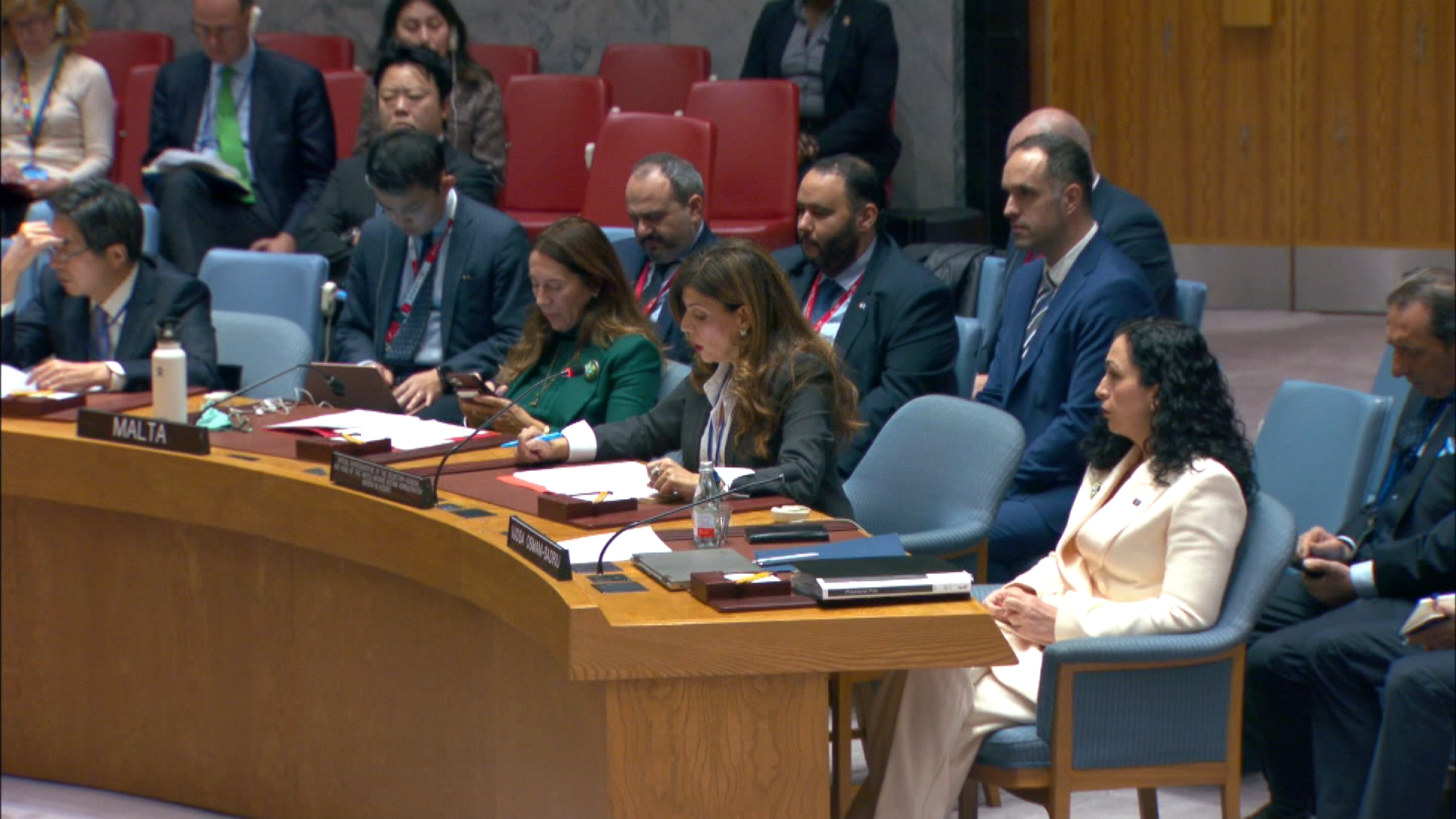
6. Wide shot, Caroline Ziadeh speaking at the Security Council
7. SOUNDBITE (English) Caroline Ziadeh, Special Representative of the Secretary-General for Kosovo and Head of the United Nations Interim Administration Mission in Kosovo:
“When I visited northern Kosovo on 25 March, civil society interlocutors, political and community leaders alike pointed to a continued trust deficit particularly vis-à-vis the institutions, while also sharing concerns about what lies ahead given the current political context and developments in the region and beyond. They lamented the unilateral actions taken by the Pristina authorities, including the recent closures of Serbia-run Centres of Social Welfare and the adverse socio-economic impact this has had.”
8. Wide shot, Caroline Ziadeh speaking at the Security Council
9. SOUNDBITE (English) Caroline Ziadeh, Special Representative of the Secretary-General for Kosovo and Head of the United Nations Interim Administration Mission in Kosovo:
“I condemn the attack on the Ibar-Lepenac/Ibër-Lepenc water canal on 29 November and reiterate my call for a comprehensive and transparent investigation to identify and hold accountable those responsible. I urge all leaders to act responsibly, avoid escalation, and to cooperate in bringing the perpetrators to justice.”
10. Wide shot, Security Council
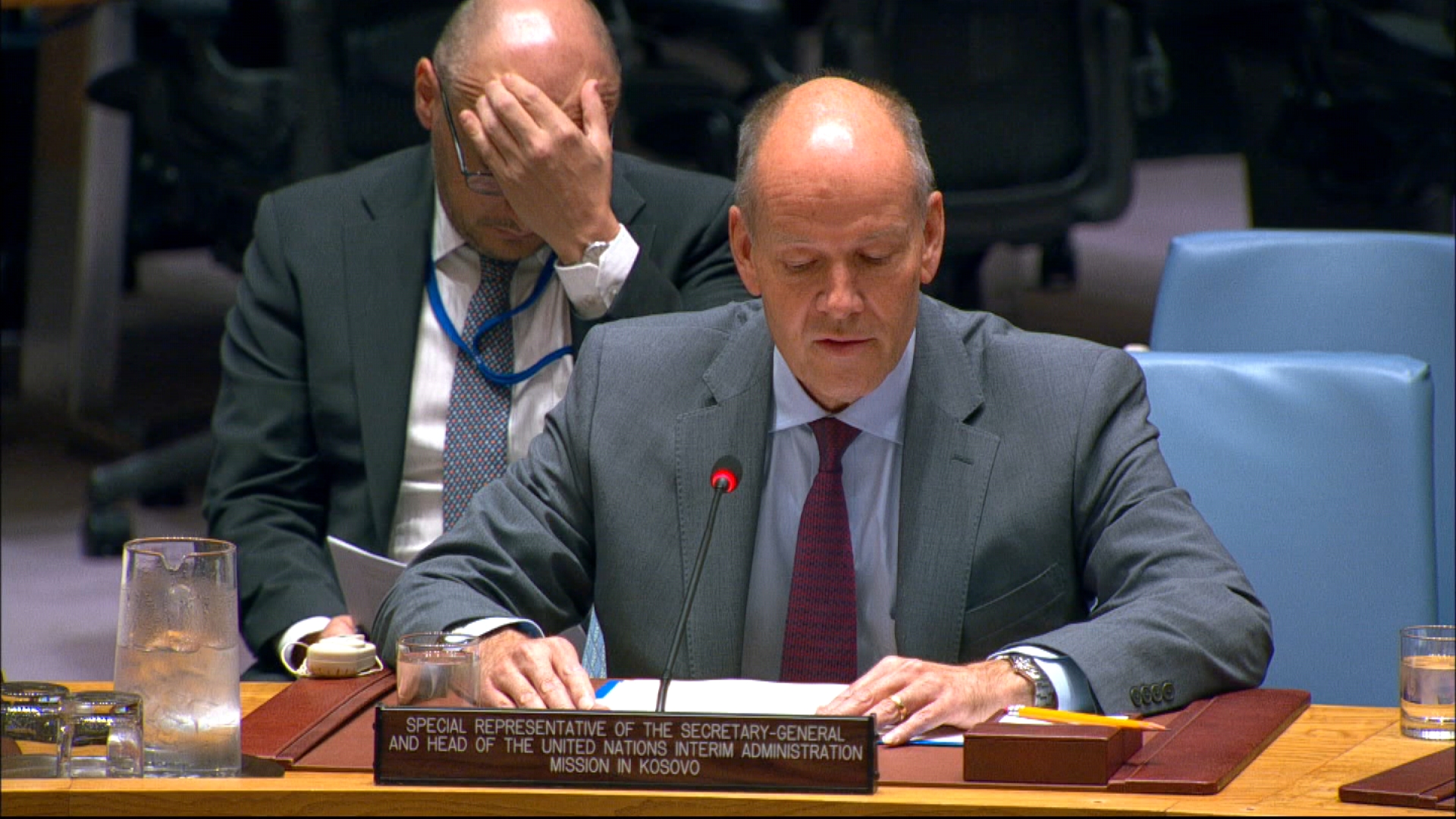
11. SOUNDBITE (English) Marko Djurić, Minister for Foreign Affairs of Serbia:
“Serbia's position remains clear and consistent. We strongly support the continued presence and full engagement of UNMIK. After more than 25 years, the mission's mandate has not yet been fulfilled, and the challenges on the ground are growing more complex day by day. UNMIK’s role is not only relevant, it is indispensable.”
12. Wide shot, Security Council
13. SOUNDBITE (English) Marko Djurić, Minister for Foreign Affairs of Serbia:
“The situation on the ground in Kosovo and Metohija is deteriorating, and Serbs are paying the price.”
14. Med shot, speakers at the Security Council
15. SOUNDBITE (English) Marko Djurić, Minister for Foreign Affairs of Serbia:
“In recent months, Pristina has escalated its campaign to systematically dismantle institutions of Serbs throughout Kosovo and Metohija. These are not symbolic gestures. They have direct, painful daily consequences for real people, salaries, pensions and social assistance to 1000s of Serbian families have been cut off. The very means of survival for many of our compatriots have been placed at risk.”
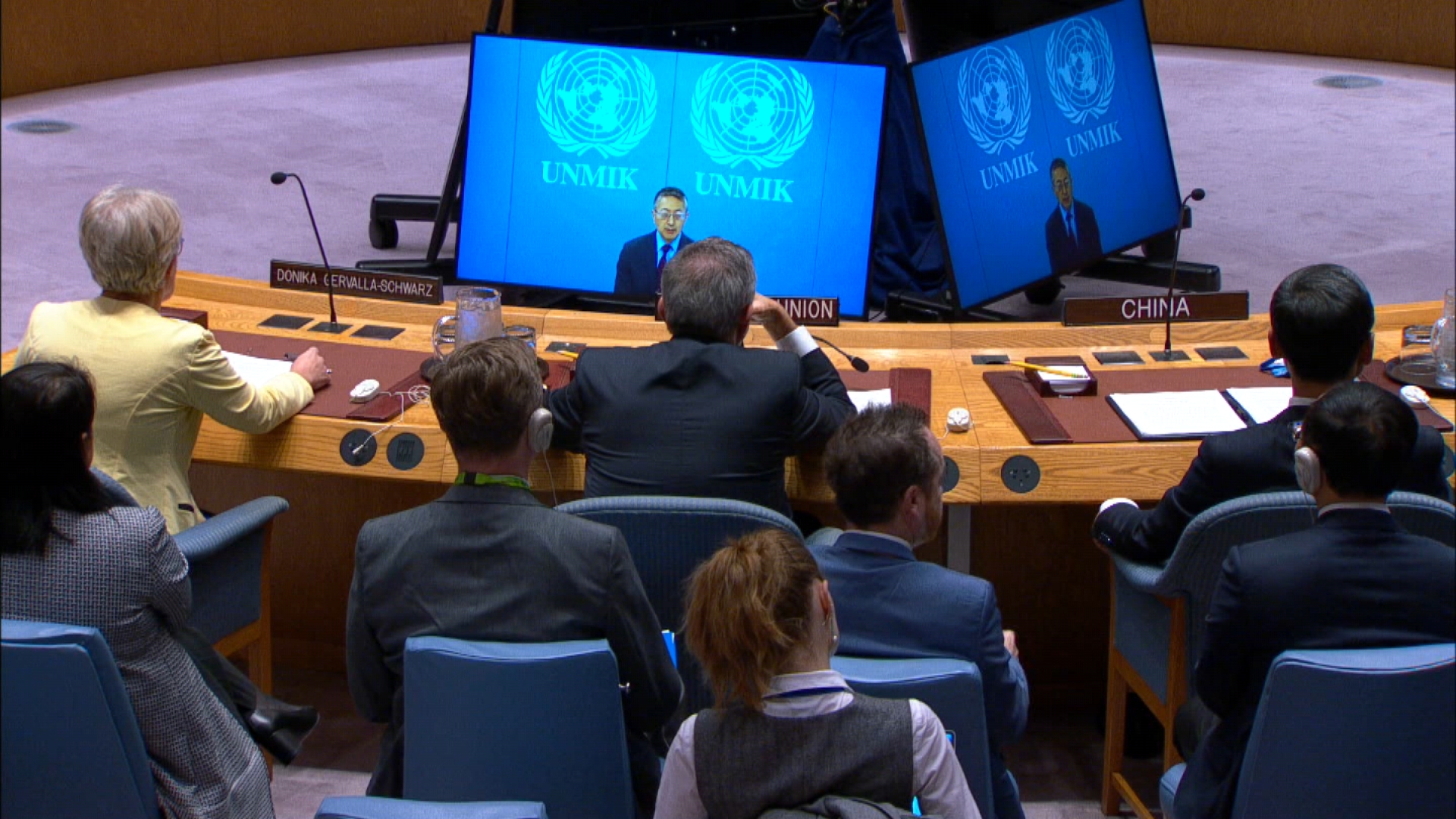
16. Med shot, Donika Gërvalla-Schwarz speaking at the Security Council
17. SOUNDBITE (English) Donika Gërvalla-Schwarz:
“In fact, yes, we are a democratic country, and we are proud of it. In the light of our painful past, we have built institutions that reflect democratic values, rule of law and human rights.”
18. Med shot, Donika Gërvalla-Schwarz speaking at the Security Council
19. SOUNDBITE (English) Donika Gërvalla-Schwarz:
“While other international organizations such as OSCE, the Council of Europe and the European Union consistently provide assessments of the development in Kosovo UNMIK only keeps misrepresenting facts and by that misleads this council as well.”
20. Wide shot, Security Council
21. SOUNDBITE (Russian) Vasily Nebenzya, Permanent Representative to the United Nations, Russian Federation:
“Mr. President, given the lack of progress in resolving the issue, the international community’s attention to Kosovo must not be diminished. We categorically oppose any reduction in the frequency or change in the format of UN Security Council meetings on the Kosovo issue, as well as any downsizing of the budgetary or personnel capacity of UNMIK.”
22. Med shot, speakers at the Security Council
23. SOUNDBITE (English) John Kelley, Acting Alternate Representative to the United Nations, United States:
“We recommend UNMIK begin transferring its functions to other UN agencies on the ground, better suited for this work. So, the process toward ultimately terminating the mission is deliberate and gradual, rather than sudden. The United States is committed to rooting out unnecessary spending in international organizations. UNMIK is a peacekeeping mission without peacekeepers.”
24. Wide shot, end of the Security Council’s meeting.
“Civil society interlocutors, political and community leaders alike pointed to a continued trust deficit,” said UN envoy Caroline Ziadeh, urging dialogue to ease tensions in Kosovo.
Briefing the Security Council today (Apr 8) on the situation in Kosovo, Ziadeh noted progress on some fronts, including the February parliamentary elections, which, despite technical issues and party appeals, were held without major incident. “It was especially encouraging to note the gains in women’s representation,” she added.
The UN envoy welcomed the recent appointment of Peter Sørensen as EU Special Representative for the Belgrade-Pristina Dialogue, describing his “early engagement” as “an opportunity to support both sides in making headway.” Referring to an earlier agreement between the parties, she said, “The progress made in December, when Belgrade and Pristina agreed on the terms of reference for the Joint Commission on Missing Persons, should inspire both sides to move forward in other areas of the Dialogue.”
Ziadeh also voiced concern over the deteriorating situation in northern Kosovo. “When I visited northern Kosovo on 25 March, civil society interlocutors, political and community leaders alike pointed to a continued trust deficit particularly vis-à-vis the institutions,” she said. “They lamented the unilateral actions taken by the Pristina authorities, including the recent closures of Serbia-run Centres of Social Welfare and the adverse socio-economic impact this has had.”
She condemned the attack on the Ibar-Lepenac/Ibër-Lepenc water canal on 29 November and reiterated a call “for a comprehensive and transparent investigation to identify and hold accountable those responsible.” She said, “I urge all leaders to act responsibly, avoid escalation, and to cooperate in bringing the perpetrators to justice.”
Serbian Foreign Minister Marko Djurić reaffirmed his country’s stance, stressing the need for continued UN oversight. “Serbia's position remains clear and consistent. We strongly support the continued presence and full engagement of UNMIK” He added that, “the mission's mandate has not yet been fulfilled.”
Djurić also said, “The situation on the ground in Kosovo and Metohija is deteriorating, and Serbs are paying the price.”
The minister also said, “In recent months, Pristina has escalated its campaign to systematically dismantle institutions of Serbs throughout Kosovo and Metohija. These are not symbolic gestures. They have direct, painful daily consequences for real people… the very means of survival for many of our compatriots, have been placed at risk.”
Donika Gërvalla-Schwarz defended Kosovo’s democratic trajectory and challenged the relevance of the United Nations Interim Administration Mission in Kosovo (UNMIK). “In fact, yes, we are a democratic country, and we are proud of it,” she told the Council. “In the light of our painful past, we have built institutions that reflect democratic values, rule of law and human rights.”
She argued that other international actors provide more accurate and timely assessments of Kosovo’s progress, saying, “While other international organizations such as OSCE, the Council of Europe and the European Union consistently provide assessments of the development in Kosovo, UNMIK only keeps misrepresenting facts and by that misleads this council as well.”
Council members offered contrasting views on the future of UNMIK. The United States called for a phased transition of responsibilities, with Acting Alternate Representative John Kelley stating, “We recommend UNMIK begin transferring its functions to other UN agencies on the ground, better suited for this work. So the process toward ultimately terminating the mission is deliberate and gradual, rather than sudden.” He added, “The United States is committed to rooting out unnecessary spending in international organizations. UNMIK is a peacekeeping mission without peacekeepers.”
Russia expressed concern over international disengagement from the issue and emphasized the continued relevance of the mission. “Given the lack of progress in resolving the issue, the international community’s attention to Kosovo must not be diminished,” said the Russian representative. “We categorically oppose any reduction in the frequency or change in the format of UN Security Council meetings on the Kosovo issue, as well as any downsizing of the budgetary or personnel capacity of UNMIK.”