Media Home
 UN Web TV
 UN Audiovisual Library
 UN Photo
UN / SYRIA MISSING PERSONS QUINTANA INTERVIEW
Download
There is no media available to download.
Share
STORY: UN / SYRIA MISSING PERSONS QUINTANA INTERVIEW
TRT: 05:00
SOURCE: UN NEWS
RESTRICTIONS: NONE
LANGUAGE: ENGLISH / SPANISH / NATS
DATELINE: 06 OCTOBER 2025, NEW YORK CITY / FILE
FILE - NEW YORK CITY
1. Wide shot, exterior UN Headquarters
06 OCTOBER 2025, NEW YORK CITY
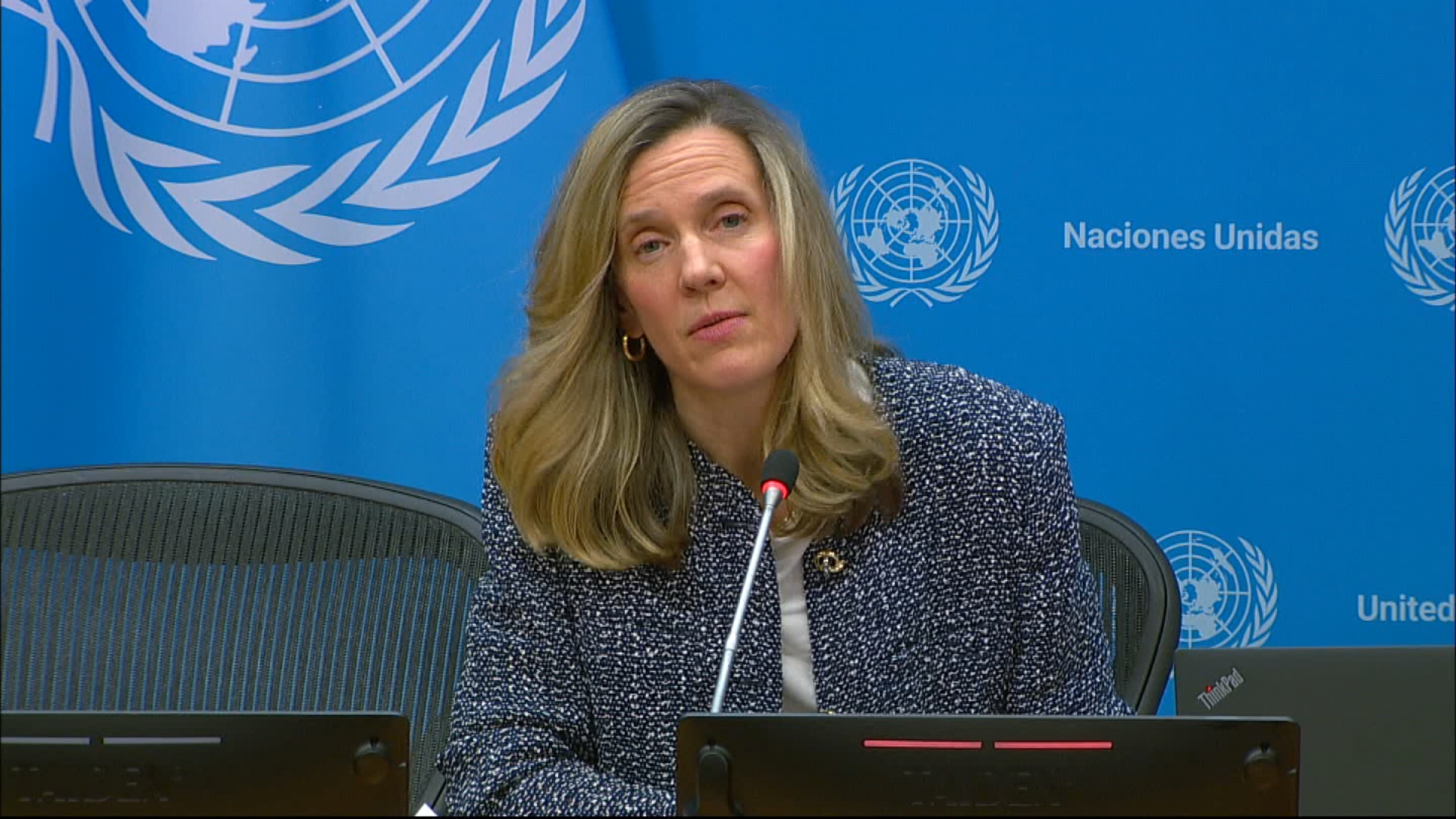
2. Wide shot, Head of the Independent Institution on Missing Persons in Syria Karla Quintana and interviewer
3. SOUNDBITE (English) Karla Quintana, Assistant Secretary-General, Head of the Independent Institution on Missing Persons in Syria (IIMP), United Nations:
“Our mandate is a very broad one. We are mandated to look for everyone, and when I say everyone, it's everyone missing in Syria, regardless of their nationality, their ethnicity, their religion, regardless when they went missing, and I think that's very important. We're looking for everyone that had gone missing in Syria and while fleeing Syria.”
4. Wide shot, Quintana and interviewer
5. SOUNDBITE (English) Karla Quintana, Assistant Secretary-General, Head of the Independent Institution on Missing Persons in Syria (IIMP), United Nations:
“We have opened several lines of inquiry to look for the people that went that forcefully disappeared by the former regime. That's one of the lines of inquiry. Second, we're looking also for missing children that went missing also in the former regime. We are looking into also the disappearances committed by Daesh. And we are also looking into missing migrants. We are also looking, of course, into disappearances that have occurred after December 8.”
6. Wide shot, Quintana and interviewer
7. SOUNDBITE (English) Karla Quintana, Assistant Secretary-General, Head of the Independent Institution on Missing Persons in Syria (IIMP), United Nations:
“Looking for the missing is a collective endeavour. No one can do this alone. We are talking about hundreds of thousands of people missing in Syria. When we have been in Syria, we have been able to see that everyone has someone missing in Syria or knows someone that went missing in Syria. So, this is something that every Syrian has in common, not only the will and the hope to rebuild their country, but also the hope to find their loved ones.”
8. Wide shot, Quintana and interviewer
9. SOUNDBITE (English) Karla Quintana, Assistant Secretary-General, Head of the Independent Institution on Missing Persons in Syria (IIMP), United Nations:
“One of the biggest challenges when looking for the missing is information. We need information, and in order to get information, we need to have the trust of the families, and we need to have access to official documentation. One of the most important works that we will be able to do in the context of our mandate is to put all this information together and to bring to the table all the stakeholders that have this information. It's not only necessary to have the information, but to make everyone share it.”
10. Wide shot, Quintana and interviewer
11. SOUNDBITE (English) Karla Quintana, Assistant Secretary-General, Head of the Independent Institution on Missing Persons in Syria (IIMP), United Nations:
“When looking for the missing time is of essence. The longer it takes us to start looking for them, the higher the possibilities to lose information. We need to talk to witnesses. We need talk to survivors. We need to have access to documentation. And that's why we have to do it as soon as possible. We had experiences all over the world if think of, for instance, Argentina or the Balkans or like many places, people like survivors and victims start dying. We don't want that.”
12. Wide shot, Quintana and interviewer
13. SOUNDBITE (English) Karla Quintana, Assistant Secretary-General, Head of the Independent Institution on Missing Persons in Syria (IIMP), United Nations:
“Of course, there were lots of hopes of finding many people alive after the fall of the regime. And we know of many cases of people that came back alive. We are still looking for people alive. As I was telling you, we work in the missing children file. We have information, credible information, and our lines of inquiry are taking us that way, that these children, maybe now young adults, are alive.”
14. Wide shot, Quintana and interviewer
15. SOUNDBITE (English) Karla Quintana, Assistant Secretary-General, Head of the Independent Institution on Missing Persons in Syria (IIMP), United Nations:
“What never stops to impress me is the strength of women. And Syrian women are impressive on how they have pushed to look for their loved ones within Syria and abroad, and how strong they are when facing the disappearance of a loved one.”
16. Wide shot, Quintana and interviewer
17. SOUNDBITE (Spanish) Karla Quintana, Assistant Secretary-General, Head of the Independent Institution on Missing Persons in Syria (IIMP), United Nations:
“In all parts of the world are particularly women who are looking for their sons, their husbands, their daughters, and their strength has succeeded in building institutions. It has succeeded in building laws and treaties. And it has managed to build answers for the search for missing persons.”
18. Wide shot, Quintana and interviewer
The Head of the Independent Institution on Missing Persons in Syria (IIMP), Karla Quintana, today (6 Oct) said, “looking for the missing is a collective endeavour,” and “this is something that every Syrian has in common, not only the will and the hope to rebuild their country, but also the hope to find their loved ones.”
In an interview with UN News, Quintana explained the IIMP’s mandate “is a very broad one,” as it is mandated to look for “everyone missing in Syria, regardless of their nationality, their ethnicity, their religion, regardless when they went missing.”
She said, “we have opened several lines of inquiry to look for the people that went that forcefully disappeared by the former regime,” and “we're looking also for missing children that went missing also in the former regime. We are looking into also the disappearances committed by Daesh. And we are also looking into missing migrants,” as well as into “disappearances that have occurred after December 8,” the day of the fall of the Assad regime.
Quintana said, “we are talking about hundreds of thousands of people missing in Syria. When we have been in Syria, we have been able to see that everyone has someone missing in Syria or knows someone that went missing in Syria. So, this is something that every Syrian has in common.”
One of the biggest challenges, she said, is “in order to get information, we need to have the trust of the families, and we need to have access to official documentation. One of the most important works that we will be able to do in the context of our mandate is to put all this information together and to bring to the table all the stakeholders that have this information. It's not only necessary to have the information, but to make everyone share it.”
The Head of the IIMP said, “when looking for the missing time is of essence. The longer it takes us to start looking for them, the higher the possibilities to lose information. We need to talk to witnesses. We need talk to survivors. We need to have access to documentation. And that's why we have to do it as soon as possible.”
She said, “we know of many cases of people that came back alive. We are still looking for people alive. As I was telling you, we work in the missing children file. We have information, credible information, and our lines of inquiry are taking us that way, that these children, maybe now young adults, are alive.”
Quintana said, “what never stops to impress me is the strength of women. And Syrian women are impressive on how they have pushed to look for their loved ones within Syria and abroad, and how strong they are when facing the disappearance of a loved one.”
Turning to her native Spanish, she said, “in all parts of the world are particularly women who are looking for their sons, their husbands, their daughters, and their strength has succeeded in building institutions. It has succeeded in building laws and treaties. And it has managed to build answers for the search for missing persons.”
Quintana is a Mexican human rights expert and legal scholar with extensive experience in international human rights and humanitarian law, transitional justice, and constitutional law.
The IIMP is a UN entity established by the General Assembly on 29 June 2023 in response to the urgent calls for action from family members of Syria’s many thousands of missing persons to determine their fate and whereabouts. The IIMP’s founding resolution mandates it to clarify the fate and whereabouts of all missing persons in Syria, and provide adequate support to victims, including survivors and the families of those missing.
This work must be carried out with the full and meaningful participation of victims, with sustained engagement with Syrian civil society including women’s organisations, and in close cooperation and complementarity with all relevant actors.
All missing persons in Syria fall under the mandate of the IIMP, regardless of their nationality, political affiliation, or the reasons for or timing of their going missing. The IIMP’s mandate is humanitarian and truth-seeking in nature, aiming to support families’ right to know the truth about what happened to their loved ones.