Media Home
 UN Web TV
 UN Audiovisual Library
 UN Photo
UNICEF / CHILDREN CLIMATE THREATS
Download
There is no media available to download.
Share
STORY: UNICEF / CHILDREN CLIMATE THREATS
TRT: 04:43
SOURCE: UNICEF
RESTRICTIONS: PLEASE CREDIT UNICEF ON SCREEN / EMBARGO UNTIL 00:01 GMT 16 JUNE 2026
LANGUAGE: NATS
DATELINE: FILE / CHECK SHOTLIST FOR DETAILS
16 OCTOBER 2025, BENTIU, UNITY STATE, SOUTH SUDAN
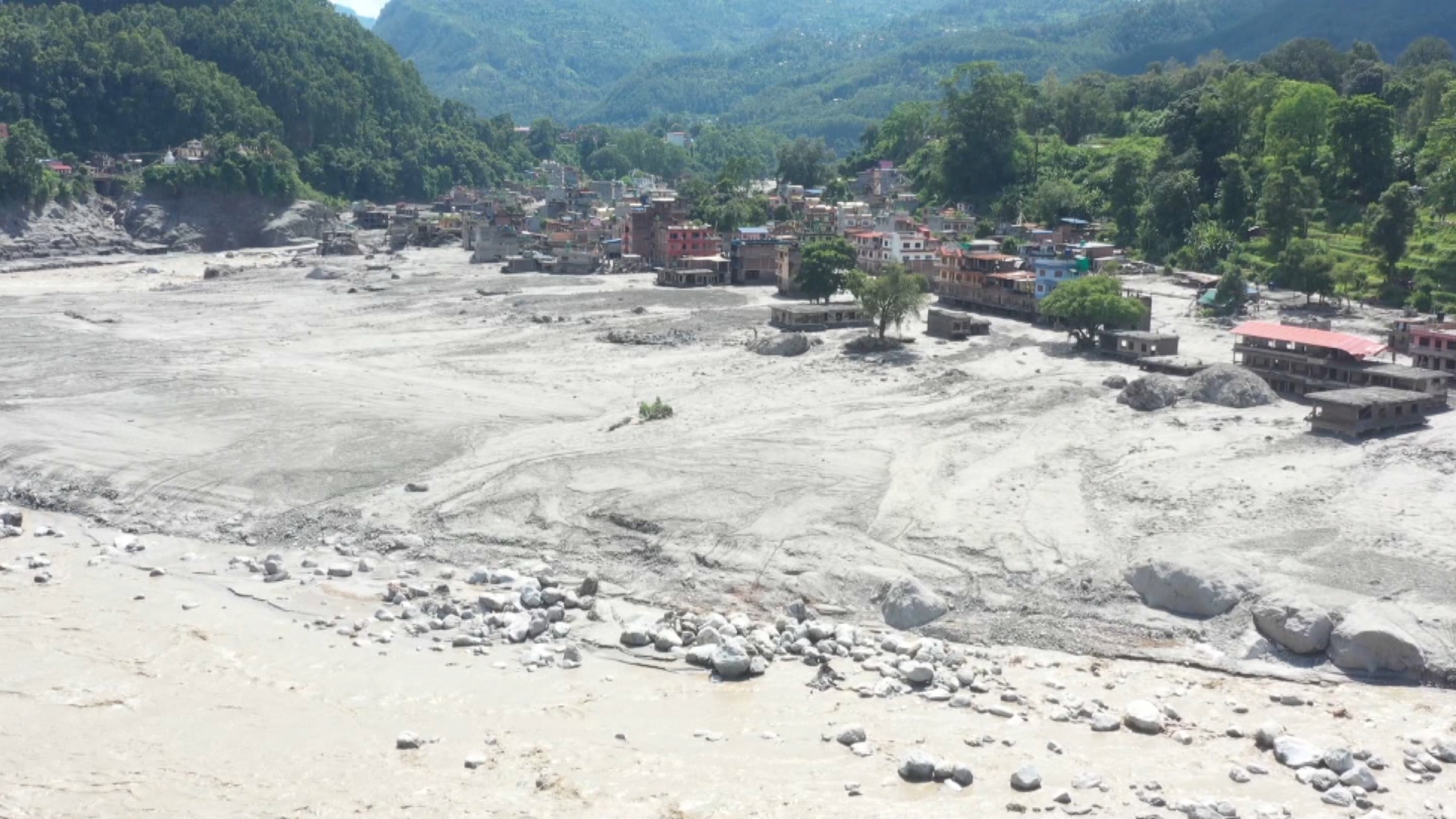
1 Drone shots, flooded areas and the river
2. Wid shot, Families, including women and children, gathering at a UNICEF-supported WASH station, filling water jerrycans
3. Close up, water jerrycans at a UNICEF-supported WASH station
4. Med shot, Families, including women and children, gathering at a UNICEF-supported WASH station, filling water jerrycans.
NOVEMBER 2024, ETHIOPIA
5. Wide shot, children in the drought and flood-prone areas of the Somali region walking to school
6. Wide shot, school in the drought and flood-prone areas of the Somali region
02 FEBRUARY 2024, ADRE, CHAD
7. Wide shot, Adre Camp
8. Med shot, children gathered around water point in the camp
JUNE 2025, ADRE, CHAD
9. Med shot, families filling jerrycans at UNICEF-supported WASH station
10. Med shot, families filling jerrycans at UNICEF-supported WASH station
MAY 2026, TAWILA, DARFUR, SUDAN
11. Close up, water running into a container at UNICEF-supported WASH station
12. Wide shot, women walking away from the water point with containers filled with water
29 OCTOBER 2025, GOSHEN AND SANTA CRUZ, ST. ELIZABETH, JAMAICA
13. Drone shots, destructions across sections of southwestern Jamaica were caused by Category 5 Hurricane Melissa, leaving several homes and communities destroyed
14. Various shots, damaged areas of Black River, Jamaica
25 – 28 NOVEMBER 2025, SANTIAGO DE CUBA, MUNICIPIO DE GUAMA, SANTIAGO DE CUBA MUNICIPIO RIO CAUTO, GRANMA, MUNICIPIO CAUTO CRISTO, GRANMA, CUBA
15. Wide shot, houses affected by hurricane Melissa
16. Wide shot, residents of the Boca Dos Ríos Community collecting and burning trash
17. Wide shot, façade of the Ciro Redondo School, affected by the hurricane
18. Wide shot, façade of the Ciro Redondo School, affected by the hurricane
19. Med shot, Adelaida Salazar Echavarría and Dayán Gómez Moreno conversing in the school courtyard with classmates
20. Med shot, Adelaida Salazar Echavarría and Dayán Gómez Moreno conversing in the school courtyard with classmates
21. Wide shot, teenager standing in front of the façade of the Ciro Redondo Secondary School, next to a sign reading "Potential Danger."
22. Med shot, Sunny Guidotti (UNICEF) conversing with a mother and two small children
23. Close up, mother holding a child, conversing with Sunny Guidotti (UNICEF)
24. Med shot, with two children, conversing with Sunny Guidotti (UNICEF)
24. Close up, equipment at water purification plant
25. Wide shot, UNICEF-supported water purification plant
26. Med shot, families arriving at water purification plant
27. Med shot, families filling water containers
28. Close up, child at water purification plant
30 NOVEMBER 2025 – 1 DECEMBER 2025, GAMPAHA, ATTANUGALU OYA AND UTHUWANKANDA, AMBALA KANDA, ARANAYAKE, KELANIYA – SRI LANKA
29. Med shot, District General Hospital Gampaha front entrance with the hospital name board partially submerged and the entire area visibly affected by heavy flooding
30. Med shot, District General Hospital Gampaha OPD and ground floor fully filled with floodwater, showing severe damage to the facility
31. Med shot, hospital beds and wheelchairs soaked, displaced, and damaged by floodwater inside the hospital
32. Med shot, child walking alone through floodwater
OCTOBER 2025, HA NOI, VIET NAM
33. Wide shot, flooding in Trung Gia commune, Soc Son district, Ha Noi in the aftermath of Typhoon Bualoi and Matmo
34. Wide shot, flooded road in Trung Gia commune, Soc Son district, Ha Noi
35. Wide shot, Ha Anh, 9 years old looks at floodwater outside her home in Song Cong hamlet, Trung Gia commune, Soc Son, Ha Noi city
36. Wide shot, Ha Anh, 9, and her sister Nguyễn Hà My, 16, wade through flood water
37. Med shot, Ha Anh, 9, and her sister Nguyễn Hà My, 16, wade through flood water
2 – 3 JUNE 2024, PULI KHUMRI & BURKA DISTRICT, BAGHLAN PROVINCE, AFGHANISTAN
38. Wide shot, Children show UNICEF staff infrastructure damaged by flash flooding
39. Med shot, Children show UNICEF staff infrastructure damaged by flash flooding
40. Med shot, damaged and destroyed homes and infrastructure
41. Med shot, children retrieving water at UNICEF-supported water trucking station
42. Med shot, children bringing water into their damaged homes
24 SEPTEMBER 2025, SAWKAI ZOR KALI CAMP, KUNAR PROVINCE, AFGHANISTAN
43. Wide shots, Sawkai Zor Kali Camp where families displaced by the earthquake have been living
44. Exterior shots, Sawkai Zor Kali Camp
45. Wide shot, Children walking into a Temporary Learning Space established after earthquakes
16. SOUNDBITE (Phasto) Sana, 11-year-old child at the Temporary Learning Space:
“Our school needs a water well so we can have drinking water. The school building is damaged and needs repair, and we also need toilets here.”
Nearly half of the world’s children – or 1.1 billion – are now exposed to at least three overlapping climate hazards, threatening their health, education, and survival, according to a new UNICEF report launched today. Almost every child in the world faces at least one climate hazard, while more than 4 million could face as many as six overlapping threats, the report warns.
The Children’s Climate Risk Report 2026 uses the latest available data to map children’s exposure to the eight most frequent climate threats, including coastal floods, droughts, extreme heat, fires, heatwaves, riverine floods, sand and dust storms, and tropical storms. For the first time, the report reveals exactly where – and how intense – multiple and overlapping climate threats are affecting children and the essential social services they rely on, and how governments can take concrete actions to respond.
“The lives of children continue to be upended by the impact of heatwaves, wildfires, droughts, and floods,” said UNICEF Executive Director Catherine Russell. “Half of the world’s children are now living with at least three overlapping climate threats shaping their daily lives.”
Drought, extreme heat, and heatwaves are the most widespread combination of climate hazards, with over 296 million children living in areas exposed to all three conditions, according to the findings. The second most common combination – drought, extreme heat, and tropical storms – leaves more than 115 million children worldwide exposed to these overlapping threats.
In the Sahel region of Africa, one of the hardest hit, more than 4 million children face the triple threat of heatwaves, extreme heat, and sand and dust storms, while in countries across Asia, for example Bangladesh, Myanmar, and Pakistan, children are exposed to more climate hazards at once and at a higher intensity than anywhere else in the world.
High-income countries are not immune to overlapping climate shocks. In Italy, for example, more than 6 million children are exposed to prolonged heatwaves and drought, the data show. Yet the country illustrates how investment in climate change adaptation can mitigate some of the risks children face, while highlighting the need for further action as the climate crisis intensifies.
In addition to the eight most frequent climate hazards, the report analyses children’s exposure to air pollution and malaria; two risks that are highly sensitive to the effects of climate change. Data show that air pollution affects nearly every child globally, while 1 billion children are exposed to malaria, adding another layer of danger for children already facing multiple climate hazards.
The report also presents a framework to analyse the different types of risks children face, based on their exposure to climate shocks and their vulnerability, determined by access to essential social services such as healthcare, clean water, education, and more. The approach can be applied in different ways, from looking at risks related to individual or multiple climate hazards to examining risks across sectors, revealing the threats children face across different contexts.
For example, considering multiple hazards and vulnerabilities together, children in landlocked* and fragile* countries such as the Central African Republic or Chad face overlapping climate hazards while also lacking access to basic services, making it much harder for them to cope and recover. Meanwhile, all children in 24 Small Island Developing States*, including from Haiti to Vanuatu, are exposed to tropical storms, which can disrupt entire islands at once and overwhelm essential services, the report notes.
Without urgent efforts to reduce greenhouse gas emissions, climate hazards will grow more frequent and severe, placing even greater strain on government budgets and systems, threatening children's well-being, the report warns.
To protect children’s rights from climate threats and adapt to growing environmental changes, UNICEF is calling on governments, businesses and relevant actors to:
Reduce emissions and take ambitious action to fulfil existing international commitments, grounded in the best available science, including the urgent phasing-out of fossil fuels and a just transition towards renewable energy.
Protect children through inclusive climate adaptation, disaster risk reduction, and responses to loss and damage that prioritise the resilience of social services, ensuring that children and child-critical services are included in national adaptation plans and sector strategies, disaster risk governance, preparedness and response plans. This includes, for example, developing safe and green learning facilities and climate resilient health care facilities, securing children’s food security, making multi hazard early warning systems effective for children and accessible to the services they rely on, and strengthening the efficiency of water and sanitation services, as well as shock responsive social protection systems.
Empower children and young people to meaningfully participate in climate action by investing in climate education, knowledge and skills, and by strengthening the capacity of decision makers and experts to respect children’s rights to be heard, freedom of expression, and participation in decisions that affect their lives.
“This analysis can help governments and decision-makers plan better and invest more effectively in resilient services,” said Russell. “When we strengthen health and education systems, and improve infrastructure with children in mind, we protect them from today’s climate threats and help secure their future.”