Media Home
 UN Web TV
 UN Audiovisual Library
 UN Photo
GENEVA / SUDAN EL OBEID ALERT
Download
There is no media available to download.
Share
STORY: GENEVA / SUDAN EL OBEID ALERT
TRT: 02:10
SOURCE: UNTV CH
RESTRICTIONS: NONE
LANGUAGE: ENGLISH / NATS
DATELINE: 17 JULY 2026 GENEVA, SWITZERLAND
FILE - GENEVA, SWITZERLAND
1. Aerial shot, exterior, Palais des Nations
17 JULY 2026 GENEVA, SWITZERLAND
2. Wide shot, press room
3. SOUNDBITE (English) Abdallah Alwardat, Sudan Country Director, World Frood Programme (WFP): “WFP has been providing food assistance to over 100,000 people in these camps inside the city. But as I said, there are more, many IDPs in that city. And they need urgent assistance.”
4. Wide shot, participants, journalists
5. SOUNDBITE (English) Abdallah Alwardat, Sudan Country Director, World Frood Programme (WFP):
“I met one old woman at the distribution centre, where she had to come to receive her food. And she has been in that camp for a year now. And when I ask, you know, ‘Do you have any other source of income?’ She just said, ‘It's only what WFP is giving me and it's not enough.’”
6. Med shot, podium
7. SOUNDBITE (English) Abdallah Alwardat, Sudan Country Director, World Frood Programme (WFP):
“All what we need to do is really now to plan for the scale up beyond the 100,000 people that we have been supporting. In addition to that, by the way, we have been also providing nutrition support to 17,000 children in the camps.”
8. Med shot, participants
9. SOUNDBITE (English) Abdallah Alwardat, Sudan Country Director, World Frood Programme (WFP):
“We are providing even not the full food ration to the people, but even that reduced food ration is being shared by the recipients with other families, because they know that they don't have any other source of income.”
10. Wide shot, participants
11. SOUNDBITE (English) Abdallah Alwardat, Sudan Country Director, World Frood Programme (WFP):
“This comes at a very difficult time where we have almost 20 million people in Sudan, they are classified as acute food insecure. WFP has been helping between three to five million people who are classified again in emergency or catastrophic emergency or food security level.”
12. Med shot, journalists
13. SOUNDBITE (English) Abdallah Alwardat, Sudan Country Director, World Frood Programme (WFP):
“We want to do more, for sure. But of course, we are also stretched on our resources. But definitely, we have the access. We can deliver the food, and we can be there, and we can work with partners on the ground. Resources are limiting us to do that one.”
14. Med shot, podium
15. Med shot, journalist
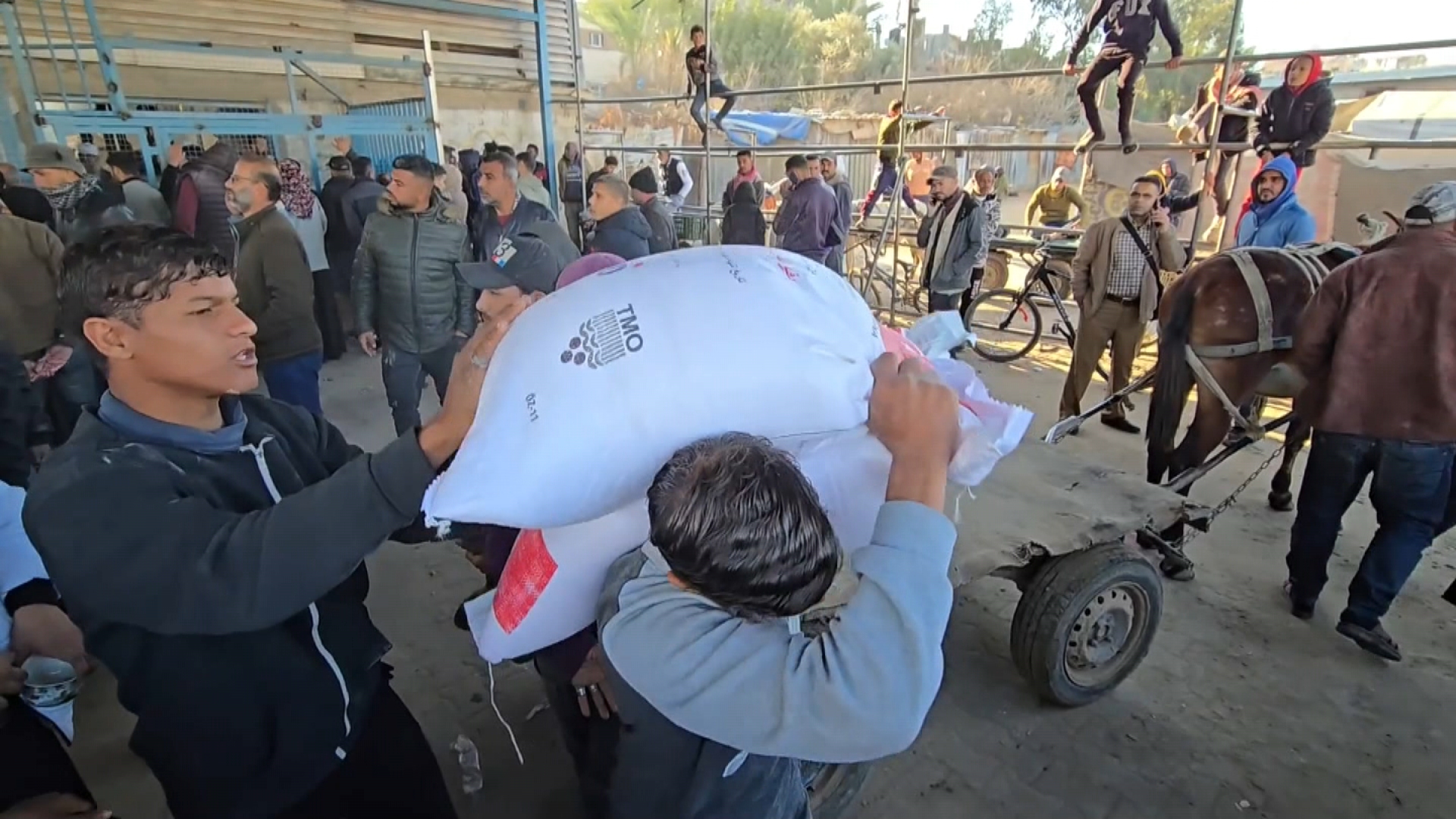
World Food Programme (WFP) Sudan Country Director, Abdallah Alwardat today (17 Jul) said, “we are providing even not the full food ration to the people, but even that reduced food ration is being shared by the recipients with other families, because they know that they don't have any other source of income.”
“WFP has been providing food assistance to over 100,000 people in these camps inside the city”, but there are many more displaced individuals sheltering in El Obeid “and they need urgent assistance”, the WFP official said.
“What we need to do is really now to plan for the scale-up beyond the 100,000 people that we have been supporting,” Alwardat stressed, adding that the agency also provides nutrition support to 17,000 children caught up in the crisis and living in camps.
The veteran humanitarian described how one elderly woman he met was entirely reliant on the UN agency’s food rations, although this was only part of her problems: “She was waiting to receive the food and she was just thinking how to carry the food back to her tent. She wanted to move it on this little tuk-tuk…So, she was going around to look at other families, if they can share the cost of transferring the food back to the tents.”
It is more than three years since Sudan’s rival militaries embarked on a brutal war that followed the collapse of the country’s transition to civilian rule, after the overthrow of longtime former President Omar al-Bashir.
The Sudanese Armed Forces (SAF) continues to battle former allies the Rapid Support Forces (RSF) militia for control of the vast country, where more than 14 million people have been uprooted and both sides have been linked to grave rights violations.
Millions have fled across the border in what has become the world’s largest displacement crisis and one of its biggest humanitarian disasters. Almost 20 million people in Sudan are now classified as acutely food insecure. WFP helps between three and five million of the most vulnerable, who face emergency or catastrophic food insecurity.
“We want to do more, for sure. But of course, we are also stretched on our resources. But definitely, we have the access. We can deliver the food, and we can be there, and we can work with partners on the ground. Resources are limiting us to do that one.”
WFP’s Alwardat said that on the five-hour drive from Kosti to El Obeid some 350 to 400 kilometres away, he did not see any military operations. The veteran humanitarian also noted how few commercial trucks or supplies were heading towards the city, where food, water and fuel remain in very short supply. WFP’s mission to the North Kordofan capital city helped to alleviate fuel shortages which have prevented aid partners from delivering food to displaced people in recent days.
“As long as we have the necessary financial support, I think we have the means and the capacity to sustain that lifeline,” Alwardat insisted. “And we have been delivering the food; the last two or three weeks, we have managed to deliver the food and the pre-positioned food for the next two months. And we started the distribution already for July, and we are ready to do for August.”