Media Home
 UN Web TV
 UN Audiovisual Library
 UN Photo
UN / WHD FLETCHER HUMANITARIAN PRESSER
Download
There is no media available to download.
Share
STORY: UN / WHD FLETCHER HUMANITARIAN PRESSER
TRT: 03:36
SOURCE: UNIFEED
RESTRICTIONS: NONE
LANGUAGES: ENGLISH / NATS
DATELINE: 19 AUGUST 2026, NEW YORK CITY
1. Wide shot, UN flag being lowered to half-mast, UN Headquarters
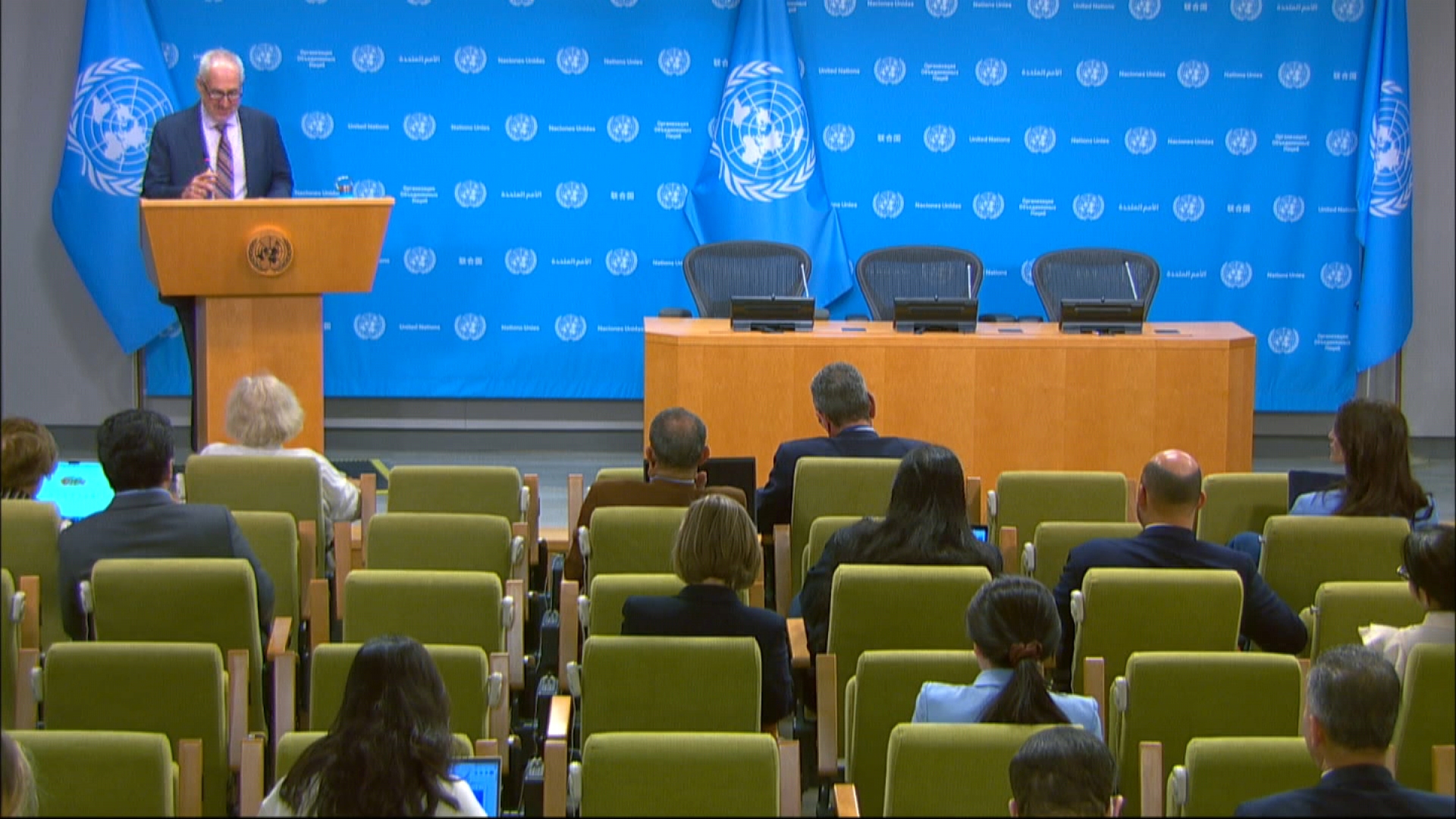
2. Wide shot, speakers, journalists, press room
3. SOUNDBITE (English) Tom Fletcher, Under-Secretary-General for Humanitarian Affairs and Emergency Relief Coordinator, United Nations:
“I've been in Kherson for the last two days, which is a real epicenter at the moment. It's saturated by use of drones against civilian areas. It's become one of the places I'm afraid where you get to really understand this dystopian reality that lies ahead potentially for many of us but is an existence day to day for people here and in so many of the crisis areas in which we work, from Somalia to Sudan to Gaza to Lebanon.”
4. Wide shot, speakers, journalists, press room
5. SOUNDBITE (English) Tom Fletcher, Under-Secretary-General for Humanitarian Affairs and Emergency Relief Coordinator, United Nations:
“This day was born from tragedy-the Canal hotel bombing 23 years ago-but those tragedies are now continuing day to day, and we're seeing them increasingly powered by a chilling alliance between Technological ingenuity and modern warfare, and the victims are civilians and they are humanitarians.”
6. Wide shot, speakers, journalists, press room
7. SOUNDBITE (English) Tom Fletcher, Under-Secretary-General for Humanitarian Affairs and Emergency Relief Coordinator, United Nations:
“The terrifying thing here is that the operator of that drone knows exactly what they're doing. They fly around the person selling fruit and vegetables in the market, or the humanitarian delivering food, they have a good look at them before they take the shot that will kill or maim them for life.”
8. Wide shot, speakers, journalists, press room
9. SOUNDBITE (English) Tom Fletcher, Under-Secretary-General for Humanitarian Affairs and Emergency Relief Coordinator, United Nations:
“From Sudan to Colombia to Gaza to Lebanon, these cheap armed drones are extending the reach of war and allowing people to kill at greater distance. 1000 civilians killed in Sudan in the first five months of the year. These numbers aren't static; they are going up, including the numbers of kids killed. So, we need states to uphold the law, and we need the companies who are manufacturing and supplying these weapons to understand international humanitarian law, to understand how these weapons are being used, and to understand their obligations and responsibilities.”
10. Wide shot, speakers, journalists, press room
11. SOUNDBITE (English) Tom Fletcher, Under-Secretary-General for Humanitarian Affairs and Emergency Relief Coordinator, United Nations:
“Concern from Member States is not enough. We need action right now. And of course, drones can help us in humanitarian work. They can deliver vaccines to communities that we can't otherwise reach. I was in Venezuela a few weeks ago in the aftermath of the earthquake and saw how we're using drones to locate survivors amid the rubble. So, they do have positive uses, but so much of what we're seeing is inhumane and reckless.”
12. Wide shot, speakers, journalists, press room
13. SOUNDBITE (English) Tom Fletcher, Under-Secretary-General for Humanitarian Affairs and Emergency Relief Coordinator, United Nations:
“We need to ensure that if the global economy is being put as it is on a war footing, that we are also training these weapons in the right way, and that we're also ensuring that technology does not outpace humanity, and that technology does not outpace accountability.”
14. Wide shot, speakers, journalists, press room
15. SOUNDBITE (English) Tom Fletcher, Under-Secretary-General for Humanitarian Affairs and Emergency Relief Coordinator, United Nations:
“An attack on any one of us in our humanitarian movement is an attack on all of us.”
16. Wide shot, speakers, journalists, press room
UN Emergency Relief Coordinator Tom Fletcher said, “An attack on any one of us in our humanitarian movement is an attack on all of us.”
Addressing the press today (19 Aug) from Kherson, Ukraine, on the occasion of World Humanitarian Day, Fletcher said, “This day was born from tragedy-the Canal hotel bombing 23 years ago-but those tragedies are now continuing day to day, and we're seeing them increasingly powered by a chilling alliance between Technological ingenuity and modern warfare, and the victims are civilians and they are humanitarians.”
According to the UN Office for the Coordination of Humanitarian Affairs (OCHA), 2025 set another grim record for violence against aid workers, with 907 colleagues killed, injured or kidnapped.
While the death toll decreased slightly to 350 last year, the overall level of violence did not ease: 322 aid workers survived attacks that left them injured while 235 were kidnapped, according to Humanitarian Outcomes’ Aid Worker Security Database.
With 186 humanitarians killed, Gaza remained the deadliest context for the third-year running, followed by Sudan with 71 killed.
So far in 2026, 82 aid workers have been killed, 97 injured and 39 kidnapped across the world.
Of particular concern is the proliferation of cheap and adaptable armed drones that are putting lethal power into ever more hands and sending more explosive weapons into towns and cities.
In Sudan, armed drones caused 80 percent of civilian deaths in the first four months of 2026, hitting markets and health facilities.
In Ukraine, drones killed 80 civilians in April this year alone, while in the Russian Federation, civilians have been killed and civilian infrastructure damaged because of drone attacks.
In Colombia, attacks using weaponized drones quadrupled between 2024 and 2025.
Humanitarians are increasingly in the crosshairs of armed drones.
In March this year, an aid worker was killed in a drone strike on a residential building in the Democratic Republic of the Congo.
In just one week in May, four humanitarian convoys were hit in Ukraine.
"From Sudan to Colombia to Gaza to Lebanon, these cheap armed drones are extending the reach of war and allowing people to kill at greater distance. 1000 civilians killed in Sudan in the first five months of the year. These numbers aren't static; they are going up, including the numbers of kids killed. So, we need States to uphold the law, and we need the companies who are manufacturing and supplying these weapons to understand international humanitarian law, to understand how these weapons are being used, and to understand their obligations and responsibilities,” Fletcher said.
He continued, “We need to ensure that if the global economy is being put as it is on a war footing, that we are also training these weapons in the right way, and that we're also ensuring that technology does not outpace humanity, and that technology does not outpace accountability.”
This year’s global campaign, Act for Humanity, spotlights aid workers who have been killed, through interviews with their families.
Behind every statistic is a family whose world has been torn apart.