Media Home
 UN Web TV
 UN Audiovisual Library
 UN Photo
UN / GUTERRES EBOLA OUTBREAK
Download
There is no media available to download.
Share
STORY: UN / GUTERRES EBOLA OUTBREAK
TRT: 03:18
SOURCE: UNIFEED
RESTRICTIONS: NONE
LANGUAGES: ENGLISH / NATS
DATELINE: 27 AUGUST 2026, NEW YORK CITY
RECENT - NEW YORK CITY
1. Wide shot, exterior United Nations Headquarters
27 AUGUST 2026, NEW YORK CITY
2. Wide shot, Secretary-General António Guterres walks up to stakeout podium
3. SOUNDBITE (English) António Guterres, Secretary-General, United Nations:
“The outbreak is the fastest-growing Ebola epidemic on record. It is growing faster and wider than the response to contain it, but it can be stopped. We know how to contain Ebola – how to interrupt transmission – and how to save lives. But we must also overcome another virus – the virus of indifference.”
4. Wide shot, Guterres at the podium
5. SOUNDBITE (English) António Guterres, Secretary-General, United Nations:
“We are facing a public health emergency in one of the world’s most fragile settings. For example, three decades of conflict in Ituri province alone have displaced one million people and severely weakened access to food, healthcare and other basic services. Across the region, more than 12 million people need humanitarian assistance and protection. And meanwhile, health systems are overstretched. Infrastructure is weak. Entire communities remain difficult to reach.”
6. Wide shot, Guterres at the podium
7. SOUNDBITE (English) António Guterres, Secretary-General, United Nations:
“We have appointed a UN Senior Ebola Coordinator – and are aligning behind 5 priorities. First, community engagement is being expanded to build trust and counter fear and misinformation. Second, surveillance systems are being strengthened to identify and isolate cases more rapidly. Third, treatment and care capacity are being increased. Fourth, safe and dignified burial operations are being expanded. And fifth, we are working to stop Ebola from spreading further.”
8. Wide shot, Guterres at the podium
9. SOUNDBITE (English) António Guterres, Secretary-General, United Nations:
“Every gap in funding and operational support makes the Ebola response more challenging. We are doing everything possible to invest in that response – including through more than 80 million US dollars from UN pooled funds and support from partners. We have put forward a detailed 2.13 billion humanitarian needs and response plan. This is 48 percent funded – thanks in large measure to a major contribution by the United States. But current resources will last weeks – not months. Without additional funding, vital operations will run out of money just when they need to expand.”
10. Wide shot, Guterres at the podium
11. SOUNDBITE (English) António Guterres, Secretary-General, United Nations:
“The world still has an opportunity to get ahead of this crisis. But time is not on our side. The Ebola outbreak deserves far greater attention than it is receiving today. The communities affected deserve far greater assistance. And the response deserves far greater support. The world has the knowledge, the means, and the resources to stop this outbreak. It is time to summon the collective determination to act before the cost becomes more deadly, more difficult, and more expensive.”
12. Pan right, Guterres walks away
Secretary-General António Guterres today (27 Aug) told reporters in New York that the Ebola epidemic in the Democratic Republic of the Congo (DRC) “is growing faster and wider than the response to contain it,” and added that in order to stop it, “we must also overcome another virus – the virus of indifference.”
As of August 25th, 5,713 cases have been confirmed, claiming 2,744 lives, the largest Ebola outbreak in the history of the DRC. About 500 new cases are being reported every week
Guterres said, “we are facing a public health emergency in one of the world’s most fragile settings,” noting that “three decades of conflict in Ituri province alone have displaced one million people and severely weakened access to food, healthcare and other basic services.”
Across the region, he said, “more than 12 million people need humanitarian assistance and protection. And meanwhile, health systems are overstretched. Infrastructure is weak. Entire communities remain difficult to reach.”
The Secretary-General outlined 5 priorities, “first, community engagement is being expanded to build trust and counter fear and misinformation. Second, surveillance systems are being strengthened to identify and isolate cases more rapidly. Third, treatment and care capacity are being increased. Fourth, safe and dignified burial operations are being expanded. And fifth, we are working to stop Ebola from spreading further.”
He said, “every gap in funding and operational support makes the Ebola response more challenging” and noted a contribution of “more than 80 million US dollars from UN pooled funds and support from partners.”
The 2.13 billion humanitarian needs and response plan is currently 48 percent funded.
Guterres said, “current resources will last weeks – not months,” and without additional funding, “vital operations will run out of money just when they need to expand.”
To conclude, he said, “the world still has an opportunity to get ahead of this crisis. But time is not on our side. The Ebola outbreak deserves far greater attention than it is receiving today. The communities affected deserve far greater assistance. And the response deserves far greater support. The world has the knowledge, the means, and the resources to stop this outbreak. It is time to summon the collective determination to act before the cost becomes more deadly, more difficult, and more expensive.”
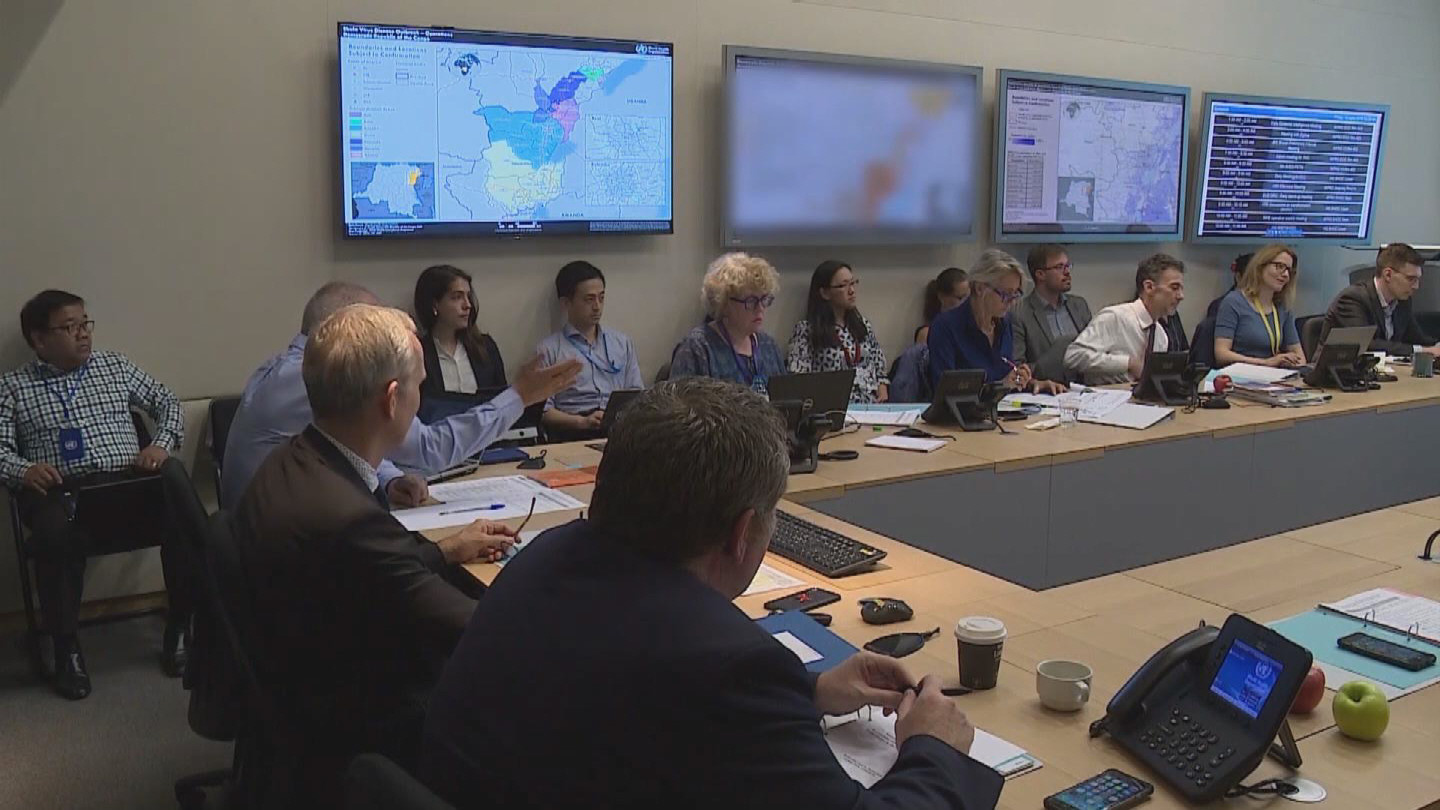
The World Health Organization (WHO) today welcomed the end of the Ebola outbreak due to Bundibugyo species in neighbouring Uganda. This follows 42 consecutive days without a new confirmed case since the country’s last patient, an imported case, was discharged from care on 16 July 2026.