Media Home
 UN Web TV
 UN Audiovisual Library
 UN Photo
GENEVA / NEPAL UNOPS INTERVIEW
Download
There is no media available to download.
Share
STORY: GENEVA / NEPAL UNOPS INTERVIEW
TRT: 06:23
SOURCE: UNTV CH
RESTRICTIONS: PLEASE CREDIT UNOPS FOOTAGE ON SCREEN
LANGUAGES: ENGLISH / NATS
DATELINE: SEE SHOT LIST
CREDIT UNOPS - 02 SEPTEMBER 2026, NUWAKOT DISTRICT, NEPAL
1. Wide shot, destruction
11 SEPTEMBER 2026, GENEVA, SWITZERLAND
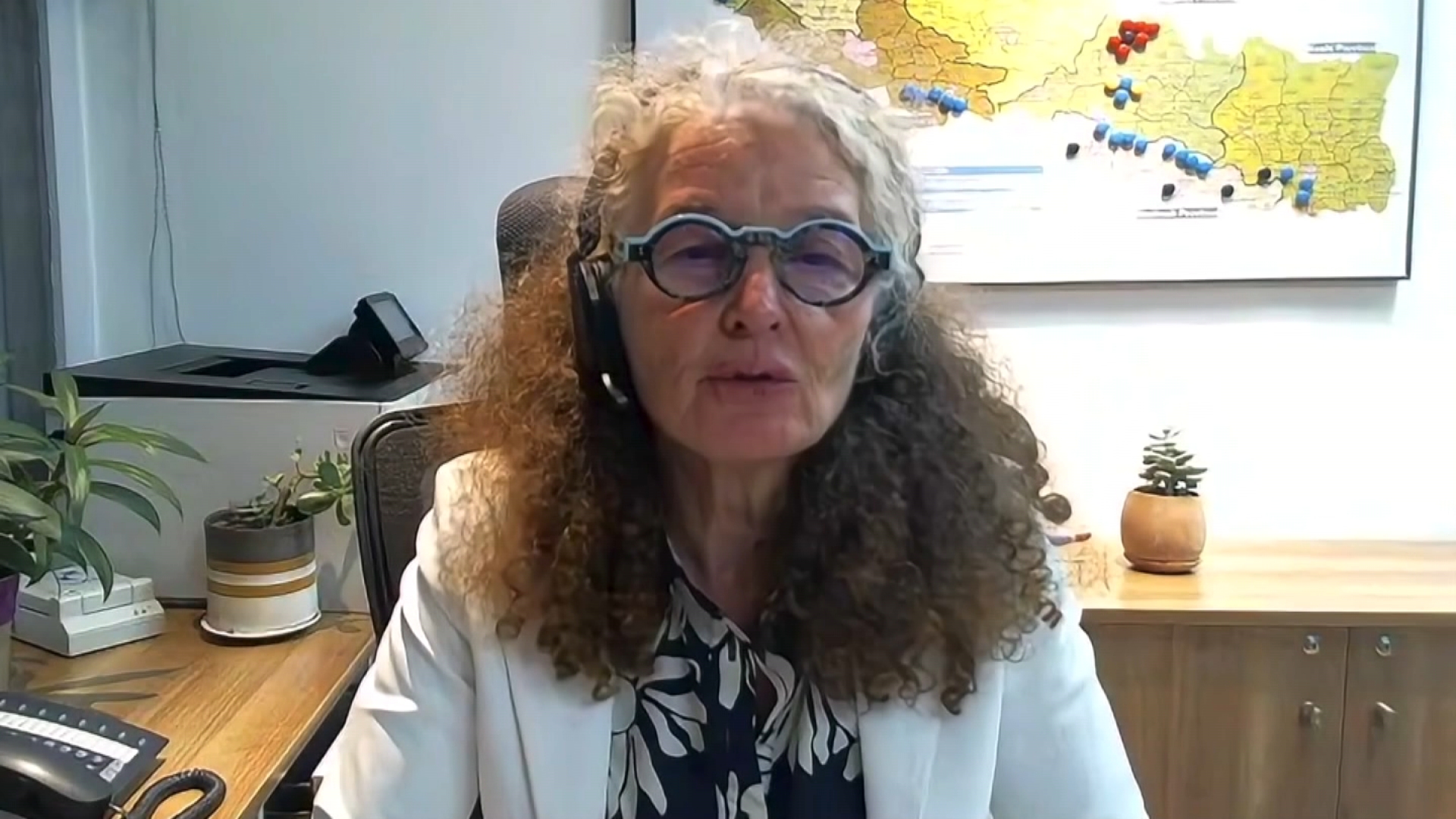
2. SOUNDBITE (English) Sara Netzer, Regional Director for Asia Pacific, UNOPS:
“I'm back in Kathmandu today, but our teams remain out in the field, moving toward Rasuwa. What they have reported to me today, as they moved further on into the more affected and remote areas, is that these communities remain very much cut off, very dependent on our colleagues at the World Food Programme continuing food assistance by helicopter. There's also other non-food item assistance coming in. It is really a scene of total devastation in these areas. There are hardly any buildings standing, whereas before, maybe in an earthquake, you might have, you know, one building here that's a little bit damaged, and this one's still standing, and this one maybe needs significant repair. There's nothing there. Everything is destroyed; the rubble is five to eight metres.”
CREDIT UNOPS - 01-08 SEPTEMBER 2026, NUWAKOT DISTRICT, NEPAL
3. Various shots, destruction
11 SEPTEMBER 2026, GENEVA, SWITZERLAND
4. SOUNDBITE (English) Sara Netzer, Regional Director for Asia Pacific, UNOPS:
“We don't actually know what's in the rubble, so there needs to be some caution in removing the rubble. And then we also need to understand what can be built and where, as the river has changed its course. Where maybe the river was smaller in some places and larger in other areas, it may have changed. We have to rethink where bridges go, what type of bridges go, and where people can actually live and potentially be resettled in the future.”
CREDIT UNOPS - 01-08 SEPTEMBER 2026, NUWAKOT DISTRICT, NEPAL
5. Various shots, destruction
11 SEPTEMBER 2026, GENEVA, SWITZERLAND
6. SOUNDBITE (English) Sara Netzer, Regional Director for Asia Pacific, UNOPS:
“I think for any family member, a horrific situation. Many are still waiting to hear from loved ones. There's still signboards up with pictures of people's loved ones, and these are people from all ages, from children to the elderly. Many were swept away. Unfortunately, many were swept away in front of family members' eyes. We spoke with one community member who has small children, and he saw his wife swept away. They know that she's… that she's deceased now, but they have no body to move forward, for closure, for burial. He said that he's lucky, at least he knows. There's many that don't know and are still holding on to that hope that their loved one got washed down the river and has climbed out somewhere and is trying to make their way back to them, and, and, and sadly, I think, that won't be the case for many families that remain waiting.”
CREDIT UNOPS - 01 SEPTEMBER 2026, NUWAKOT DISTRICT, NEPAL
7. Wide shot, helicopter
11 SEPTEMBER 2026, GENEVA, SWITZERLAND
8. SOUNDBITE (English) Sara Netzer, Regional Director for Asia Pacific, UNOPS:
“I was fortunate to meet with our colleagues at WFP, the World Food Programme, earlier this week. The drones are working to deliver food assistance to remote areas. WFP also has helicopters taking off almost around the clock, delivering assistance to those remote areas. Also, UNOPS has supported the World Health Organization in delivering water treatment and water purification to some of these facilities where people are seeking shelter after losing everything.”
CREDIT UNOPS - 01 SEPTEMBER 2026, NUWAKOT DISTRICT, NEPAL
9. Wide shot, destruction
11 SEPTEMBER 2026, GENEVA, SWITZERLAND
10. SOUNDBITE (English) Sara Netzer, Regional Director for Asia Pacific, UNOPS:
“Right now, people… some people are sheltering in schools, but the government of Nepal is working to establish temporary shelters. The government of Nepal is also providing resources for families that would like to seek temporary accommodation, so like renting accommodation. Rebuilding, I think it will take some time for the government of Nepal. They're working on… They've just finished their rapid disaster assessment, and they're also going to, with UN colleagues and other colleagues, commence a PDNA, a post-disaster needs assessment, which will help the government of Nepal make those plans for where resettlement can happen. Unfortunately, it won't be tomorrow, and I know many families wish that would be the case.”
CREDIT UNOPS - 02 SEPTEMBER 2026, NUWAKOT DISTRICT, NEPAL
11. Various shots, UNOPS staffers assessing the damage
11 SEPTEMBER 2026, GENEVA, SWITZERLAND
12. SOUNDBITE (English) Sara Netzer, Regional Director for Asia Pacific, UNOPS:
“It's heartbreaking. We have had colleagues visit some of the facilities where children are waiting for their parents, where they're unaccompanied. And our UN colleagues and the protection cluster are working very closely to ensure that the children are receiving everything they need, as well as the mental health, the psychosocial support. This is also why the government of Nepal is really prioritizing getting the schools reopened, so that children can return to, as much as possible, some sense of normalcy and have a safe space as well.”
01-08 SEPTEMBER 2026, NUWAKOT DISTRICT, NEPAL
13. Wide shot, general view of the neighborhood
“There's nothing there. Everything is destroyed; the rubble is five to eight metres,” a senior UN official said about the situation in Nepal.
Speaking via video from Kathmandu today (11 Sep), Sara Netzer, Regional Director for Asia Pacific at the United Nations Office for Project Services (UNOPS), said teams remained in flood-hit northern Nepal, moving toward Rasuwa district. There, communities “remain very much cut off” and depend on World Food Programme (WFP) helicopter food deliveries.
Glacier melt triggered devastating floods in northern Nepal on 26 August, affecting 84,000 people and causing widespread damage to homes, roads and essential services. More than 1,200 people have died and over 5,000 remain missing. The UN and its partners have launched a 49.6 million dollars appeal to provide lifesaving assistance.
“It is really a scene of total devastation in these areas. There are hardly any buildings standing,” the UNOPS official said.
She said recovery would be complicated by the changing landscape, as the river has shifted its course in places. “We don't actually know what's in the rubble, so there needs to be some caution in removing the rubble,” Netzer said. “We have to rethink where bridges go, what type of bridges go, and where people can actually live and potentially be resettled in the future.”
Many families are still waiting for news of missing relatives, and signboards with their pictures remain posted. “Unfortunately, many were swept away in front of family members' eyes,” the regional director said. “We spoke with one community member who has small children, and he saw his wife swept away.”
The man told UNOPS staff he was “lucky, at least he knows,” Netzer said. Others still hope their loved ones survived the floodwaters. “Sadly, I think, that won't be the case for many families that remain waiting,” she said.
WFP is using drones and helicopters “taking off almost around the clock” to reach remote areas. UNOPS has supported the World Health Organization (WHO) in delivering water treatment and purification supplies to sites where displaced people are sheltering.
Some people are sheltering in schools while the Government of Nepal works to establish temporary shelters and supports families seeking rented accommodation. Authorities have completed a rapid disaster assessment. With UN and other partners, they will next begin a post-disaster needs assessment (PDNA) to guide resettlement plans.
“Unfortunately, it won't be tomorrow, and I know many families wish that would be the case,” Netzer said.
Children waiting for their parents at facilities for unaccompanied minors are a particular concern. “It's heartbreaking,” the UNOPS official said. Partners and the protection cluster are providing the children with mental health and psychosocial support, she said. The government is also prioritizing reopening schools so children can “return to, as much as possible, some sense of normalcy and have a safe space as well.”