Media Home
 UN Web TV
 UN Audiovisual Library
 UN Photo
UN / SOUTH-SOUTH COOPERATION
Download
There is no media available to download.
Share
STORY: UN / SOUTH SOUTH COOPERATION
TRT: 02:39
SOURCE: UNIFEED
RESTRICTIONS: NONE
LANGUAGES: ENGLISH / NATS
DATELINE: 11 SEPTEMBER 2026, NEW YORK CITY
FILE - NEW YORK CITY
1. Wide shot, UN Headquarters
11 SEPTEMBER 2026, NEW YORK CITY
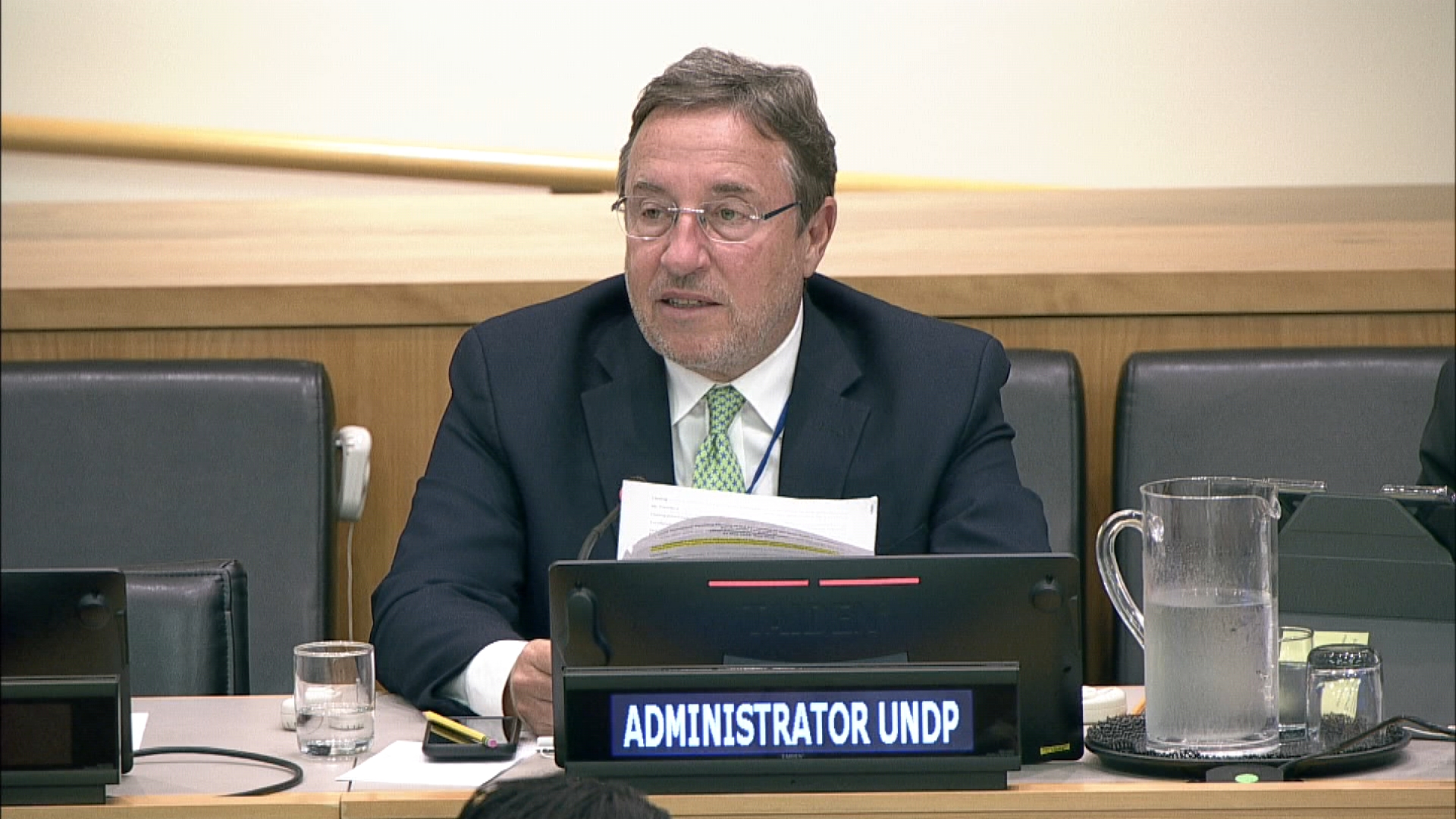
2. Wide shot, conference room
3. SOUNDBITE (English) Dima Al-Khatib, Director, Office for South-South Cooperation, United Nations:
“In an era marked by complex global challenges, the Global South continues to demonstrate remarkable resilience. Solidarity is no longer just a moral imperative; it is the practical foundation for our shared future.”
5. Wide shot, conference room
6. SOUNDBITE (English) Dima Al-Khatib, Director, Office for South-South Cooperation, United Nations:
“Many countries are contending simultaneously with fiscal constraints, climate shocks, the digital divide, and persistent inequality. These pressures make cooperation across the Global South – and engagement with triangular partners – more critical, practical, and consequential.”
7. Wide shot, conference room
8. SOUNDBITE (English) Amar Bendjama, Permanent Representative to the United Nations, Algeria / President, United Nations Economic and Social Council (ECOSOC):
“South-South cooperation rests on a simple truth: Countries have much to learn from one another. Let us strengthen these connections stronger. Let us scale what really works. – and let us deliver tangible, tangible progress for people and for the planet.”
9. Wide shot, conference room
10. SOUNDBITE (English) Omar Hilale, Permanent Representative to the United Nations, Kingdom of Morocco / President, 22nd Session of High-level Committee on South-South Cooperation:
“This year observation reminds us that solidarity is not an abstract precept: it is a n operational necessity; that national countries are confronting sobering realities. Most Sustainable Development Goals are not on track, and in many areas, progress has stalled or reversed. Yet, it is precisely in this context that South-South and Triangular Cooperation can generate the momentum we urgently need.”
11. Wide shot, conference room
12. SOUNDBITE (English) Dima Al-Khatib, Director, Office for South-South Cooperation, United Nations:
“Most successful alliances are not transactional. They leverage the complementary strengths of different sectors — combining the financing of sovereign donors, the reach of multilateral institutions, the specialized technology of the private sector, and the trust of local communities to achieve scale. And this is exactly what we aim to achieve with the Global Alliance. We aspire to make the capabilities that already exist — and those that are emerging — easier to see, easier to understand and easier to mobilize around real needs.”
13. Wide shot, conference room
The President of the United Nations Economic and Social Council (ECOSOC) Amar Bendjama said, “South-South cooperation rests on a simple truth: Countries have much to learn from one another.” UNIFEED
Today (11 Sep), a High-level panel discussion on the occasion of the International Day for South-South Cooperation (12 Sep) was held in New York to highlight new partnership opportunities and collective actions for sustainable development
Addressing the panel, Dima Al-Khatib, Director of the UN Office for South-South Cooperation (UNOSSC), said, “In an era marked by complex global challenges, the Global South continues to demonstrate remarkable resilience. Solidarity is no longer just a moral imperative; it is the practical foundation for our shared future.”
She added “Many countries are contending simultaneously with fiscal constraints, climate shocks, the digital divide, and persistent inequality. These pressures make cooperation across the Global South – and engagement with triangular partners – more critical, practical, and consequential.”
ECOSOC President Amar Bendjama said “South-South cooperation rests on a simple truth: Countries have much to learn from one another. Let us strengthen these connections stronger. Let us scale what really works. – and let us deliver tangible, tangible progress for people and for the planet.”
Omar Hilale, President of the 22nd Session of High-level Committee on South-South Cooperation said, “This year observation reminds us that solidarity is not an abstract precept: it is a n operational necessity; that national countries are confronting sobering realities. Most Sustainable Development Goals are not on track, and in many areas, progress has stalled or reversed. Yet, it is precisely in this context that South-South and Triangular Cooperation can generate the momentum we urgently need.”
Officially launching the Global Alliance for South-South and Triangular Cooperation - a voluntary, UN-facilitated platform convened by UNOSSC - Dima Al-Khatib, said, “Most successful alliances are not transactional. They leverage the complementary strengths of different sectors — combining the financing of sovereign donors, the reach of multilateral institutions, the specialized technology of the private sector, and the trust of local communities to achieve scale. And this is exactly what we aim to achieve with the Global Alliance. We aspire to make the capabilities that already exist — and those that are emerging — easier to see, easier to understand and easier to mobilize around real needs.”
South-South cooperation is a manifestation of solidarity among peoples and countries of the South. It contributes to their national well-being, national and collective self-reliance, and the achievement of internationally agreed development goals, including the 2030 Agenda for Sustainable Development.
Operationally, South-South cooperation for development is a process whereby two or more developing countries pursue their individual or shared national capacity-development objectives by exchanging knowledge, skills, resources and technical know-how, and by taking collective action at the regional, interregional and global levels.
South-South cooperation is not a substitute for North-South cooperation.
It complements it by supporting country-led partnerships among developing countries, guided by the principles of respect for national sovereignty, national ownership and independence, equality, non-conditionality, non-interference in domestic affairs and mutual benefit.
Triangular cooperation involves Southern-driven partnerships between two or more developing countries, supported by a developed country or countries, or by multilateral organizations, to implement development cooperation programmes and projects.
The basic objectives of South-South collaboration are drawn from the Buenos Aires Plan of Action for Promoting and Implementing Technical Cooperation among Developing Countries, endorsed by the General Assembly in 1978.