Media Home
 UN Web TV
 UN Audiovisual Library
 UN Photo
VIENNA / UNODC JUMA TECHNOLOGY CRIME
Download
There is no media available to download.
Share
STORY: VIENNA / UNODC JUMA TECHNOLOGY CRIME
TRT: 04:45
SOURCE: UNIS VIENNA
RESTRICTIONS: NONE
LANGUAGES: ENGLISH / NATS
DATELINE: 15 SEPTEMBER 2026, VIENNA, AUSTRIA, FILE
FILE – RECENT, VIENNA, AUSTRIA
1. Various shots, exterior, Vienna International Centre
15 SEPTEMBER 2026, VIENNA, AUSTRIA
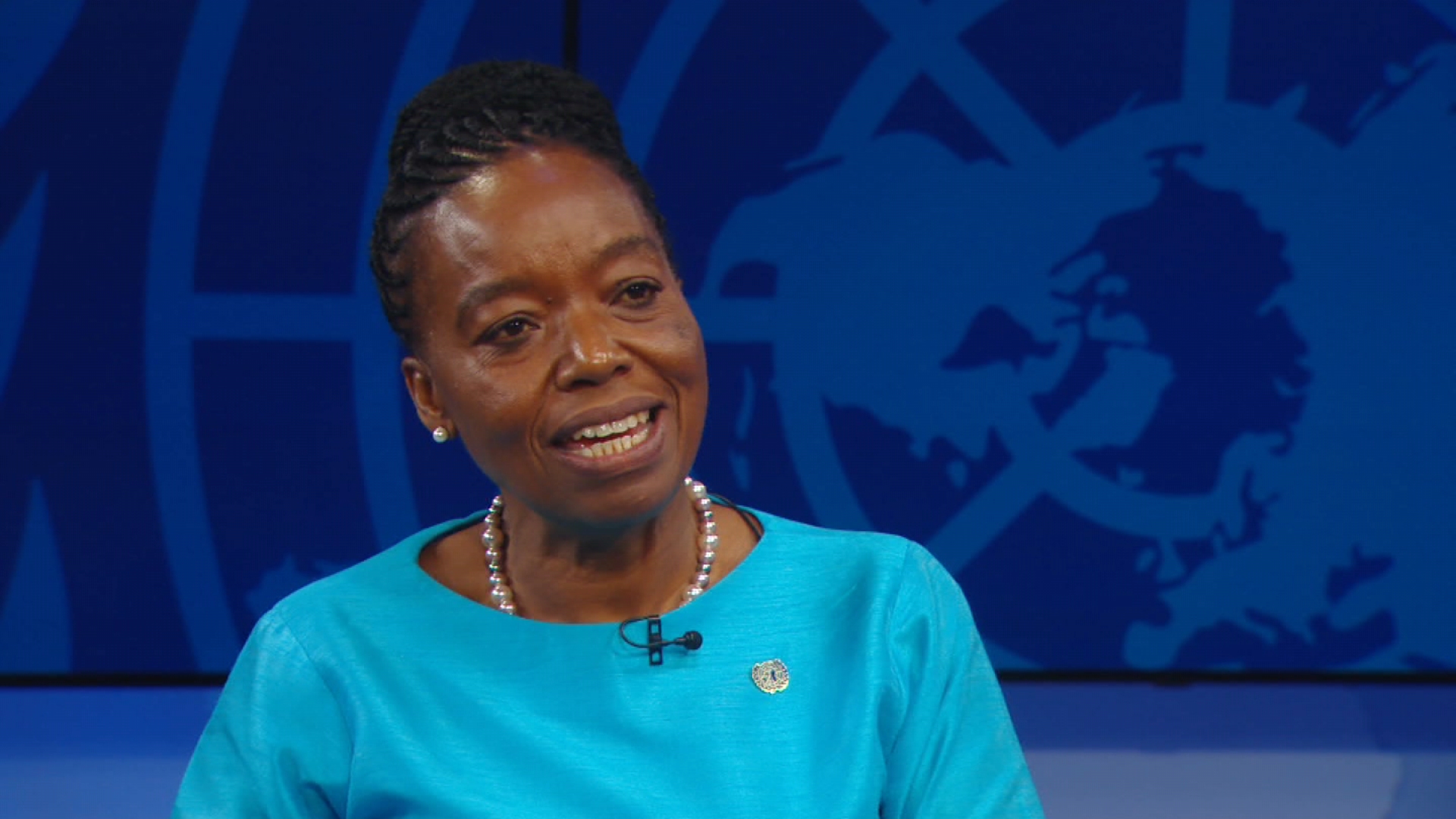
2. SOUNDBITE (English) Monica Juma, Executive Director, United Nations Office on Drugs and Crime (UNODC):
“People should pay attention to this Congress because it relates to matters of public safety that are experienced every day by every person across the world.”
FILE UNODC – RECENT, UKRAINE
3. Various shots, UNODC Executive Director Monica Juma’s official visit to Ukraine
15 SEPTEMBER 2026, VIENNA, AUSTRIA
4. SOUNDBITE (English) Monica Juma, Executive Director, United Nations Office on Drugs and Crime (UNODC):
“This is the 15th, Congress. It convenes every five years. So, you can imagine five years ago this conversation would have been very different. So, this provides a platform where the world converges to ask the question, what has changed? How has crime changed? What are the patterns we are seeing? And so, it becomes a real opportunity to look, for example, at the defining factor today, which is technology.”
FILE UNODC– UKRAINE
5. Various shots, Juma at airport security check point
15 SEPTEMBER 2026, VIENNA, AUSTRIA
6. SOUNDBITE (English) Monica Juma, Executive Director, United Nations Office on Drugs and Crime (UNODC):
“By technology you can reach, you can target millions of people within a fraction of a second. So, you don't need intermediaries. You don't need to cross borders, you know, because technology can enable that across borders very quickly. That is what has significantly changed.”
FILE UNODC– RECENT, TANZANIA
7. Various shots, investigators collecting evidence
15 SEPTEMBER 2026, VIENNA, AUSTRIA
8. SOUNDBITE (English) Monica Juma, Executive Director, United Nations Office on Drugs and Crime (UNODC):
“In fact, technology is not leaving anyone behind. It is precisely where we have vulnerabilities of technology that we need to focus our attention more. Because even in countries that we consider very advanced in terms of technology, they are as vulnerable as the weakest ones. And that is why it is important that there is a convergence of those that are ahead, plus those that that might have some vulnerabilities and risk.”
FILE UNODC– RECENT, TANZANIA
9. Various shots, investigators collecting and analysing evidence
15 SEPTEMBER 2026, VIENNA, AUSTRIA
10. SOUNDBITE (English) Monica Juma, Executive Director, United Nations Office on Drugs and Crime (UNODC):
“We have more than 80 signatories already, so it is doing very well. We have a couple of ratifications. We are calling and encouraging countries to ratify so that it can enter into force. Now ratification is a domestic legislative process. So, a lot of countries that I personally have spoken to have actually indicated that that process is ongoing. Now, there is an imperative of time, you know, because until it enters into force, its full utilization would be limited.”
FILE UNODC– RECENT, TANZANIA
11. Various shots, investigators collecting ivory evidence
15 SEPTEMBER 2026, VIENNA, AUSTRIA
12. SOUNDBITE (English) Monica Juma, Executive Director, United Nations Office on Drugs and Crime (UNODC):
“The scam centres are really a global crisis. In the last report on scam centres in Southeast Asia indicate that more than 80 nationalities, 80 in the world in the last assessment, have been victims. You know, 80 countries, and they are drawn from everywhere. So, this is a global situation that is expanding exponentially.”
FILE UNODC– RECENT, BANGLADESH
13. Med shot, police holding guns on a boat
14. Med shot, photographing captured drugs
15. Close up, collect and record captured drugs
15 SEPTEMBER 2026, VIENNA, AUSTRIA
16. SOUNDBITE (English) Monica Juma, Executive Director, United Nations Office on Drugs and Crime (UNODC):
“When they get into those scam centres, a large number of those young people mainly are victims, as you say, and it is very important that they are conceived as victims rather than culprits, you know, and that you will follow who the perpetrator of the crime is. It is the people that are deceiving them. It is the people that are recruiting them. It is the people that are misleading them and so forth.”
FILE – UNKNOWN DATE AND LOCATION
17. Various shots, police operation at sea
15 SEPTEMBER 2026, VIENNA, AUSTRIA
16. SOUNDBITE (English) Monica Juma, Executive Director, United Nations Office on Drugs and Crime (UNODC):
“We have a situation where there is a convergence, one, of the level of threat and a convergence, one, of the desire to look for solution. And so, as we come to Abu Dhabi, I think you are going to, there is no debate whether this is important or not. So, the focus will be on this solution.”
FILE – RECENT, VIENNA, AUSTRIA
17. Wide shot, exterior, Vienna International Centre
Ahead of a pivotal UN gathering in Abu Dhabi, the Executive Director at the United Nations Office on Drugs and Crime (UNODC), Monica Juma said, “it will be a real opportunity to look, for example, at the defining factor today, which is technology.”
Juma said, “people should pay attention to this Congress because it relates to matters of public safety that are experienced every day by every person across the world.”
She said, “this is the 15th Congress. It convenes every five years. So, you can imagine five years ago this conversation would have been very different. So, this provides a platform where the world converges to ask the question, what has changed? How has crime changed? What are the patterns we are seeing?
Criminal networks now move money, goods, and information across borders at lightning speed, exploiting everything from new technologies to global instability. Yet the same tools that help drive illicit activity could also transform the fight against it.
Juma said, “by technology you can reach, you can target millions of people within a fraction of a second. So, you don't need intermediaries. You don't need to cross borders, you know, because technology can enable that across borders very quickly. That is what has significantly changed.”
She said, “in fact, technology is not leaving anyone behind. It is precisely where we have vulnerabilities of technology that we need to focus our attention more. Because even in countries that we consider very advanced in terms of technology, they are as vulnerable as the weakest ones. And that is why it is important that there is a convergence of those that are ahead, plus those that that might have some vulnerabilities and risk.”
On the UN Cyber Crime Convention, the Executive Director said, “we have more than 80 signatories already, so it is doing very well. We have a couple of ratifications. We are calling and encouraging countries to ratify so that it can enter into force. Now ratification is a domestic legislative process. So, a lot of countries that I personally have spoken to have actually indicated that that process is ongoing. Now, there is an imperative of time, you know, because until it enters into force, its full utilization would be limited.”
Asked about scam centres, she said, “the scam centres are really a global crisis. In the last report on scam centres in Southeast Asia indicate that more than 80 nationalities, 80 in the world in the last assessment, have been victims. You know, 80 countries, and they are drawn from everywhere. So, this is a global situation that is expanding exponentially.”
Juma said, “when they get into those scam centres, a large number of those young people mainly are victims, as you say, and it is very important that they are conceived as victims rather than culprits, you know, and that you will follow who the perpetrator of the crime is. It is the people that are deceiving them. It is the people that are recruiting them. It is the people that are misleading them and so forth.”
She said, “we have a situation where there is a convergence, one, of the level of threat and a convergence, one, of the desire to look for solution. And so, as we come to Abu Dhabi, I think you are going to, there is no debate whether this is important or not. So, the focus will be on this solution.”
These challenges, from cyber-enabled crime to trafficking and online scams, will be at the centre of discussions at the 15th UN Crime Congress; the world's largest gathering focused on crime prevention and criminal justice.