Media Home
 UN Web TV
 UN Audiovisual Library
 UN Photo
IOM / DRC UGANDA EBOLA
Download
There is no media available to download.
Share
STORY: IOM / DRC UGANDA EBOLA
TRT: 08:20
SOURCE: IOM
RESTRICTIONS: NONE
LANGUAGE: FRENCH / NATS
DATELINE: SEPTEMBER 2026, LINDJI 1 IDP SITE, IGA BARRIÈRE, ITURI, DEMOCRATIC REPUBLIC OF THE CONGO (DRC) / AUGUST 2026, PORT OF BENDE BENDE, KINSHASA, DEMOCRATIC REPUBLIC OF THE CONGO (DRC) / AUGUST 2026, BIBIA, UGANDA
AUGUST 2026, PORT OF BENDE BENDE, KINSHASA, DEMOCRATIC REPUBLIC OF THE CONGO (DRC)
1. Various shots, arrival of a boat carrying more than 900 passengers, IOM supported the Congolese health authorities and their partners in implementing health screening measures
2. SOUNDBITE (French) DR. Primous Godjedo, Health Security Specialist, International Organization for Migration (IOM):
“We are here at Bende-Bende Port, in the Maluku health zone, to strengthen health screening following an alert issued by the Congolese authorities about a vessel that may have come from Tshopo Province.
IOM has provided significant support, including supplies, capacity building and operational support for primary screening. This involves taking the temperature of every passenger—men, women and children—on board the vessel, as well as collecting health information through the traveller health form.
If a passenger meets the definition of a suspected or alert case, they are immediately referred to the sampling unit to determine whether it is a case of Ebola virus disease, another epidemic disease, or cholera. IOM will continue to support the Congolese Government in this response so that this health screening point can remain operational throughout the outbreak.”
SEPTEMBER 2026, LINDJI 1 IDP SITE, IGA BARRIÈRE, ITURI, DEMOCRATIC REPUBLIC OF THE CONGO (DRC)
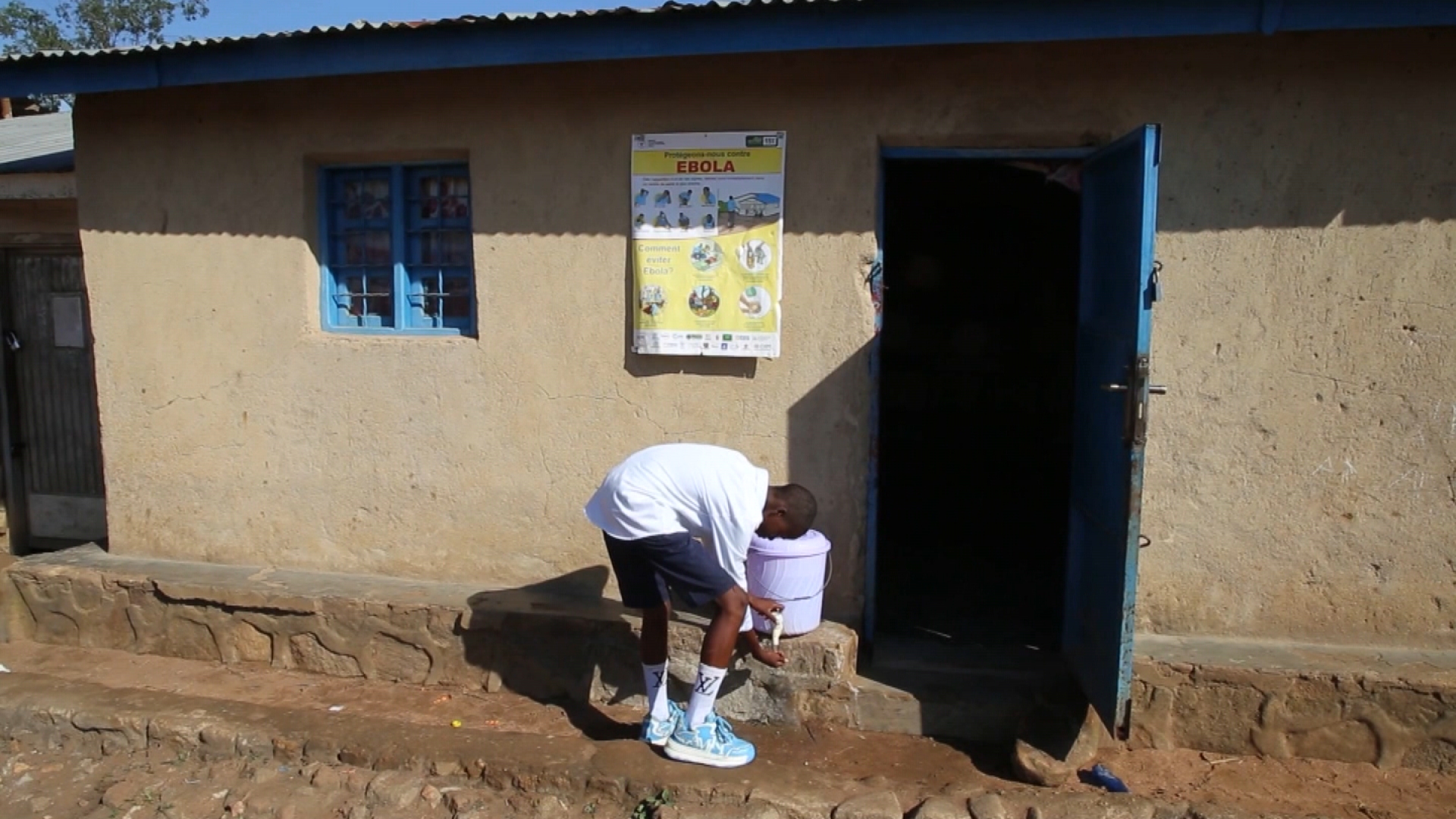
3. Various shots, Lombou, President of the Lindji 1 site, raising awareness among residents about precautions to prevent the spread of Ebola virus disease
AUGUST 2026, BIBIA, UGANDA
Various shots, Betty Mafura, a Village Health Team (VHT) member in Bibia, West Nile, raises awareness about Ebola as part of the Risk Communication and Community Engagement response
As the Ebola outbreak in the Democratic Republic of the Congo (DRC) reaches unprecedented levels, the International Organization for Migration (IOM) is expanding efforts to strengthen disease surveillance and preparedness along major travel routes including riverine corridors and across borders to help prevent further spread.
Since the outbreak was declared in May 2026, the numbers have continued to climb. More than 7,400 confirmed cases have now been recorded, making this the largest Ebola outbreak ever reported in the country, and a crisis exacerbated by ongoing conflict and large-scale displacement.
As of 16 September, the World Health Organization had reported over 3,600 deaths. Over the same period, IOM has supported local authorities with over 33 million health screenings across the region, reaching millions of people with life-saving information and referrals to appropriate services.
SOUNDBITE (French) DR. Primous Godjedo, Health Security Specialist, International Organization for Migration (IOM):
“We are here at Bende-Bende Port, in the Maluku health zone, to strengthen health screening following an alert issued by the Congolese authorities about a vessel that may have come from Tshopo Province.
IOM has provided significant support, including supplies, capacity building and operational support for primary screening. This involves taking the temperature of every passenger—men, women and children—on board the vessel, as well as collecting health information through the traveller health form.
If a passenger meets the definition of a suspected or alert case, they are immediately referred to the sampling unit to determine whether it is a case of Ebola virus disease, another epidemic disease, or cholera. IOM will continue to support the Congolese Government in this response so that this health screening point can remain operational throughout the outbreak.”
Displaced people, and host communities within the outbreak epicentre face particular barriers to accessing health services. Overcrowding, inadequate water and sanitation services, limited access to lifesaving services, and gaps in disease surveillance in displacement sites make early detection more difficult.
IOM is strengthening disease surveillance and preparedness across DRC using population mobility mapping and flow monitoring to identify high-risk mobility corridor, border communities points of entry (PoEs) and informal crossing points, enabling authorities to better target the response to a fast-moving disease.
The organization is also scaling up disease surveillance at displacement sites and along the Congo River, a key route for people travelling towards Kinshasa. At the Bende-Bende point of control, IOM is supporting health authorities with training and other critical preparedness activities alongside traveller screening, with teams conducting an average of around 1,000 health screenings a day.
IOM is working closely with governments and partners in neighbouring countries, including Uganda, South Sudan Burundi, Rwanda, Central African Republic along with other at-risk countries across the region, to strengthen preparedness and reduce the risk of cross-border transmission.
To sustain and expand this work, IOM is seeking USD 110 million for its multi-country Ebola Virus Disease Preparedness and Response Plan. So far, USD 29.6 million has been received, leaving more than half of the appeal unfunded. Additional resources are urgently needed to sustain surveillance along key movement routes, strengthen preparedness in neighbouring countries, and ensure mobile and displaced communities are included in the response.
IOM's response is supported by the United States Government, the United Nations Central Emergency Response Fund (CERF), European Union, the Government of Japan and the World Bank.