Media Home
 UN Web TV
 UN Audiovisual Library
 UN Photo
WHO / PUBLIC HEALTH ISSUES UPDATE
STORY: WHO / PUBLIC HEALTH ISSUES UPDATE
TRT: 07:56
SOURCE: WHO
RESTRICTIONS: PLEASE CREDIT WHO ON SCREEN
LANGUAGES: ENGLISH / NATS
DATELINE: 04 NOVEMBER 2026, GENEVA, SWITZERLAND / FILE
FILE – GENEVA, SWITZERLAND
1. Wide shot, World Health Organization headquarters
04 NOVEMBER 2026, GENEVA, SWITZERLAND
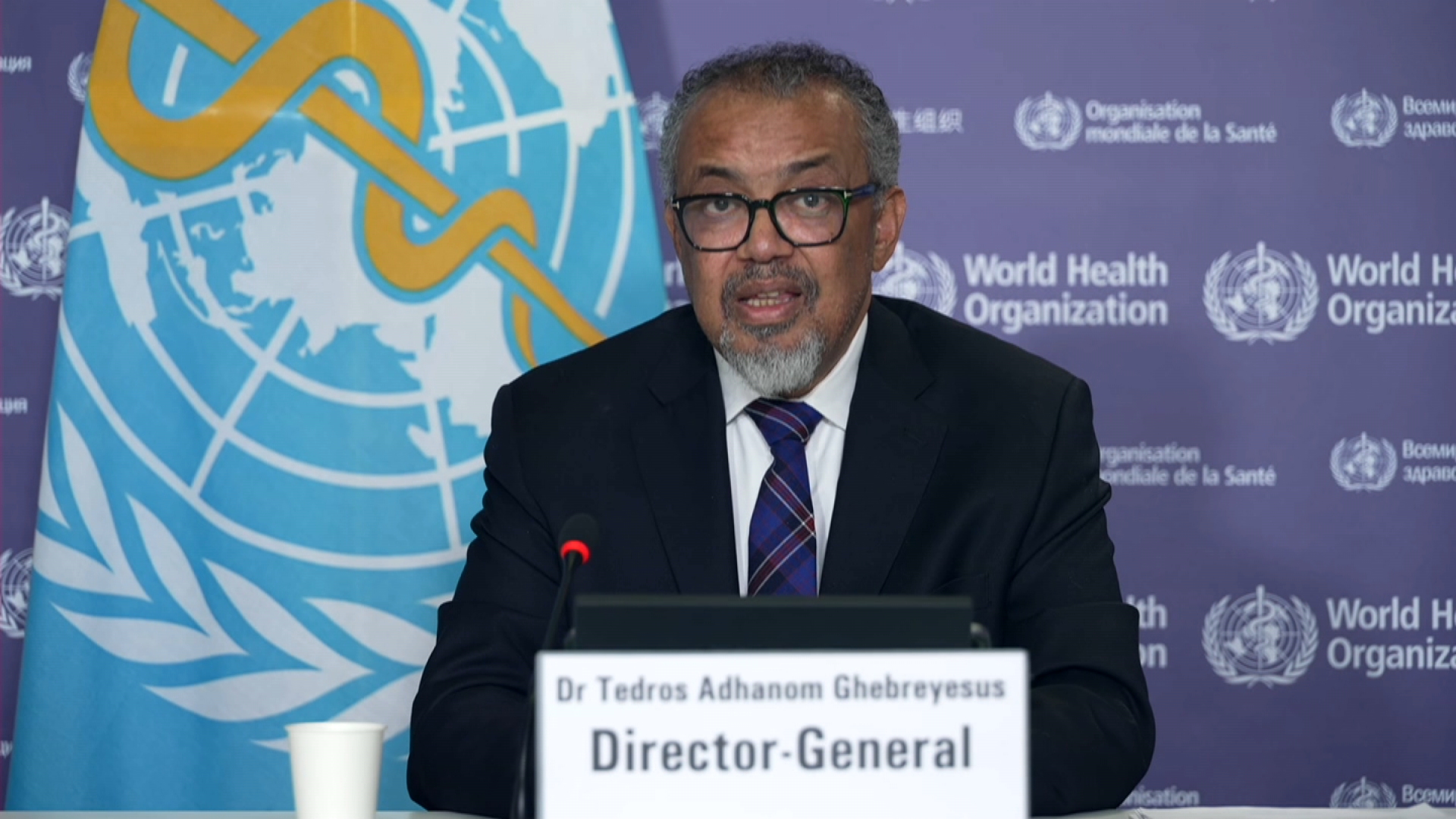
2. Wide shot, press briefing room
3. SOUNDBITE (English) Dr Tedros Adhanom Ghebreyesus, Director-General, WHO:
“First, to the Ebola epidemic in the Democratic Republic of the Congo. More than ten-thousand cases and five-thousand deaths have now been reported in the DRC. In some areas transmission is slowing, but new hotspots continue to emerge. Displacement, rainy weather, attacks on healthcare and difficulties in reaching remote areas are complicating the response.”
4. Wide shot, press briefing room
5. SOUNDBITE (English) Dr Tedros Adhanom Ghebreyesus, Director-General, WHO:
“The DRC is also seeing its worst cholera outbreak in decades, with more than sixty-thousand cases and one-thousand-eight-hundred deaths reported so far this year.”
6. Wide shot, press briefing room
7. SOUNDBITE (English) Dr Tedros Adhanom Ghebreyesus, Director-General, WHO:
“In Kenya, nine cases of Ebola have been reported, including two deaths, and one case has also been confirmed in Nigeria. I commend Kenya and Nigeria for their rapid response to these imported cases, and for their transparency in reporting them.”
8. Wide shot, press briefing room
9. SOUNDBITE (English) Dr Tedros Adhanom Ghebreyesus, Director-General, WHO:
“We call on countries that have imposed travel restrictions to lift them. Such restrictions punish countries for doing the right thing, create disincentives for transparency, and harm the response.”
10. Wide shot, press briefing room
11. SOUNDBITE (English) Dr Tedros Adhanom Ghebreyesus, Director-General, WHO:
“Last month, a vaccine trial began using the Ervebo vaccine, which is approved for Ebola virus, but not for Bundibugyo virus. Today, WHO expert groups are recommending adding two vaccine candidates to the trial that have been developed specifically for Bundibugyo virus.”
12. Wide shot, press briefing room
13. SOUNDBITE (English) Dr Tedros Adhanom Ghebreyesus, Director-General, WHO:
“The candidates are ChAdOx1 BDBV, developed by the University of Oxford with the Serum Institute of India, and Moderna's mRNA-1469. The trial is being led by the DRC's National Institute for Biomedical Research, with support from national and international partners, including WHO.”
14. Wide shot, press briefing room
15. SOUNDBITE (English) Dr Tedros Adhanom Ghebreyesus, Director-General, WHO:
“Now to Sudan, where more than three years of war have created one of the world's largest humanitarian and health crises – and yet it remains forgotten and ignored by the international community.”
16. Wide shot, press briefing room
17. SOUNDBITE (English) Dr Tedros Adhanom Ghebreyesus, Director-General, WHO:
“Access to health care remains severely constrained by insecurity, shortages of medicines and health workers, restrictions on humanitarian access, and attacks on health care. Since the conflict began, WHO has verified more than two-hundred-and-thirty such attacks, causing more than two-thousand deaths and hundreds of injuries.”
18. Wide shot, press briefing room
19. SOUNDBITE (English) Dr Tedros Adhanom Ghebreyesus, Director-General, WHO:
“Repeated attacks on power stations and fuel depots are disrupting electricity and fuel supplies, further threatening an already fragile health system. Drone attacks on civilians have also been reported in the Amhara and Tigray regions of Ethiopia, killing children and people who were trying to get food.”
20. Wide shot, press briefing room
21. SOUNDBITE (English) Dr Tedros Adhanom Ghebreyesus, Director-General, WHO:
“In both countries, all parties must respect international humanitarian law, protect civilians and civilian infrastructure, and safeguard health facilities, health workers and patients. The most courageous choose peace.”
22. Wide shot, press briefing room
23. SOUNDBITE (English) Dr Tedros Adhanom Ghebreyesus, Director-General, WHO:
“The health impacts of climate change are not a theoretical risk for the future. They are right here and right now. The climate crisis is fuelling outbreaks, driving higher rates of heart and lung disease, cancer and asthma, and making healthy diets less affordable. Climate denialism doesn’t help; it only hurts.”
24. Wide shot, press briefing room
25. SOUNDBITE (English) Dr Tedros Adhanom Ghebreyesus, Director-General, WHO:
“Ahead of COP31, WHO is today releasing new estimates on the costs and benefits of proven actions that protect health and reduce emissions. These include heat-health warning systems; climate-resilient water, sanitation and hygiene services; cleaner household energy sources; and efficient fossil fuel pricing policies.”
26. Wide shot, press briefing room
27. SOUNDBITE (English) Dr Tedros Adhanom Ghebreyesus, Director-General, WHO:
“WHO estimates that scaling up these measures globally could prevent 1.6 million deaths each year, while generating an estimated 3.9 trillion US dollars in economic welfare benefits and a further 5.4 trillion dollars in fiscal benefits. Ultimately, climate action is not a cost, it’s an investment in healthier people, a healthier planet, and healthier economies.”
28. Wide shot, press briefing room
29. SOUNDBITE (English) Dr Tedros Adhanom Ghebreyesus, Director-General, WHO:
“WHO is releasing new global estimates on physical activity among adolescents. Physical activity is known to prevent heart disease, some cancers, and diabetes, and promote healthy weight and mental wellbeing.”
30. Wide shot, press briefing room
31. SOUNDBITE (English) Dr Tedros Adhanom Ghebreyesus, Director-General, WHO:
“WHO recommends that children and adolescents aged 11 to 17 should get at least 60 minutes of physical activity every day on average. Our new estimates suggest that only 14 percent of adolescents globally are reaching that level. And one in four adolescents globally report not getting 60 minutes of physical activity on any day in a week, let alone every day.”
32. Wide shot, press briefing room
33. SOUNDBITE (English) Dr Tedros Adhanom Ghebreyesus, Director-General, WHO:
“These levels of physical inactivity among adolescents are virtually unchanged in 15 years, and girls continue to face greater barriers than boys in almost every country and region.”
34. Wide shot, press briefing room
35. SOUNDBITE (English) Dr Tedros Adhanom Ghebreyesus, Director-General, WHO:
“The answer is not simply to tell young people to try harder. Governments must make physical activity the easy choice, by investing in safe schools, public spaces, walking and cycling routes, transport policy and affordable opportunities for sport and recreation.”
36. Wide shot, press briefing room
37. SOUNDBITE (English) Dr Tedros Adhanom Ghebreyesus, Director-General, WHO:
“Now to one of the great success stories in global health – the fight against neglected tropical diseases, or NTDs. NTDs are a group of 21 diseases that mainly affect poor and marginalized communities in tropical and subtropical regions.”
38. Wide shot, press briefing room
39. SOUNDBITE (English) Dr Tedros Adhanom Ghebreyesus, Director-General, WHO:
“WHO is publishing its mid-term evaluation of the global road map, which shows very encouraging progress. As of June this year, 63 countries had eliminated at least one NTD; The number of people requiring interventions has fallen by 19 percent since 2020; And last year, only 10 cases of Guinea worm disease were reported.”
40. Wide shot, press briefing room
41. SOUNDBITE (English) Dr Tedros Adhanom Ghebreyesus, Director-General, WHO:
“But progress is uneven, funding is fragile and dependent on a small number of donors, and recent funding cuts have disrupted services and programmes.”
42. Wide shot, press briefing room
43. SOUNDBITE (English) Dr Tedros Adhanom Ghebreyesus, Director-General, WHO:
“Now is the time for countries and partners to step up, not step back. That means increasing domestic financing, sustaining external support and integrating services for neglected tropical diseases into primary health care and universal health coverage.”
44. Wide shot, press briefing room
“In some areas transmission is slowing, but new hotspots continue to emerge. Displacement, rainy weather, attacks on healthcare and difficulties in reaching remote areas are complicating the response,” WHO Director-General Dr Tedros Adhanom Ghebreyesus said about the Ebola epidemic in the Democratic Republic of the Congo.
Briefing reporters in Geneva today (4 Nov), Tedros said more than 5,000 people had died in the outbreak in the country.
Kenya has reported nine Ebola cases, including two deaths, and Nigeria one confirmed case. Tedros praised both countries for their handling of the imported cases.
“We call on countries that have imposed travel restrictions to lift them. Such restrictions punish countries for doing the right thing, create disincentives for transparency, and harm the response,” the WHO chief told journalists.
WHO expert groups are recommending that two vaccine candidates developed specifically for Bundibugyo virus, ChAdOx1 BDBV and Moderna’s mRNA-1469, be added to a trial that began last month with the Ervebo vaccine. Ervebo is approved for Ebola virus but not for Bundibugyo virus.
The DRC is also facing its worst cholera outbreak in decades, with more than 60,000 cases and 1,800 deaths reported so far this year.
Turning to Sudan, Tedros said more than three years of war had created one of the world’s largest humanitarian and health crises. “Since the conflict began, WHO has verified more than 230 such attacks, causing more than 2000 deaths and hundreds of injuries,” he said, referring to attacks on health care.
Ahead of COP31, WHO released estimates showing that scaling up proven climate and health measures globally could prevent 1.6 million deaths each year. “Ultimately, climate action is not a cost, it’s an investment in healthier people, a healthier planet, and healthier economies,” Tedros said.
New WHO estimates also show that only 14 per cent of adolescents worldwide get the recommended 60 minutes of daily physical activity. On neglected tropical diseases, a mid-term evaluation found that 63 countries had eliminated at least one such disease as of June, though the agency warned that funding remains fragile.