Media Home
 UN Web TV
 UN Audiovisual Library
 UN Photo
OCHA / HAITI DISPLACED BY VIOLENCE
STORY: OCHA / HAITI DISPLACED BY VIOLENCE
TRT: 03:49
SOURCE: OCHA
RESTRICTIONS: PLEASE CREDIT OCHA ON SCREEN
LANGUAGES: FRENCH / NATS
DATELINE: OCTOBER 2026, PORT-AU-PRINCE, HAITI
1. Wide shot, Michel and wife inside class where they live
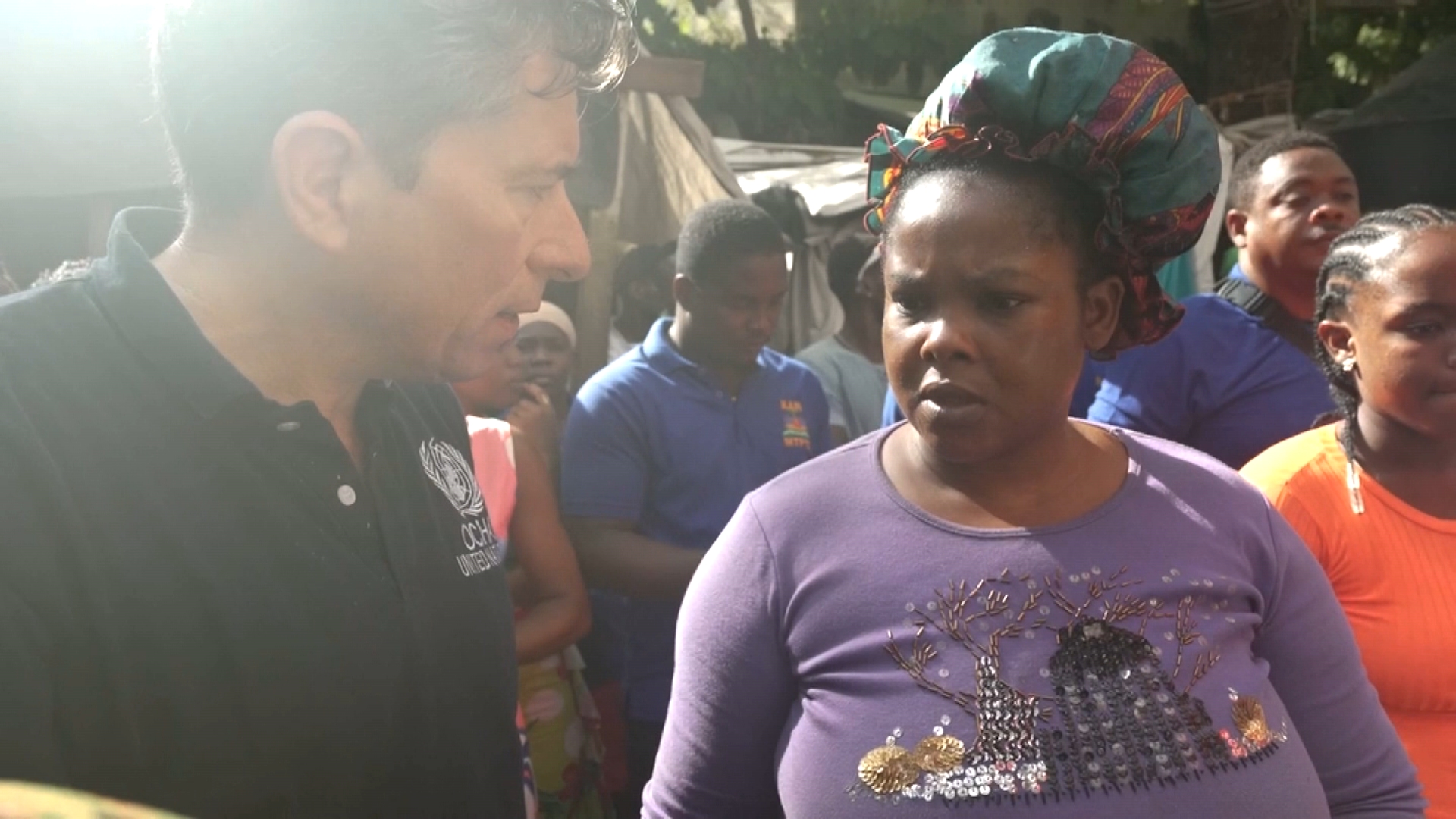
2. SOUNDBITE (French) Michel, Internally Displaced Person:
“They looted, they burned, they raped, and most of all, they killed. And, well, the rest of us managed to escape, my family and I, along with the others. And we ended up here. And now, well, we live here.”
3. Wide shot, displaced people inside former school class, where they live now
4. SOUNDBITE (French) Michel, Internally Displaced Person:
“Without assistance, without humanitarian aid, and perhaps without support from government institutions, from the State, we wouldn’t have had the means to survive. Above all, humanitarian assistance in the social, economic and, especially, food sectors. Without their help, we wouldn’t survive.”
5. Wide shot, displaced people inside former school class, where they live now
6. SOUNDBITE (French) Michel, Internally Displaced Person:
“Well, Our ultimate goal is relocation; you are never well unless you are at home. Here, despite the assistance we receive, we aren’t really living. We aren’t happy. We don’t feel like ourselves.”
7. Med shot, school, shelters
8. SOUNDBITE (French) Pierre, Internally Displaced Person:
“My house was the first one to be set on fire by the gangs in the area. So ,I was truly devastated, deeply affected and saddened by this tragedy.”
9. Wide shot, communal kitchen
10. SOUNDBITE (French) Pierre, Internally Displaced Person:
“Day-to-day life is extremely difficult. I must tell you honestly that, although today we receive assistance from the State, which provides us with one hot meal every day, it is not enough. Because, as you know, when you provide humanitarian assistance to people by giving them one hot meal every 24 hours, it is simply insufficient. Do you understand?”
11. Wide shot, displaced people inside former school class, where they live now
12. SOUNDBITE (French) Pierre, Internally Displaced Person:
“Internally displaced people (IDPs) need assistance that goes beyond school for their children because many of them are not going to school.”
13. Med shot, school
14. SOUNDBITE (French) Pierre, Internally Displaced Person:
“We also have young people who have turned their backs on the violence and don’t want to use arms. They, too, need support to help them learn practical trade. You see, so that they can be given another chance. Because if these young people don't receive support, who knows what might happen in the years to come.”
15. Med shot, stairs
16. SOUNDBITE (French) Pierre, Internally Displaced Person:
“We always say a country's future depends on its young people. But young people need to have a trade, a skill. If you develop a social reintegration and personal development programme for our young people, they will be able to learn a trade, something practical, whether refrigeration, tiling or plumbing. Do you understand? Through this, they will gain confidence in themselves.”
17. Wide shot, school corridor with displaced people
In Port-au-Prince, a school that once welcomed hundreds of pupils is now home to nearly 3,000 people displaced by violence.
Among them is a former teacher determined to give his children a future beyond the classroom they now call home.
Michel sits beside the doorway of a former classroom, watching people pass through the busy corridor.
A woman carries a bucket of water. Others return with food or stop to talk to neighbors. Children weave between adults, their voices echoing through the building.
For the 44-year-old former teacher, this is home for now.
He shares the classroom with his wife, Islande, and three children, with about 36 other people who have also been forced to flee their homes.
Asked about the future, Michel said. “Our ultimate goal is relocation; you are never well unless you are at home.”
The school once echoed with the voices of about 500 pupils.
Since 2024, it has provided shelter to nearly 3,000 people displaced by violence in Haiti's capital.
Its corridors have become shared living spaces.
Residents sell small items to earn a little money, women queue at water tanks, and meals are prepared in communal kitchens.
Everyday life continues, but privacy is scarce and the future remains uncertain.
Before the displacement, Michel worked as a teacher, while his wife ran a small business.
Together, their earnings helped pay for their children's needs.
Then armed men attacked their neighborhood, looting and settings homes on fire.
His wife, standing beside him, listened quietly; her face etched with sorrow.
She has also lost her livelihood, the income that once helped pay for the family's needs has disappeared, leaving them dependent on assistance and whatever opportunities they can find.
The family fled more than once before reaching the school. What they thought might be a temporary refuge has become their home for an indefinite period.
Two of their children attend school, The youngest, aged 5, has not yet started. For a father who once taught, education is now among the things displacement has made uncertain.
In another classroom, a local group gathers children for psychosocial support. Amid the pressures of communal living, the session gives them time and space to play, participate, and receive attention.
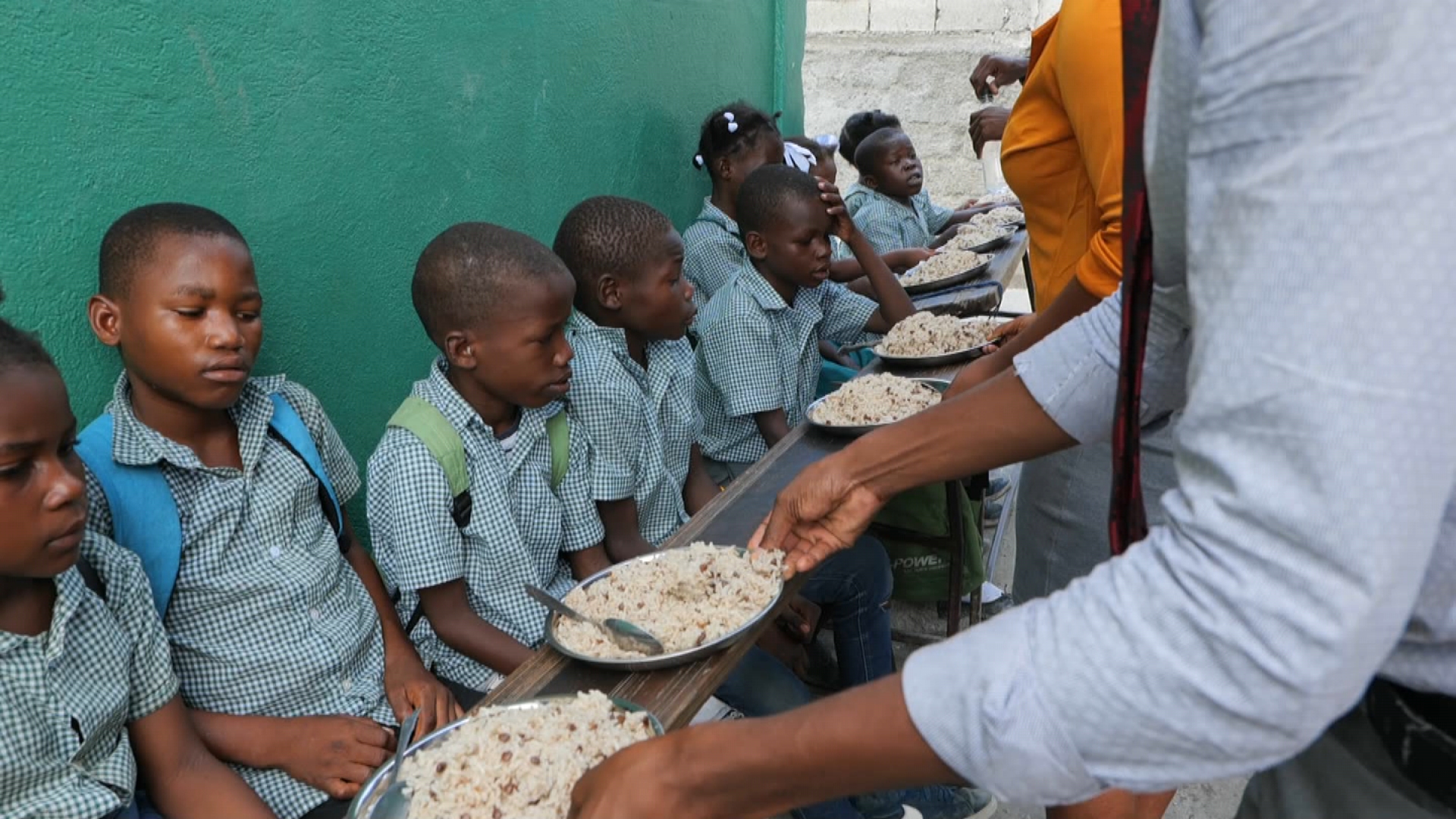
In the communal kitchen, huge pots of rice and sauce simmer as residents prepare food. More than 500 kg of rice is being prepared, but for many people, the meal will be all they eat that day.
Michel's family has received food and financial assistance.
Without this help, “we would not survive,” he says.
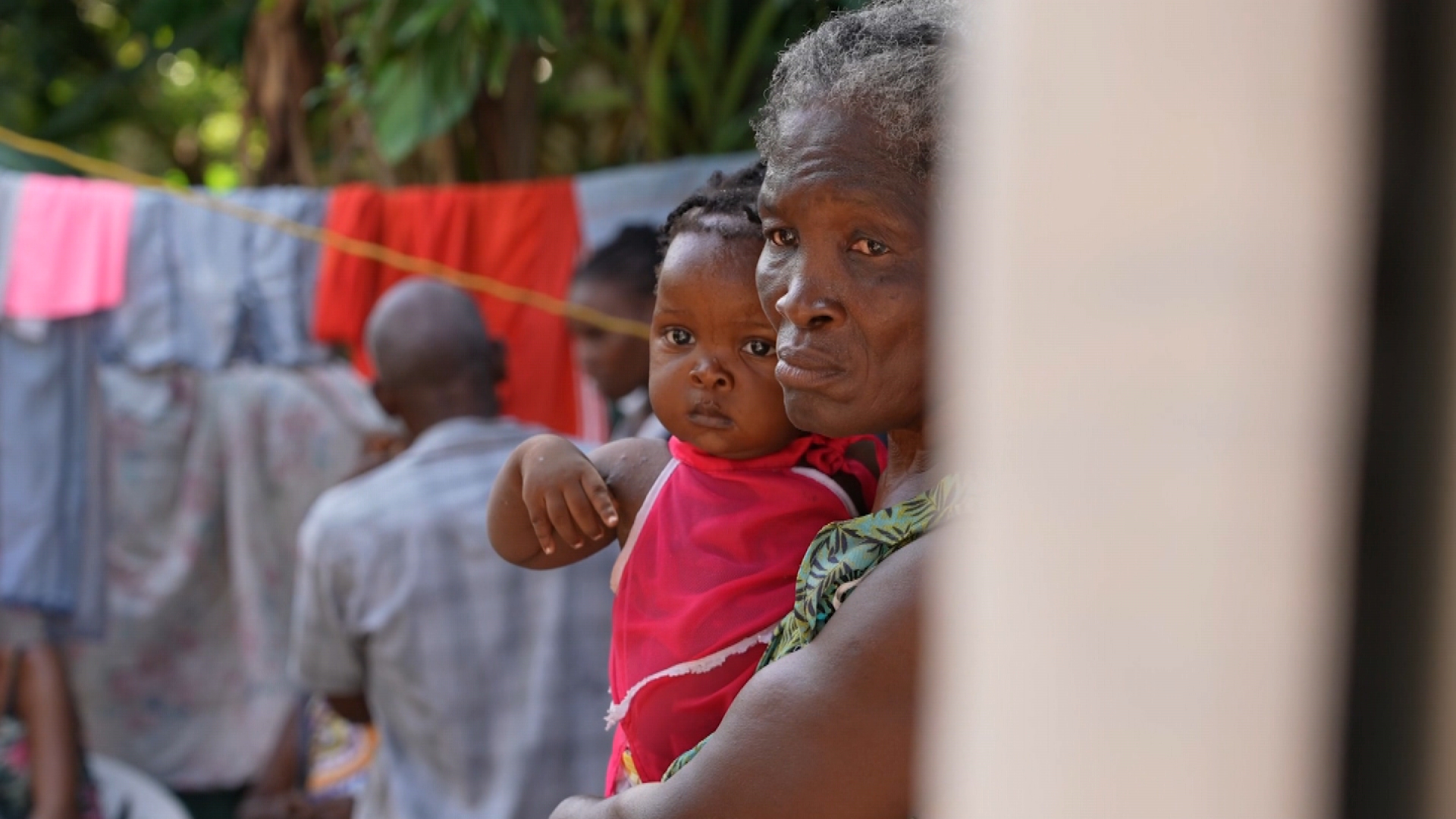
Michel’s family is among the nearly 1,5 million people displaced, about 12 percent of Haiti’s population.
It is a nationwide crisis.
Behind the figures are families trying to keep their children learning, finding work and regaining somewhere safe to live.
More than 1,600 schools closed last school year because of violence.
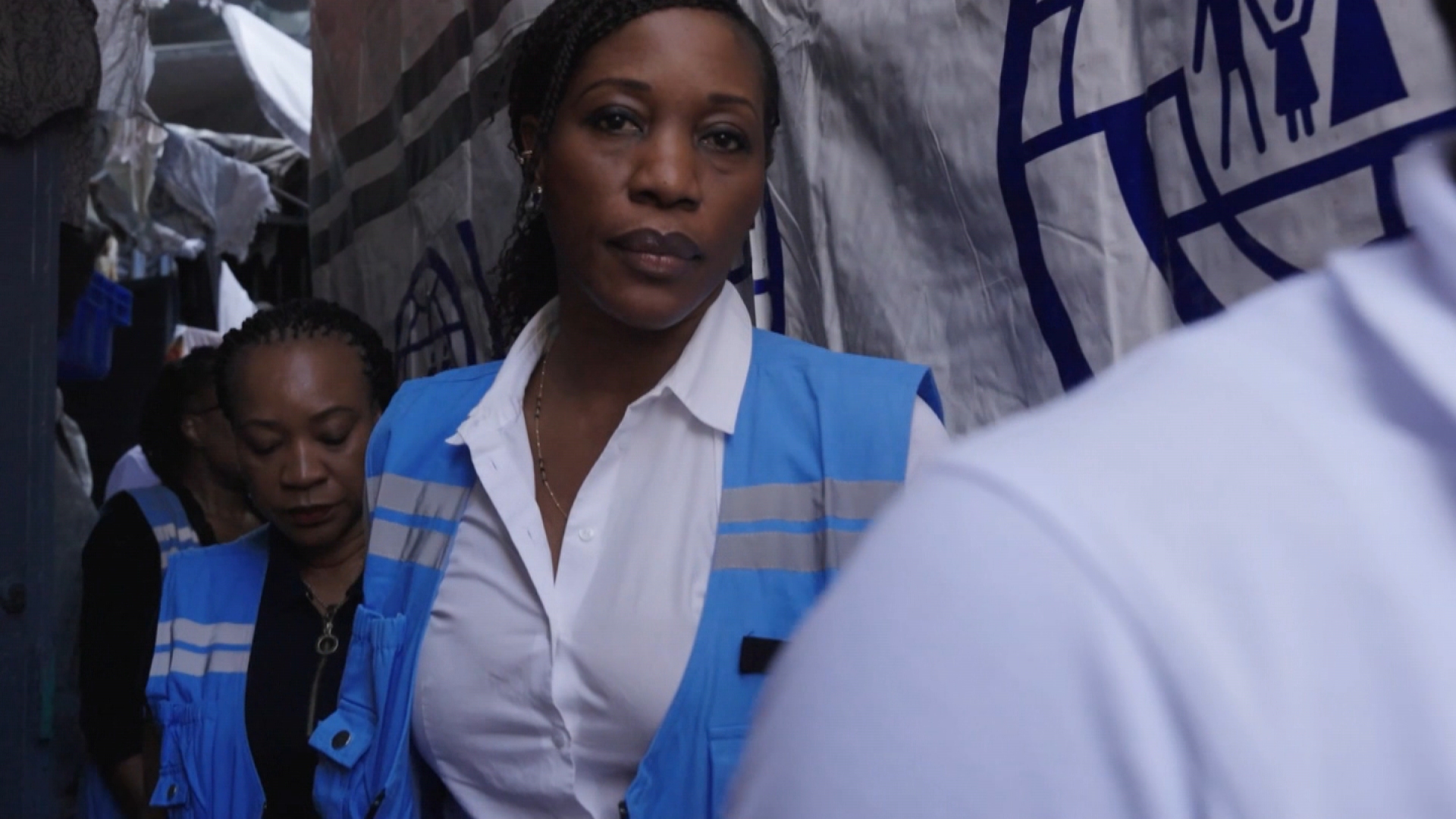
Humanitarian organizations continue to deliver food, shelter, healthcare, clean water, sanitation services, protection and psychosocial support, despite difficult operating conditions.
But the resources fall short of the needs, Haiti’s US$880 million Humanitarian Needs and Respond Plan aims to assist 4.2 million people and only 49 percent is funded.
For families living here, emergency assistance remains indispensable, so does the prospect of eventually no longer needing it.
Pierre, the president of the site often ponders about the young's people future. He wants children in school and young adults to be given a chance to learn trade.
“We always say a country's future depends on its young people,” Pierre reasoned.
But young people need to have a trade, a skill. If you develop a social reintegration and personal development programme for our young people, they will be able to learn a trade, something practical, whether refrigeration, tiling or plumbing. Do you understand? Through this, they will gain confidence in themselves.”
Humanitarian aid alone will not be enough. Haitian communities need support that goes beyond emergency relief: safer neighborhoods, access to basic services and real opportunities to earn a living.