Media Home
 UN Web TV
 UN Audiovisual Library
 UN Photo
Unifeed
UN / HALABJA MASSACRE ANNIVERSARY

Download
There is no media available to download.
Share
STORY: UN / HALABJA MASSACRE ANNIVERSARY
SOURCE: UNTV
TRT: 1.59
RESTRICTIONS: NONE
LANGUAGE: ENGLISH/ NATS
DATELINE: 16 MARCH 2009, NEW YORK CITY/ FILE
FILE – RECENT, NEW YORK CITY
1. Wide shot, exterior UN building
16 MARCH 2009, NEW YORK CITY
2. Wide shot, dais
3. Pan right, audience
4. SOUNDBITE (English) Hamid Al-Bayati, Permanent Representative of Iraq to the United Nations:
“The streets and alleys of Halabja, corpses piled up over one another. Children playing in front of the houses in the morning were instantly murdered by cyanide gases. These innocent children did not even have time to run back home. I am sorry to show you these gruesome pictures, but we have to know what happened.”
5. Med shot audience
6. SOUNDBITE (English) Peter Galbraith, Senior Diplomatic Fellow at the Center for Arms Control and Non-Proliferation:
“What happened in Halabja was not a single incident. It was part of a campaign of chemical weapons that began in late 86 or early 87; a campaign of chemical weapons against the Kurds that began in late 86 or early 87. It had already begun against the Iranians in 83, and continued until after – and this is the critical point – after the Iraq-Iran war was over.”
7. Med shot, audience member
8. SOUNDBITE (English) Kenneth Roth, Executive Director of Human Rights Watch:
“It was more convenient to ignore the atrocities. Why? You know, because Saddam Hussein at that point was seen as a useful ally in countering what was viewed as the greater threat on Khomeini’s Iran. And so, you know, if Saddam was using chemical weapons against Iran, as was discussed, you know if he was using chemical weapons against his own people, you know yes he may be a particularly ruthless ally, but he was an ally nonetheless and one against whom the US government and its allies in Europe were unwilling to speak out”.
9. Wide shot, conference room
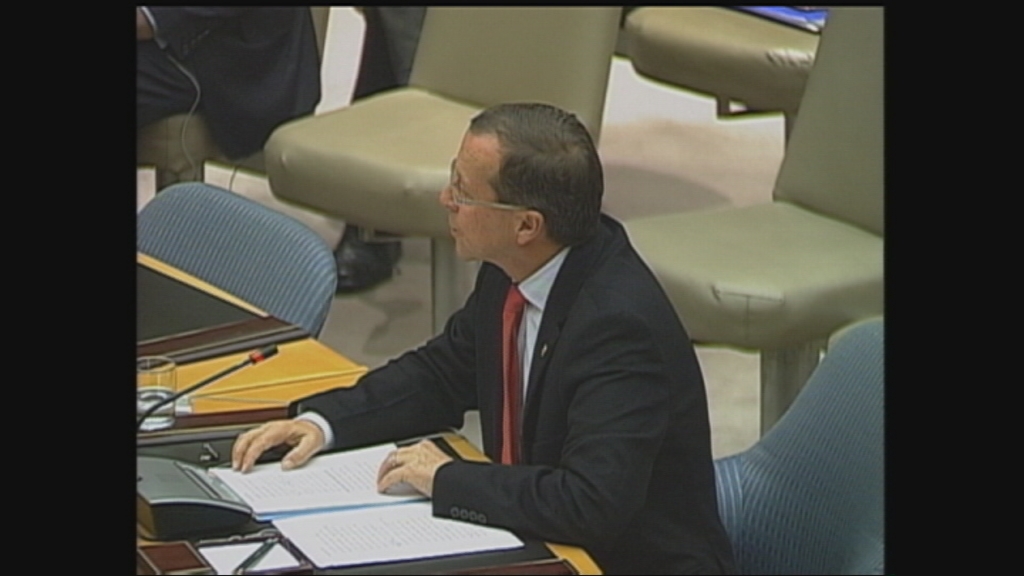
Diplomats and human rights advocates gathered today (16 March) at the United Nations for a special commemorative event marking the 21st anniversary of the Halabja massacre in Iraq.
Iraqi ambassador Hamid Al-Bayati recalled the atrocities and while apologizing for the “gruesome” pictures on the screens, said that in the streets and alleys of Halabja, “corpses piled up over one another” and children killed by cyanide gas “did not even have time to run back home”.
Former United States ambassador Peter Galbraith stressed that “what happened in Halabja was not a single incident” but part of a campaign “against the Kurds” that continued until “after the Iraq-Iran war was over.”
The director of the non-governmental organization Human Rights Watch, Kenneth Roth, received an award in the name of his organization recognizing its efforts to call attention to the Kurds’ massacre.
He pointed out that at the time of the attacks in 1988, “it was more convenient” for many governments to ignore the atrocities, as the former Iraqi leader Saddam Hussein was an ally against whom “the US government and its allies in Europe were unwilling to speak out”.
Human Rights Watch has defined the Halabja poison gas attack as an act of genocide, estimating that it killed between 3,200 and 5,000 civilians.