Media Home
 UN Web TV
 UN Audiovisual Library
 UN Photo
HAITI / MOSQUITO NETS
Download
There is no media available to download.
Share
STORY: HAITI / MOSQUITO NETS
TRT: 2:22
SOURCE: UNICEF
RESTRICTIONS: NONE
LANGUAGE: ENGLISH / FRENCH / NATS
DATELINE: SEPTEMBER 2010, LEOGANE, HAITI
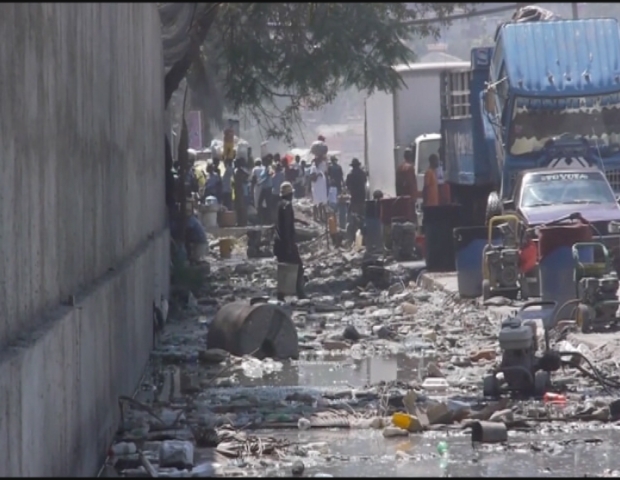
1. Med shot, people waiting in line
2. Wide shot, people waiting in line
3. Close up, hand on gate as people go through from under the rope
4. Close up, mosquito nets
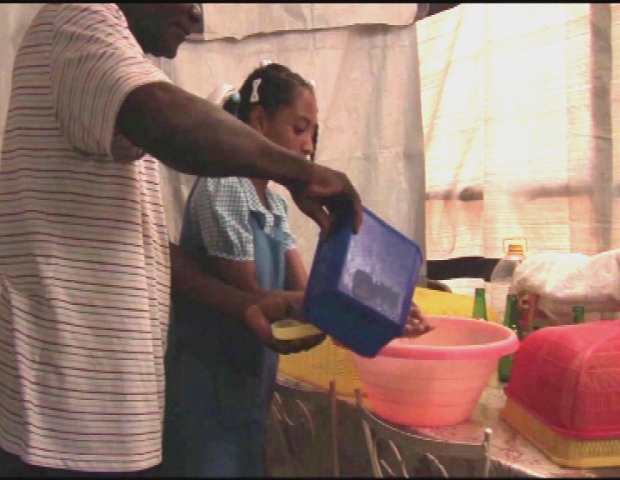
5. Wide shot, people receiving nets in white plastic buckets
6. Med shot, people receiving nets in white plastic buckets
7. Close up, person’s hand pulling mosquito nets out of bucket
8. Wide shot, staffers loading mosquito nets into buckets
9. Close up, staffers face while registering names
10. Wide shot, staffers registering names
11. Med shot, people receiving nets in white plastic buckets
12. Wide shot, people in line, with Richemond Casseus from Malteser International
13. Med shot, people waiting in line, with Richemond Casseus from Malteser International
14. SOUNDBITE (FRENCH) Richemond Casseus, Malteser International:
“You see, we’re in a pretty poor, rural region, and no one’s got the money to buy mosquito nets for themselves at the market, because it’s expensive.”
15. Wide shot, crowds in line
16. SOUNDBITE (FRENCH) Richemond Casseusm, Malteser International:
“Normally they’re 200-250 gourdes.”
17. Close up, feet of people standing in line
18. Med shot, people standing in line
19. Wide shot, traffic on the road in the city street
20. Wide shot, people standing around and little girl walks up steps
21. Med shot, little boy sawing a piece of wood
22. SOUNDBITE (English) Francoise Gruloons-Ackerman, UNICEF Haiti Representative:
“We are on an island an in a region. In the same island, the neighboring country, they have dengue. In the neighboring countries, in the Caribbean and the region they have dengue. So are supposing the mosquitoes are not stopping at the border and the immigration office, so we have of course dengue here in this country but we have no figures.”
23. Wide shot, old lady sitting on the ground in village
24. Med shot, old lady’s face
25. Med shot, little boy
26. Wide shot, Richemond Casseus in village
27. SOUNDBITE (French) Richemond Casseus, Malteser International:
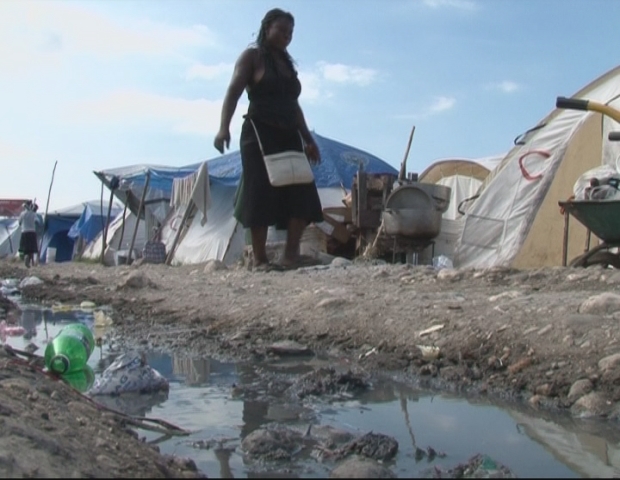
“You see the mud, it’s easy for mosquitoes to lay their eggs here and they would attack people who sleep in the nearby house. The animals should be put much further from the house.”
28. Wide shot, women with two babies
29. Med shot, two babies
In Haiti, malaria is under-reported. Although the official prevalence rate is 5-7 percent, UNICEF estimates that 70-80 percent of people living in low-lying coastal areas are at risk of contracting the disease.
Moreover, UNICEF believes that only five per cent of children under-five, who contract the disease, receive treatment for it.
UNICEF and partners have started distributing some of the 400,000 mosquito nets to over 200,000 Haitian families. The distribution is primarily in the south of the country such as in Leogane where malaria and dengue fever strike the hardest.
While prevention through the use of a net may seem easy, Richemond Casseus, from UNICEF’s partner Malteser, says too often it’s poverty that gets in the way.
SOUNDBITE (FRENCH) Richemond Casseus, Malteser International:
“You see, we’re in a pretty poor, rural region, and no one’s got the money to buy mosquito nets for themselves at the market, because it’s expensive.
At 250 Haitian gourdes or 7 US dollars, mosquito nets are financially out of reach for most of the villagers in Leogane.
SOUNDBITE (English) Francoise Gruloons-Ackerman, UNICEF Haiti Representative:
“We are on an island an in a region. In the same island, the neighboring country, they have dengue. In the neighboring countries, in the Caribbean and the region they have dengue. So are supposing the mosquitoes are not stopping at the border and the immigration office, so we have of course dengue here in this country but we have no figures.”
Health workers know that many ordinary Haitians don’t recognize dengue fever or malaria when they see it. Often, people believe that they are simply suffering from a fever. According to UNICEF, just five percent of affected children receive treatment for malaria leading to potential fatalities.
A typical village may be poor, Casseus says, but there are simple steps that can be taken to help prevent malaria.
SOUNDBITE (FRENCH) Richemond Casseus, Malteser International:
“You see the mud, it’s easy for mosquitoes to lay their eggs here and they would attack people who sleep in the nearby house. The animals should be put much further from the house.”
Prior to the UNICEF distribution, just six per cent of Haitian households in affected areas were reported to use mosquito nets.