Media Home
 UN Web TV
 UN Audiovisual Library
 UN Photo
HAITI / CHOLERA UPDATE
Download
There is no media available to download.
Share
STORY: HAITI / CHOLERA UPDATE
TRT: 2:49
SOURCE: UNICEF
RESTRICTIONS: NONE
LANGUAGE: ENGLISH / CREOLE / NATS
DATELINE: OCTOBER 2010, PORT-AU-PRINCE, HAITI
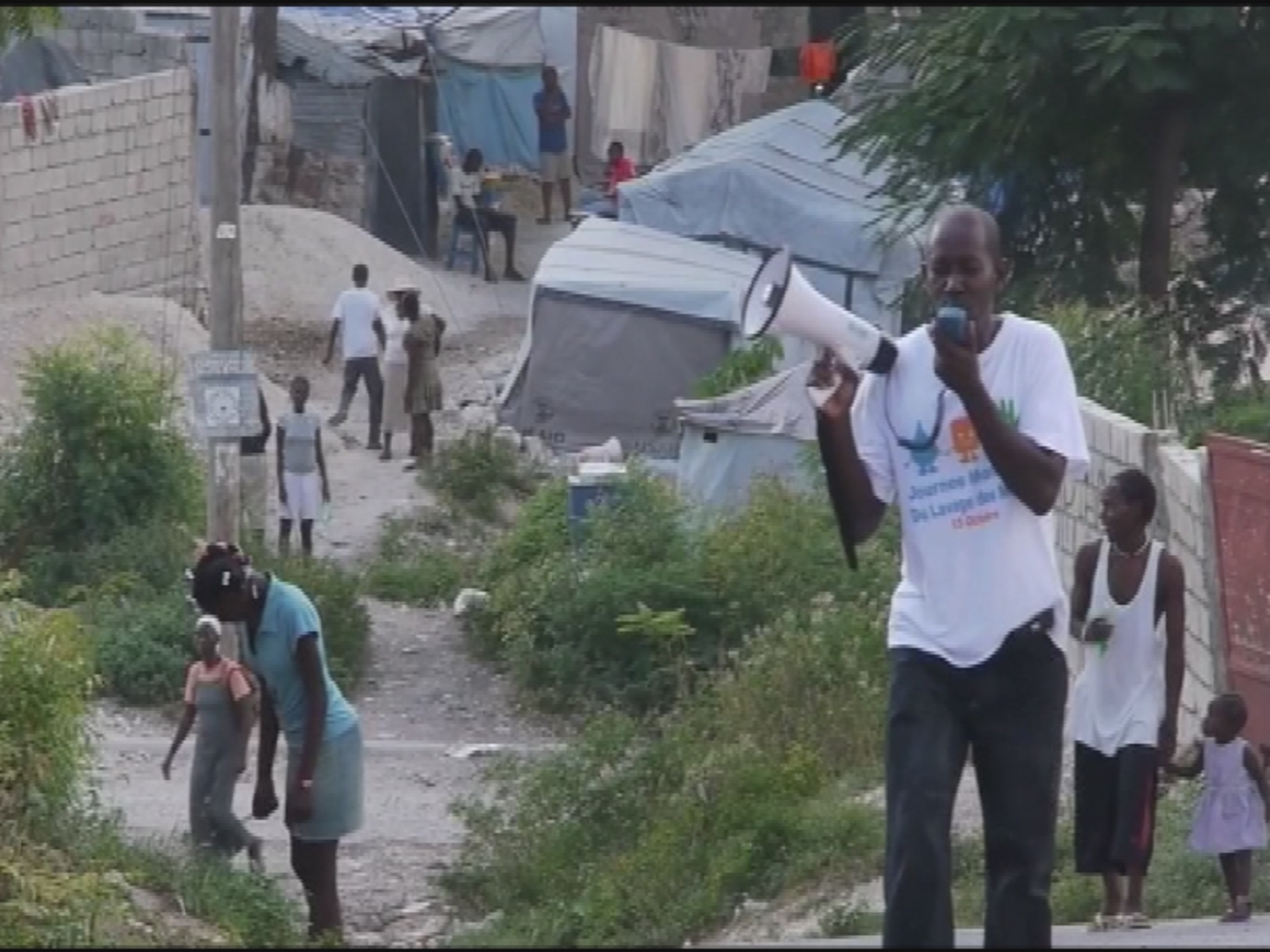
1. Wide shot, Health worker with megaphone
2. Med shot, health worker with megaphone walks through camp
3. Wide shot, community health demonstration
4. Med shot, man listens to radio
5. Wide shot, open sewer and garbage by the roadside
6. Wide shot, mother and daughter jump over dirty water and garbage on the road
7. Wide shot, people walking on the road, by the garbage and filthy water
8. SOUNDBITE (English) Bill Pape, Medical Expert, GHESKIO:
“This will be much worse because the population is much more dense and the population having access to portable water and having access to toilet accommodation is very, very limited in this large city, particularly after the earthquake where a lot of the water supply has been destroyed, a lot of accommodations have changed. It will be a catastrophe if it hits here.”
9. Wide shot, people with bags on their heads, standing by the roadside
10. Wide shot, garbage piled by the roadside with trucks parked nearby
11. Close up, open sewer
12. Close up, filthy water from the sewer
13. SOUNDBITE (Creole) Ramon Lebrun, Resident:
“They are telling us to avoid cholera by washing our hands and drinking treated water, but we need so much more. We’re living among dust, raw sewage, mud and stinking water which is terrible.”
14. Med shot, health team on motorbikes
15. Med shot, health workers walk through camp
16. Med shot, health team tests water, they pour water from a water can for testing
17. Close up, health worker holding sample of the water that’s been tested for chlorine
18. SOUNDBITE (English) Mark Henderson, Chief, UNICEF Water and Sanitation:
“One of the main strategies now with the threat of cholera is to raise the chlorine levels in all the water supplies, whether it’s trucked water, whether it’s piped water, whether it’s retail sold water, and to make sure there is adequate protection for drinking water through the use of chlorine.”
19. Med shot, Health worker with a megaphone walks through the camp along with a woman
20. Med shot, Health team talks to a woman in the camp
21. Wide shot, health team shows woman hand-washing
22. Close up, UNICEF Cholera Treatment Center tent
23. Wide shot, UNICEF tent label to construction workers under the tent
24. Close shot, worker lays concrete floor
25. Med shot, UNICEF team member assembles new tent
26. Close up, UNICEF team member assembling new tent
27. Wide shot, workers assembling tents for treatment centers
UNICEF and partners work closely with the government to prepare for a potential outbreak of cholera in Port-Au-Prince, focusing efforts on safe water, cholera-adapted health services and hygiene promotion.
SOUNDUP (Creole), Health worker:
“Cholera doesn’t fool around. It doesn’t play with you. It will kill you if you don’t take medication.”
This urgent message on how cholera can kill is being shared throughout Port-Au-Prince by health workers in camps for people displaced by last January’s earthquake. As well as during community mobilization meetings and on the radio
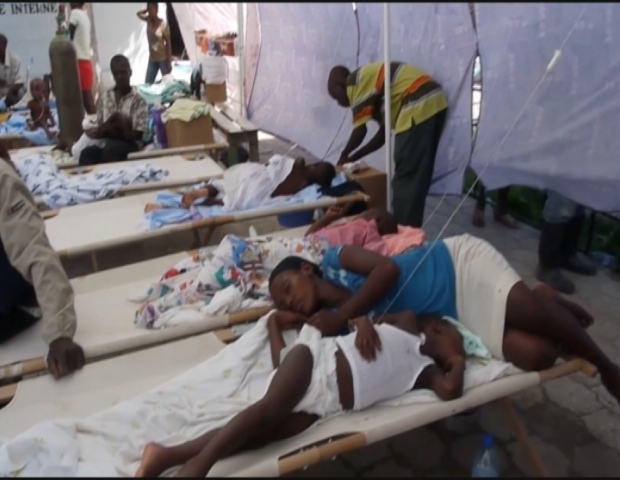
Just 70 kilometers north of the city, authorities are struggling to contain Haiti’s cholera epidemic that has killed more than three hundred people. Experts fear the fast spreading disease could reach the capital.
SOUNDBITE (English) Bill Pape, Medical Expert, GHESKIO:
“This will be much worse because the population is much more dense and the population having access to portable water and having access to toilet accommodation is very, very limited in this large city, particularly after the earthquake where a lot of the water supply has been destroyed, a lot of accommodations have changed. It will be a catastrophe if it hits here.”
All across this city of three million, conditions are ripe for the spread of cholera. Open sewers and human waste are everywhere. Dirty water is used for cleaning, washing and even cooking.
SOUNDBITE (Creole) Ramon Lebrun, Resident:
“They are telling us to avoid cholera by washing our hands and drinking treated water, but we need so much more. We’re living among dust, raw sewage, mud and stinking water which is terrible.”
Making sure that all water sources are treated is an urgent priority. And UNICEF and its partners are now at the frontlines of this battle against cholera. Teams are checking chlorine levels all across the city.
SOUNDBITE (English) Mark Henderson, Chief, UNICEF Water and Sanitation:
“One of the main strategies now with the threat of cholera is to raise the chlorine levels in all the water supplies, whether it’s trucked water, whether it’s piped water, whether it’s retail sold water, and to make sure there is adequate protection for drinking water through the use of chlorine.”
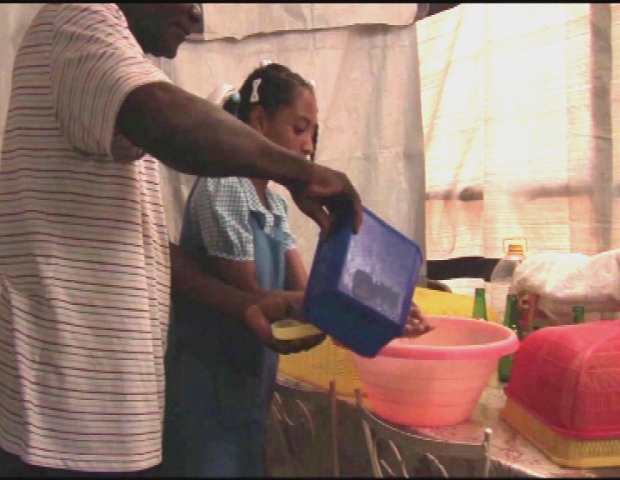
In the most vulnerable communities of the city, the slums and crowded camps, mobilization teams are going door to door educating people on hand-washing, proper preparation of food and avoiding water from unprotected sources.
With support from UNICEF, temporary cholera treatment centers are being set up for confirmed cases to be isolated and treated.