Media Home
 UN Web TV
 UN Audiovisual Library
 UN Photo
HAITI / CHOLERA
Download
There is no media available to download.
Share
STORY: HAITI / CHOLERA
TRT: 2.26
SOURCE: UNICEF
RESTRICTIONS: NONE
LANGUAGES: FRENCH / CREOLE / NATS
DATELINE: 20 FEBRUARY 2011, CANAPÉ VERT, PORT-AU-PRINCE
1. Wide shot, children in class listening to the cholera prevention training given by Farah Sylvestre
2. SOUNDBITE (Creole) Farah Sylvestre, GOAL trainer:
“Cholera is a disease that causes diarrhoea and severe vomiting, which can kill a child in a matter of hours.”
3. Close shot, eleven-year-old Rhodia listening to the training
4. Wide shot, Farah Sylvestre giving a cholera prevention training
5. Med shot, Rhodia sitting with various other children in class
6. SOUNDBITE (Creole) Farah Sylvestre, GOAL trainer:
“There are people who are more vulnerable to the disease and these are adults and children like you.”
7. Close shot, the faces of children listening to the training
8. Wide shot, class with little boy standing to ask a question
9. Med shot, Sylvestre lecturing the class
10. Close shot, face of girl in class
11. Wide shot, training in classroom
12. Med shot, Rhodia and other children in class
13. Close shot, washing hands over blue basin
14. Close shot, face of girl washing hands
15. Close shot, face of girl in class watching
16. Wide shot, Rhodia standing up in class to ask a question
17. Close shot, Farah Sylvestre writing on the board
18. SOUNDBITE ( French) Amara Kone, UNICEF Head of sanitation training in Schools:
“There is always the danger linked to sickness in schools, this information and prevention takes place so that children are always aware on how to prevent this illness.”
19. Wide shot, Rhodia walking home from school
20. Close shot, Rhodia’s feet as she walks home
21. Med shot, back view of Rhodia as she enters her home
22. SOUNDBITE (Créole) Rhodia, 11 years old:
“Papa, here is what we learnt at school. We need to throw out faeces and make sure that flies don’t come and sit on them. Flies come, sit on the food and then we get cholera”
23. Close shot, Rhodia’s hands as she demonstrates how to wash hands to avoid cholera bacteria
24. Med shot, Rhodia’s father pouring water over Rhodia’s hands as she washes them
25. Close shot, Rhodia’s face as she washes hands
26. Med shot, Rhodia and her father as she washes her hands
27. SOUNDBITE (Creole) Farah Sylvestre, GOAL trainer:
“These children can be the vehicles of information to adults, and also bring about a change in their behaviour, from a hygiene point of view.”
28. Med shot, girl and another GOAL trainer in class looking at cards which illustrate different hygiene situations
29. Med shot, girls in class with books in foreground
30. SOUNDBITE (Créole) Young boy in school:
“Look here, here are fruit trees and this man is going to the toilet there. That’s not a good thing.”
31. Close up, faces of little girls in class
32. Wide shot, back view of trainer and class
33. Close up, little girl in class with teddy-bear
34. Med shot, girl standing in the doorway of school with the hillside behind her
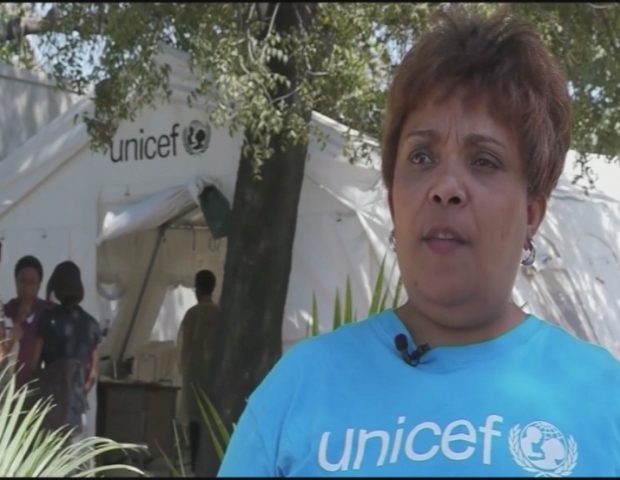
In cramped classrooms in displacement camps across Haiti, UNICEF and the non- governmental organization GOAL aim to educate children on the dangers of cholera.
SOUNDBITE, (Creole), Farah Sylvestre, GOAL Trainer:
“Cholera is a disease that causes diarrhoea and severe vomiting, which can kill a child in a matter of hours.”
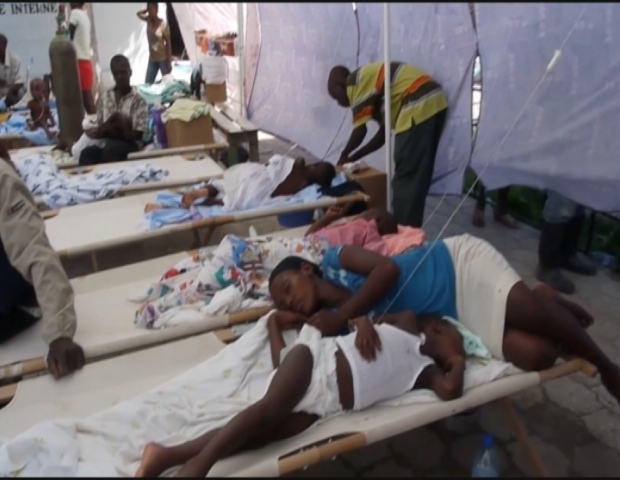
According to the Haitian government, to date the disease has claimed 4,549 people and infected over 230,000. UNICEF
SOUNDBITE, (Creole), Farah Sylvestre, GOAL Trainer:
“There are people who are more vulnerable to the disease and these are adults and children like you.”
The children are taught how to wash their hands properly to cleanse them of the cholera bacteria. UNICEF has been fighting the cholera epidemic in Haiti for months. Although the rate of people who have the disease has decreased, there is a fear that this could change.
SOUNDBITE (French) Amara Kone, UNICEF Head of Sanitation Training in Schools:
“There is always the danger linked to sickness in schools, this information and prevention takes place so that children are always aware on how to prevent this illness.”
For eleven-year-old Rhodia the cholera training gave her a better understanding of the disease. At home, she makes sure that her father also understands what she has learnt.
SOUNDBITE (Créole) Rhodia, 11 years old
“Papa, here is what we learnt at school. We need to throw out faeces and make sure that flies don’t come and sit on them. Flies come, sit on the food and then we get cholera.”
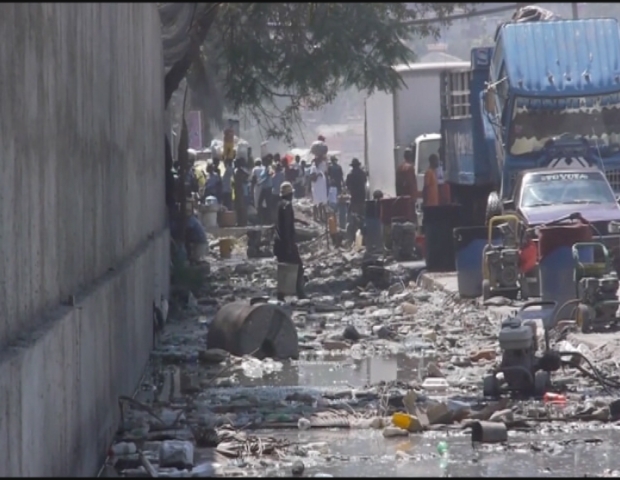
Poor sanitation conditions at home make it easy for cholera to breed despite precautions. This year, UNICEF is working to ensure that people have long term and better access sanitation and clean water.
SOUNDBITE (French) Farah Sylvestre, GOAL Trainer:
“These children can be the vehicles of information to adults, and also bring about a change in their behaviour, from a hygiene point of view.”
These lessons are not just for the classroom. These children will remember this training for their whole lives.
SOUNDBITE (Creole) Young Boy at School:
“Look here, here are fruit trees and this man is going to the toilet there. That’s not a good thing.”
These children will also pass on this behaviour change to protect their own children in the future.