Media Home
 UN Web TV
 UN Audiovisual Library
 UN Photo
MALARIA / PROGRESS REPORT
Download
There is no media available to download.
Share
STORY: MALARIA / PROGRESS REPORT
TRT: 2.57
SOURCE: ROLL BACK MALARIA PARTNERSHIP (RBM)
RESTRICTIONS: NONE
LANGUAGE: ENGLISH/ NATS
DATELINE: RECENT, THAILAND
1. Various shots, young woman giving blood sample to health worker
2. Various shots, health worker testing samples
3. SOUNDBITE (English) Dr. Fatoumata Nafo-Traoré, Executive Director of the Roll Back Malaria (RBM) Partnership:
“Malaria is not only an African issue. It is prevalent in South East Asia, in the Pacific region, in East Mediterranean region, in Europe, and in South America.”
4. Various shots, mosquito larvae
5. Various shots, mosquito biting into an arm
6. SOUNDBITE (English) Dr. Fatoumata Nafo-Traoré, Executive Director of the Roll Back Malaria (RBM) Partnership:
“We are facing the development of resistance of the parasite to anti-malarial medicines. That is concrete and urgent action has to be taken if we are to sustain the gains and the huge progress that has been made in malaria control.”
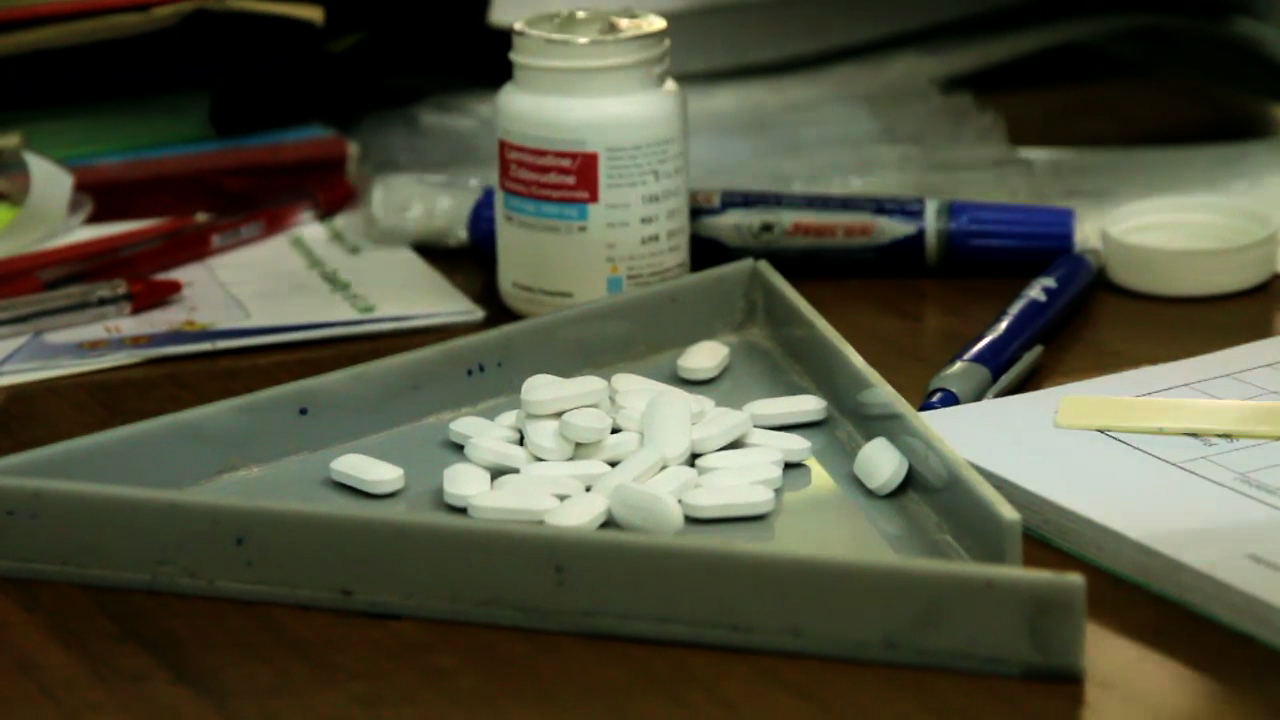
7. Close up, malaria medicines
8. SOUNDBITE (English) Dr. Fatoumata Nafo-Traoré, Executive Director of the Roll Back Malaria (RBM) Partnership:
“We need to develop new drugs. We need to continue building evidence for malaria control. We need to look for a vaccine that will support the fight.”
9. Various shots, still waters in rural road
10. SOUNDBITE (English) Dr. Fatoumata Nafo-Traoré, Executive Director of the Roll Back Malaria (RBM) Partnership:
“Malaria is not only a health issue. It is an issue for development. Investing in malaria will help in reducing absenteeism at work, absenteeism at school; it will help bring in additional investment to areas that are being left because malaria burden.”
11. Pan left, woman in traditional Thai home preparing food
12. Med shot, woman placing mosquito net over bed
Most international efforts to defeat malaria have so far focused on Africa, where the majority of the Malaria deaths occur. But out of the 3.3 billion people who are at risk from Malaria, 2.5 billion live outside the African region.
A new report by the World Health Organisation (WHO) entitled “Defeating Malaria in the Americas, Europe, the Middle East and the Pacific” is the first to shine a light on progress and challenges in the fight against malaria in other regions of the world.
The Head of the Roll Back Malaria (RBM) Partnership, Dr. Fatoumata Nafo-Traoré, said “Malaria is not only an African issue” and pointed out that it is still prevalent “in South East Asia, in the Pacific region, in East Mediterranean region, in Europe, and in South America.”
According to the report, an estimated 34 million cases and 46 000 deaths among a population at risk of 2.5 billion people occur outside of Africa.
Both Plasmodium falciparum and P. vivax parasites occur in great frequency. Diagnostic testing to determine the specific parasite and using the appropriate drug are critical. Malaria outside Africa is also characterized by greater mosquito vector diversity. Different vectors may have widely different breeding, feeding, and resting behaviors. Vector control interventions need to adapt to specific vector characteristics in a locality.
Nafo-Traoré said “we are facing the development of resistance of the parasite to anti-malarial medicines” and “concrete and urgent action has to be taken if we are to sustain the gains and the huge progress that has been made in malaria control.”
The report indicates that a total of 34 countries outside of Africa have reduced cases by more than 50 percent since 2000. Malaria death rates have decreased by 30 percent outside of Africa and four countries have been certified as free of Malaria since 2007 (Armenia, Morocco, Turkmenistan, and the united Arab Emirates).
The European Region branch of the WHO is aiming for the elimination of Malaria across the entire region by 2015 and P. falciparum transmission has already been eliminated from the region. Another 17 countries are in the pre-elimination or elimination phases of Malaria control and on the brink of eliminating Malaria from within their boundaries.
The RBM Executive Director said new drugs need to be developed and "we need to continue building evidence for malaria control. We need to look for a vaccine that will support the fight.”
According to the report, poorer populations are more likely to be affected by Malaria as they are more likely to live in rural areas in housing that offers little protection against mosquitoes. Furthermore, they are less likely to have access to mosquito nets or indoor residual spraying (IRS). They also tend to live further away from health facilities that can offer effective diagnostic testing and treatment and be less able to afford quality treatment.
Nafo-Traoré said Malaria is not only a health issue but “an issue for development.”
She added that “investing in malaria will help in reducing absenteeism at work, absenteeism at school; it will help bring in additional investment to areas that are being left because Malaria burden.”
The report says Malaria imposes costs on society which go beyond the costs to individuals and families affected by the disease. Productivity of businesses and government is reduced because of employee work time lost due to illness, and extra costs are incurred in preventing, diagnosing, and treating Malaria.
Funding for Malaria control has increased. Since 2003, international funding for malaria control has risen by more than eight-fold primarily because of the growth in funding from the Global Fund to Fight AIDS, Tuberculosis and Malaria, which accounted for approximately.
88 percent of the US$ 300 million of international funds disbursed for Malaria control outside of Africa.