Media Home
 UN Web TV
 UN Audiovisual Library
 UN Photo
UN / AMNESTY INTERNATIONAL ANNUAL REPORT
Download
There is no media available to download.
Share
STORY: UN / AMNESTY INTERNATIONAL ANNUAL REPORT
TRT: 1.51
SOURCE: UNTV
RESTRICTIONS: NONE
LANGUAGE: ENGLISH / FRENCH / NATS
DATELINE: 10 APRIL 2013, NEW YORK CITY / FILE
FILE – RECENT, NEW YORK CITY
1. Wide shot, exterior United Nations headquarters
10 APRIL 2013, NEW YORK CITY
2. Wide shot, dais
3. SOUNDBITE (English) Gérard Araud, Permanent Representative of France to the United Nations:
“We all know that the death penalty is not reflective of justice, it is reflective of failed justice. It is irreversible and has proven ineffective in combating crime. It is for this reason that France has committed for some 30 years now, to fighting to abolish the death penalty universally.”
4. Med shot, journalists
5. SOUNDBITE (English) Eduardo Ulibarri, Permanent Representative of Costa Rica to the United Nations:
“There is no clear evidence at all that the death penalty by itself is a strong deterrence against crime. Rather, we consider that a coherent, balanced and well enforced criminal policy is much more effective in fighting crime. And so, those policies should be improved and not use the death penalty as a detour in order to justify the failure of other policies that should be undertaken by the State.”
6. Med shot, journalists
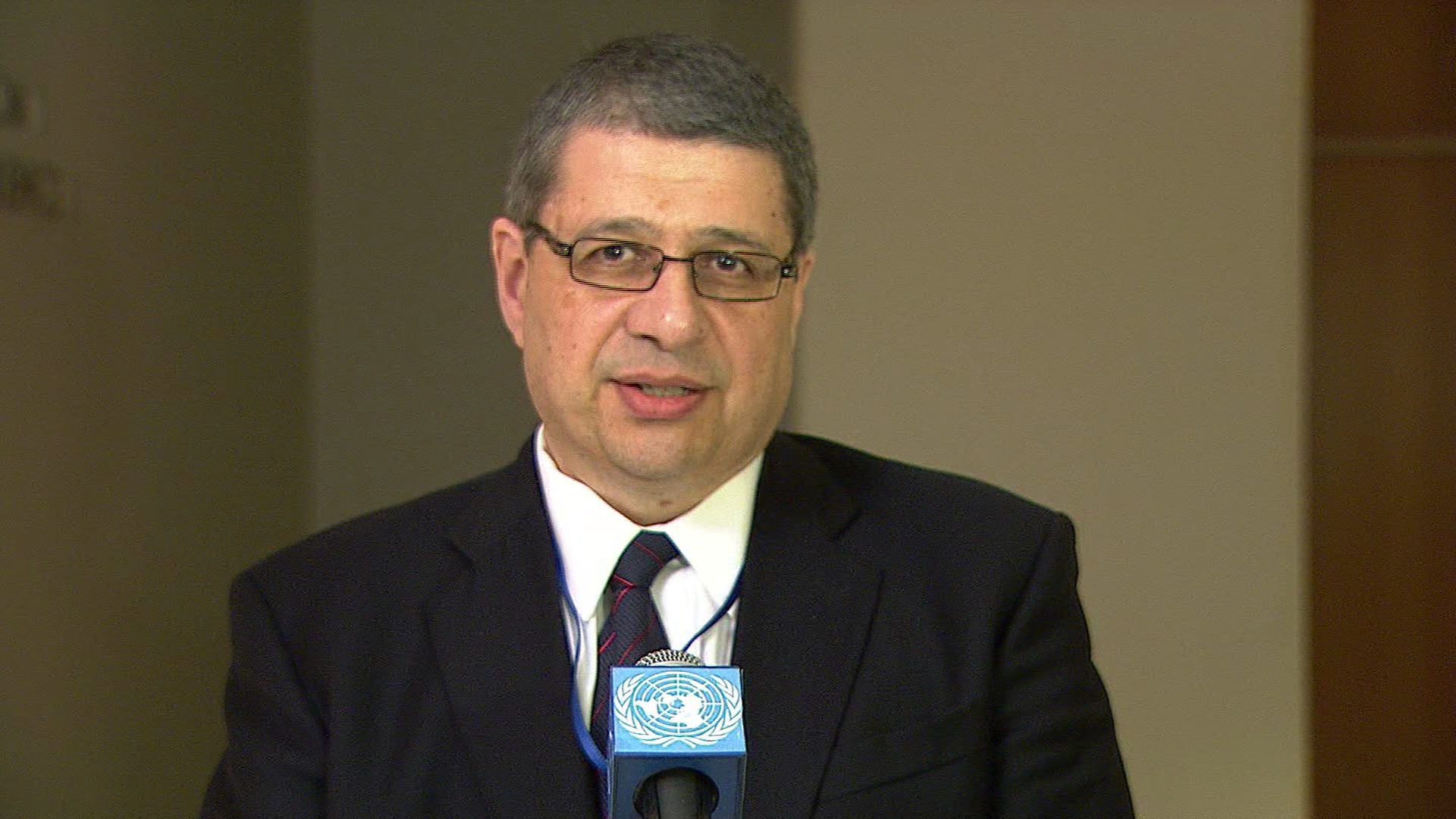
7. SOUNDBITE (English) Widney Brown, Senior Director of Law and Policy, Amnesty International:
“In the end, of the 21 states, it is actually five states who are responsible for the vast majority of executions. And in order of numbers those are China, Iran, Iraq, Saudi Arabia and the United States. Those five countries consistently show up as the top executors year after year, although we are seeing, even there, some drops with the exception of Iraq where we actually saw double the number this year than we had in 2011.”
8. Med shot, journalists
9. Wide shot, end of press conference.
According to the Amnesty International death penalty report for 2012, presented today (10 April) at the United Nations, figures on the use of the death penalty confirm that the overall trend globally is towards abolition.
Ambassador Gérard Araud of France, which abolished the death penalty in 1981, said “the death penalty is not reflective of justice; it is reflective of failed justice.”
Araud argued that “it is irreversible and has proven ineffective in combating crime” and highlighted France’s commitment “to fighting to abolish the death penalty universally.”
Ambassador Eduardo Ulibarri of Costa Rica noted that “there is no clear evidence at all that the death penalty by itself is a strong deterrence against crime” and added that the death penalty should not be used “as a detour in order to justify the failure of other policies that should be undertaken by the State.”
The Amnesty International report indicates that only one in 10 countries worldwide carried out death sentences in 2012.
However, it points out that there have also been setbacks, such as the resumption of executions especially in Gambia, India, Japan and Pakistan.
Widney Brown, who is the Senior Director of Law and Policy at Amnesty International, said “it is actually five states who are responsible for the vast majority of executions.”
Nevertheless, she noted that even in those countries, China, Iran, Iraq, Saudi Arabia and the United States, there have been ”some drops.”
The exception, she said, was Iraq “where we actually saw double the number this year than we had in 2011.”
The Amnesty International report, “Death Sentences and Executions 2012”, covers the judicial use of the death penalty for the period January to December 2012.